Just about 45 minutes from Vegas is the site of one of the most extraordinary engineering projects of the twentieth century: the Hoover Dam, overseen by Herbert Hoover and inaugurated under Roosevelt’s presidency in 1935. For the last eighty years this has captured and controlled the waters of the Colorado River, providing water for seven states and preventing all sorts of flood damage to farming communities downstream.
It’s bigger and smaller than you might imagine: side to side, it seems somewhat smaller than the impression you have from the movies. But up and down it is every bit as big, and really daunting close-up. Peering over the parapet of the Visitors’ Centre takes some nerve!
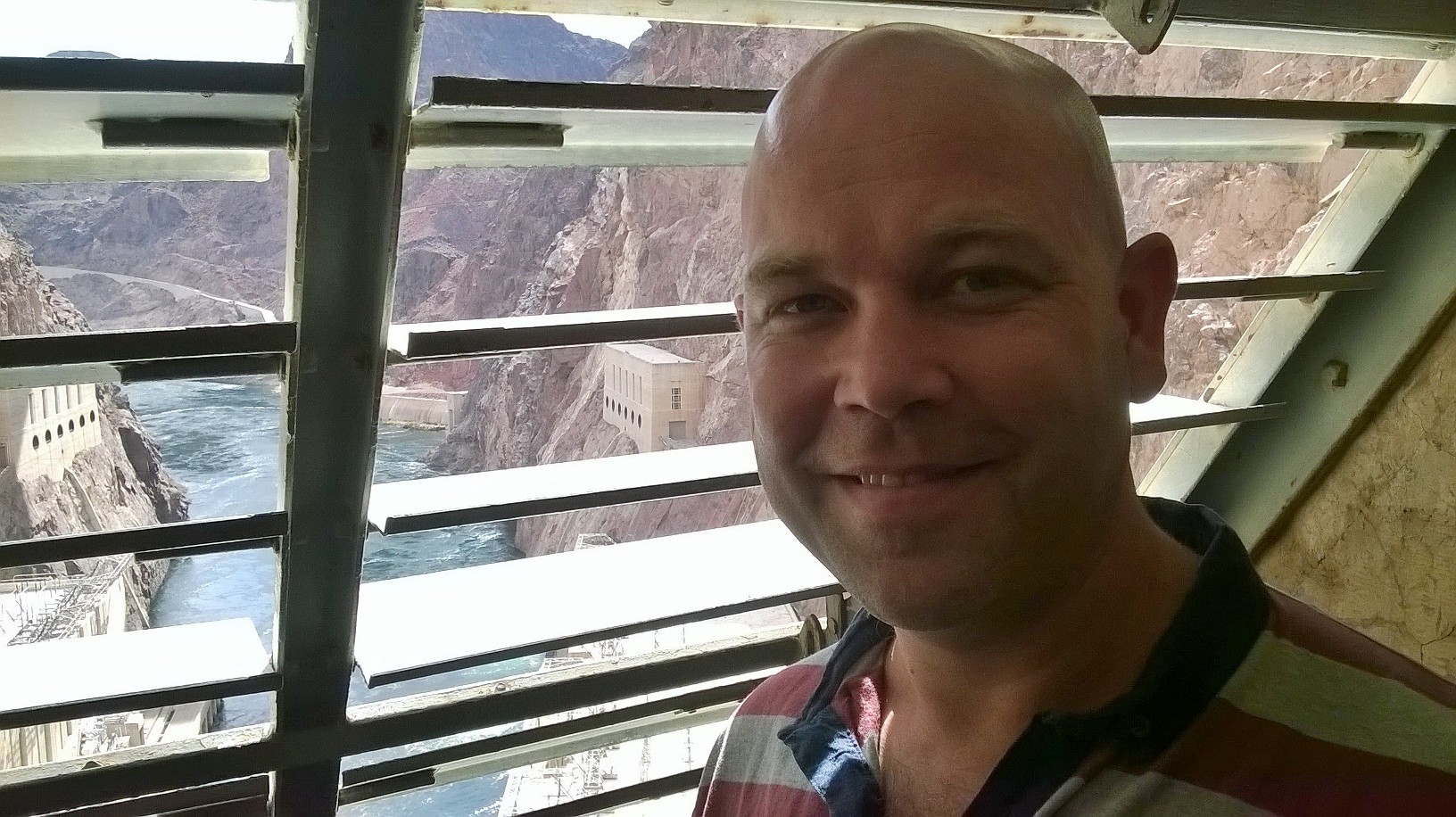
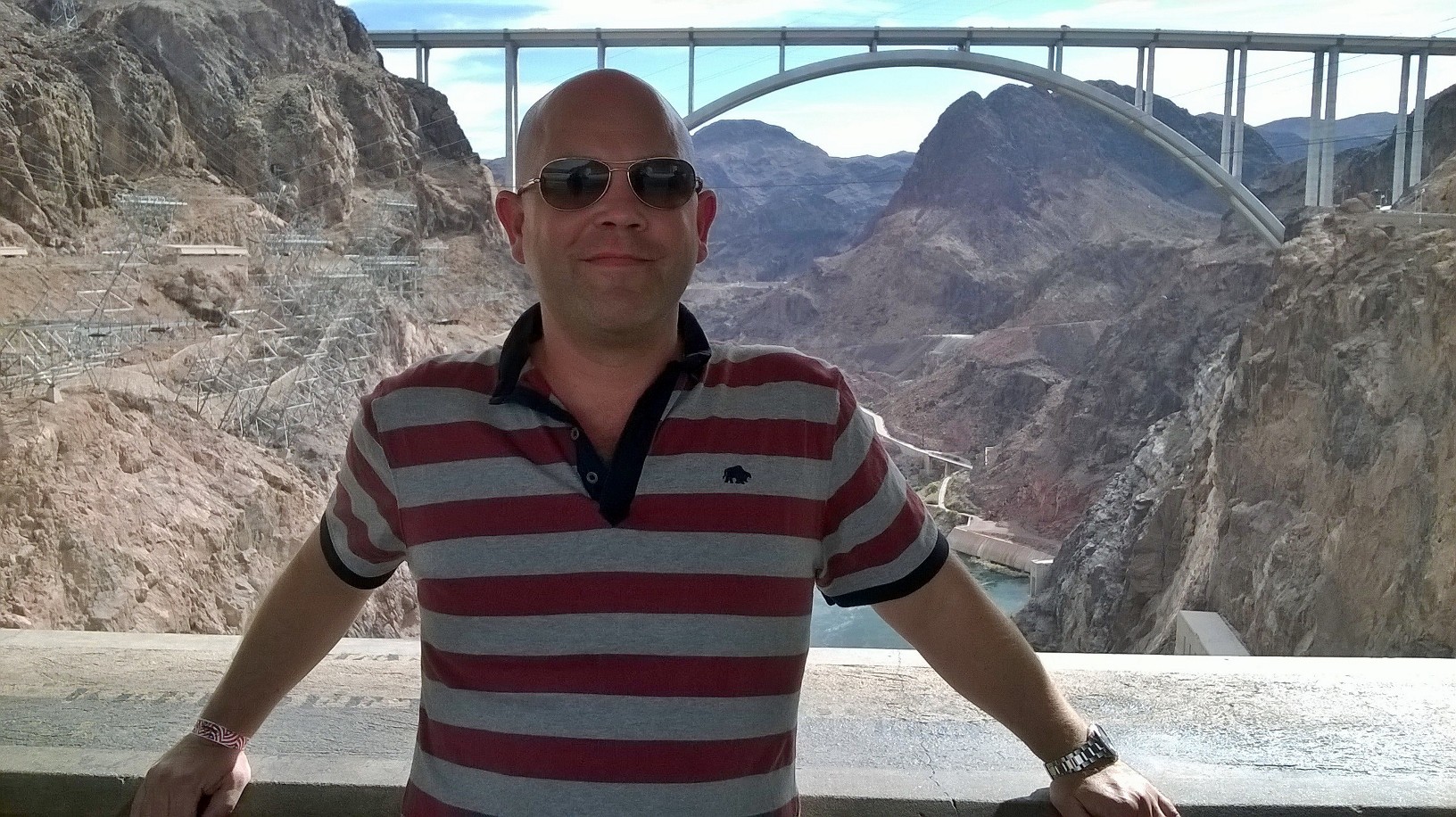
The tour around the dam allows you inside, outside, up above and down below, and it’s really interesting to hear how the engineering works. Of course, the photo opportunities are probably the most interesting aspect of the tour, so here are some of our snaps.
From inside one of the Dam’s tunnels.Karen in Dam tunnel…aka the Da Vinci (wo)man.
At the head of the dam is Lake Mead, an enormous reservoir used for watersports and hydro-electric power. You can see on this photo the tide mark of the highest level the water’s ever reached (in 1983, just seven feet below the top of the dam), and the lowest (today, way below what it should be).
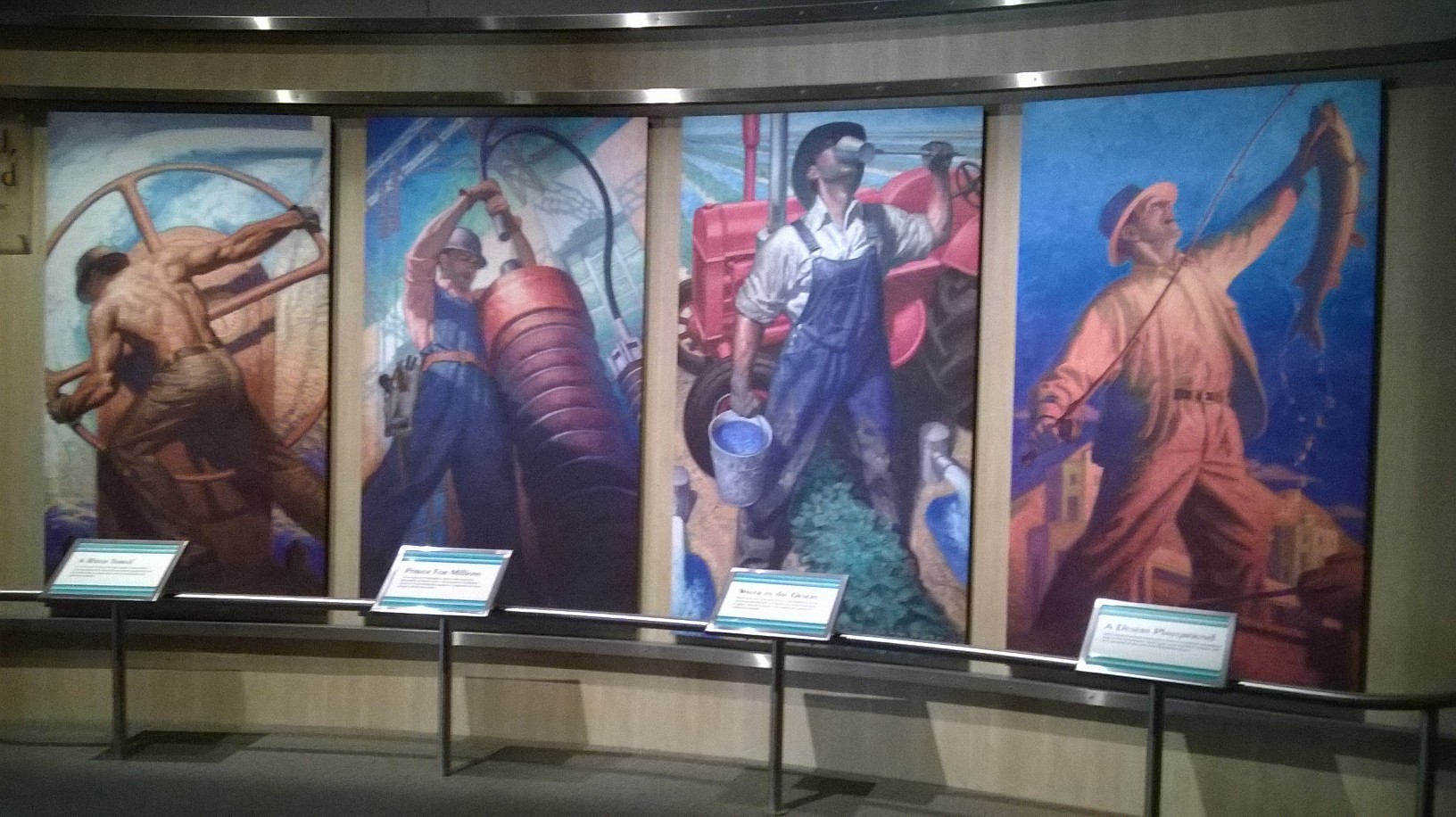
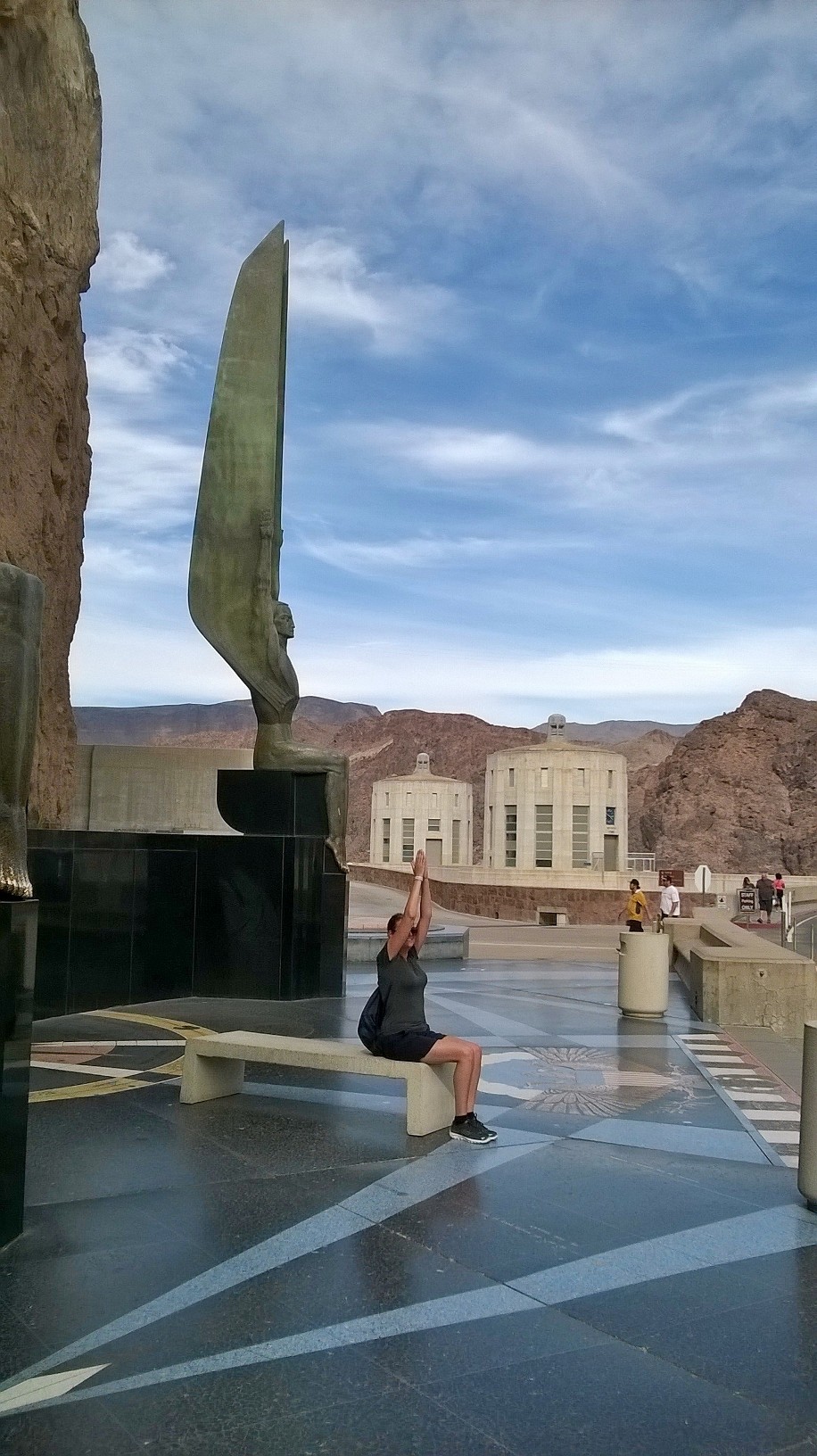
And in and around the Visitors’ Centre itself is the story of the building of the dam in the 1930s. It’s really interesting to see some of the imagery that came out of the Works Progress period of Roosevelt’s administration. See how much these images of hard-toiling American workers resemble Soviet images of the time; the eagles outside have also got that pre-war imperial brutality as well. (That’s Karen clowning around…as usual).
These are very ‘Soviet’ looking.
On the other side of the dam is Arizona, so we popped over for a few minutes and an hour, getting caught in a different time-zone as we did (Arizona is an hour in front of Nevada). Here’s the view from an hour in front…
The view from Arizona, with the Hoover Dam looking even more like a James Bond installation
If you get the chance, this is a must-see, and a really thrilling way to end our trip. We’ve done three weeks of travelling and taken in about 1500 miles of California and Nevada (and Arizona). And we’ve had a fabulous time! The next plan – once we’ve saved up the pennies – is a music tour from Chicago to New Orleans. America, we’ll be back!
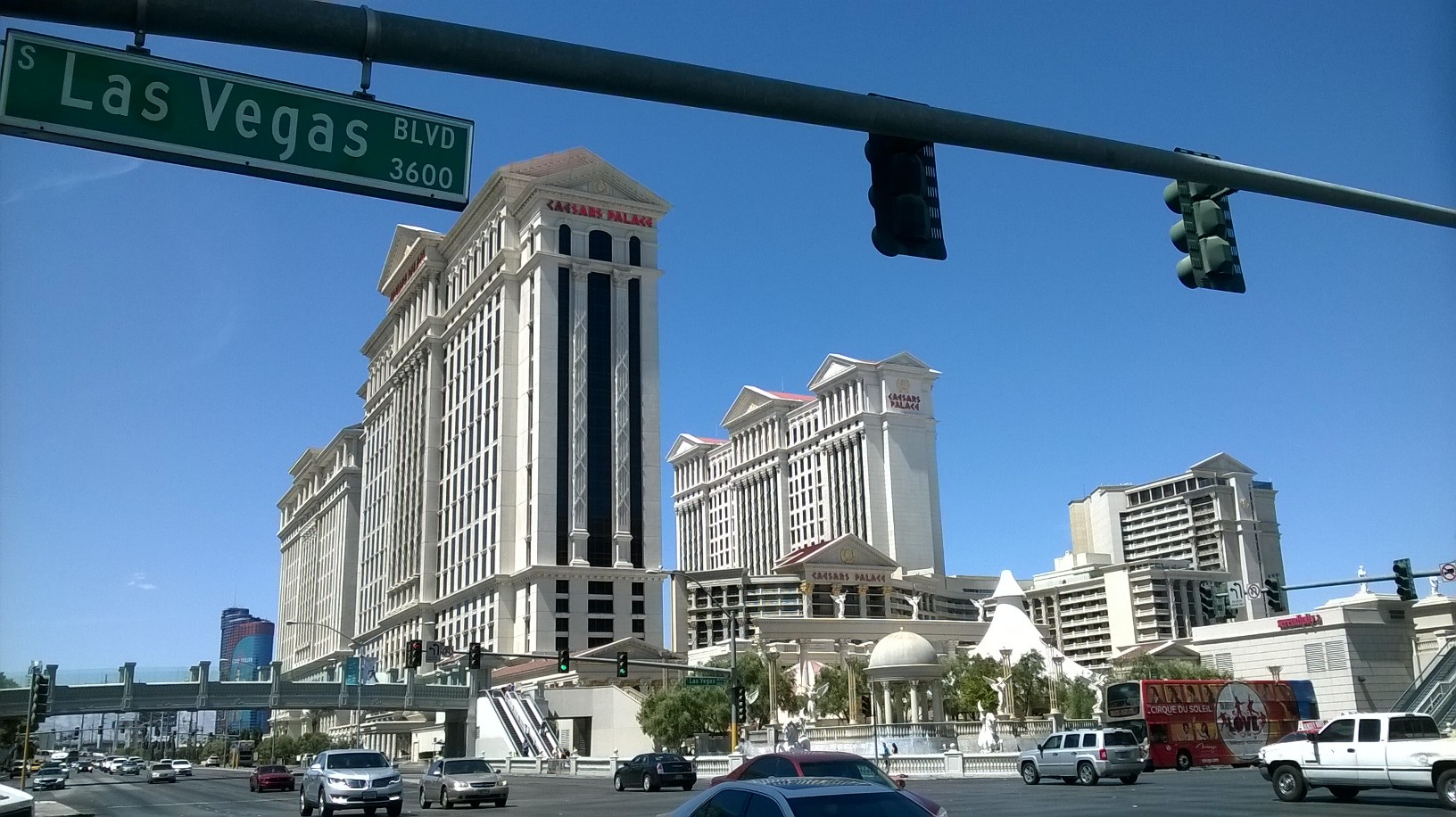
We said that Vegas was a weird town in the desert, and that’s exactly what it is. It’s so incongruous, out in the middle of nowhere, like some big kid’s toybox has been spilt in the desert. But it’s exactly what you expect: excess is everywhere, and the big kids imagination is in overdrive: you want the whole of New York to be squeezed into a snapshot? You got it. What about Paris – the Eiffel Tower, the Arc de Triomphe, the Mongolfier Balloon? You got it. It’s hyper everything – hyperreal, hypercrass and hypercommercial. So using language appropriate for the polarizing feelings that Vegas has provided, it’s safe to say that you’ll love it and hate it in equal measure. So here’re a few of the things that we have loved and hated.
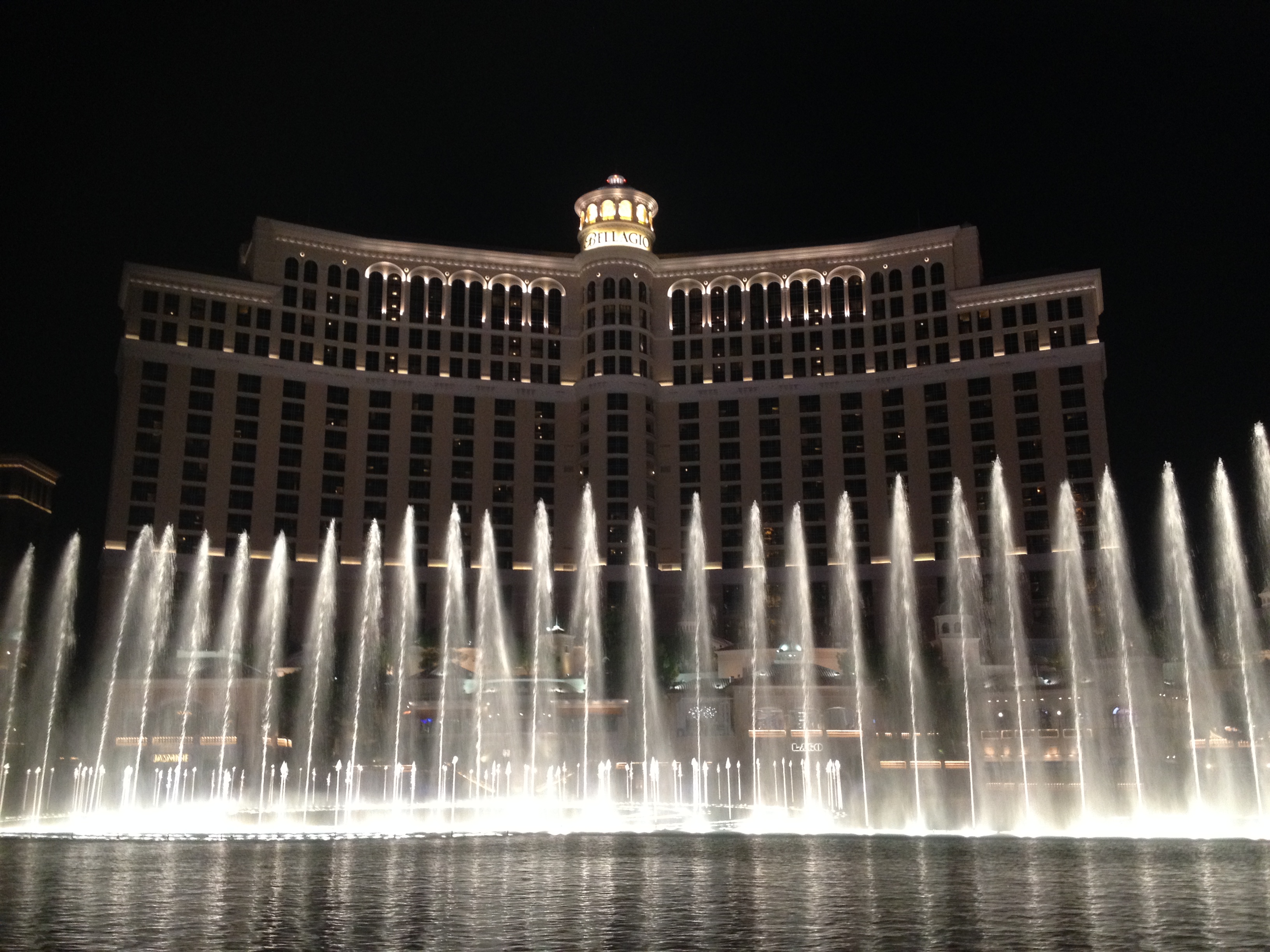
We loved the fountain display at the Bellagio. This is the hotel featured in the Ocean trilogy, out front of which is an enormous pond. Every so often, an amazing water display erupts, with the fountains springing everywhere in sync with the music. That really is magical, especially at night.
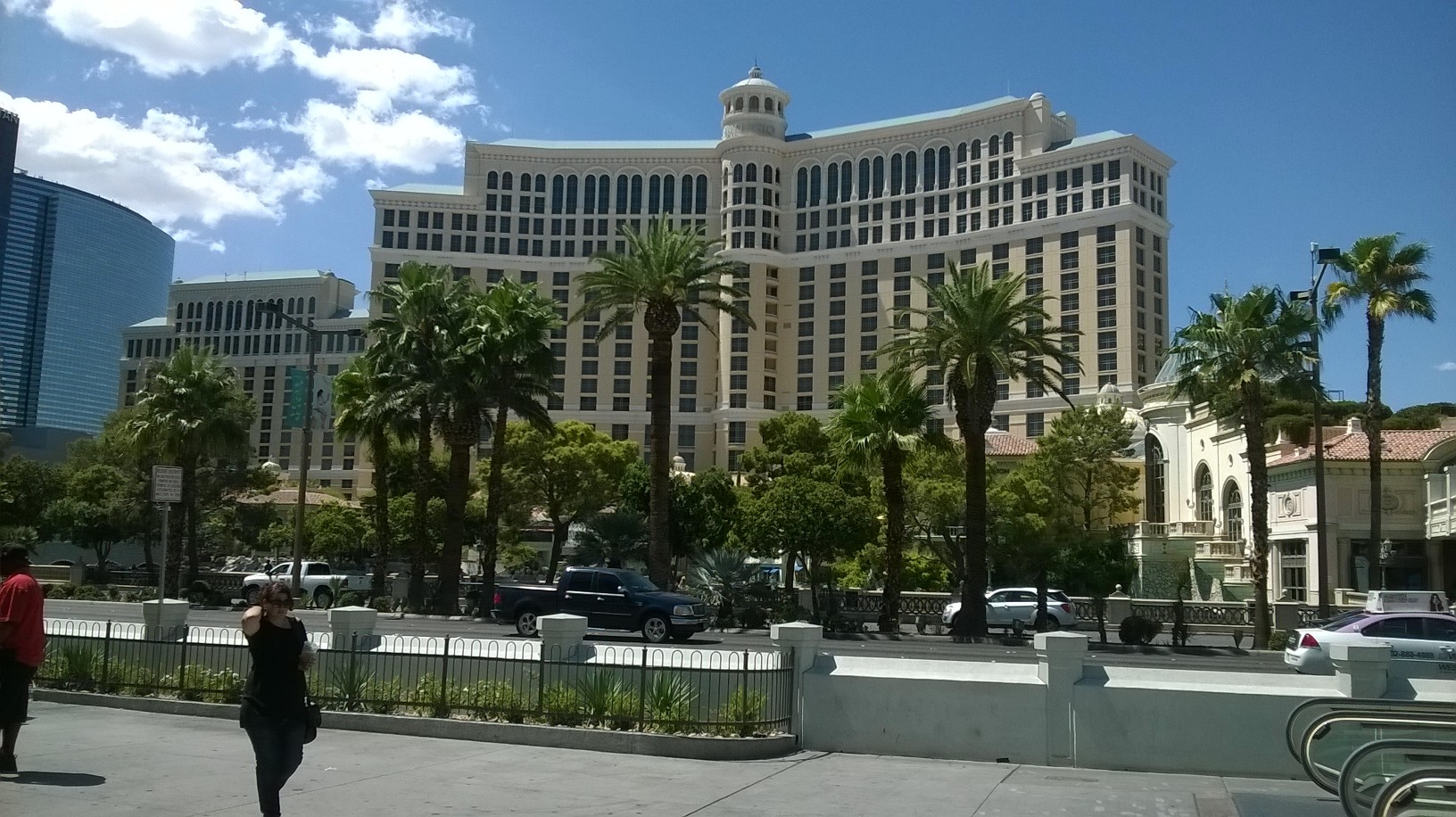
We hated the Bellagio. Inside, that is. And most of the other hotels, come to that. These places are so big, so ostentatious and so labyrinthine that it takes you literally half an hour or even an hour to walk round them, during which time you get increasingly lost. Finding your way out is the biggest challenge, and just when you think you have done it and you arrive on the pavement, you find yourself having to take an escalator and whoops, you’re back inside another gargantuan hotel! We got stuck for an hour in the MGM Grand before eventually making it back to the Strip.
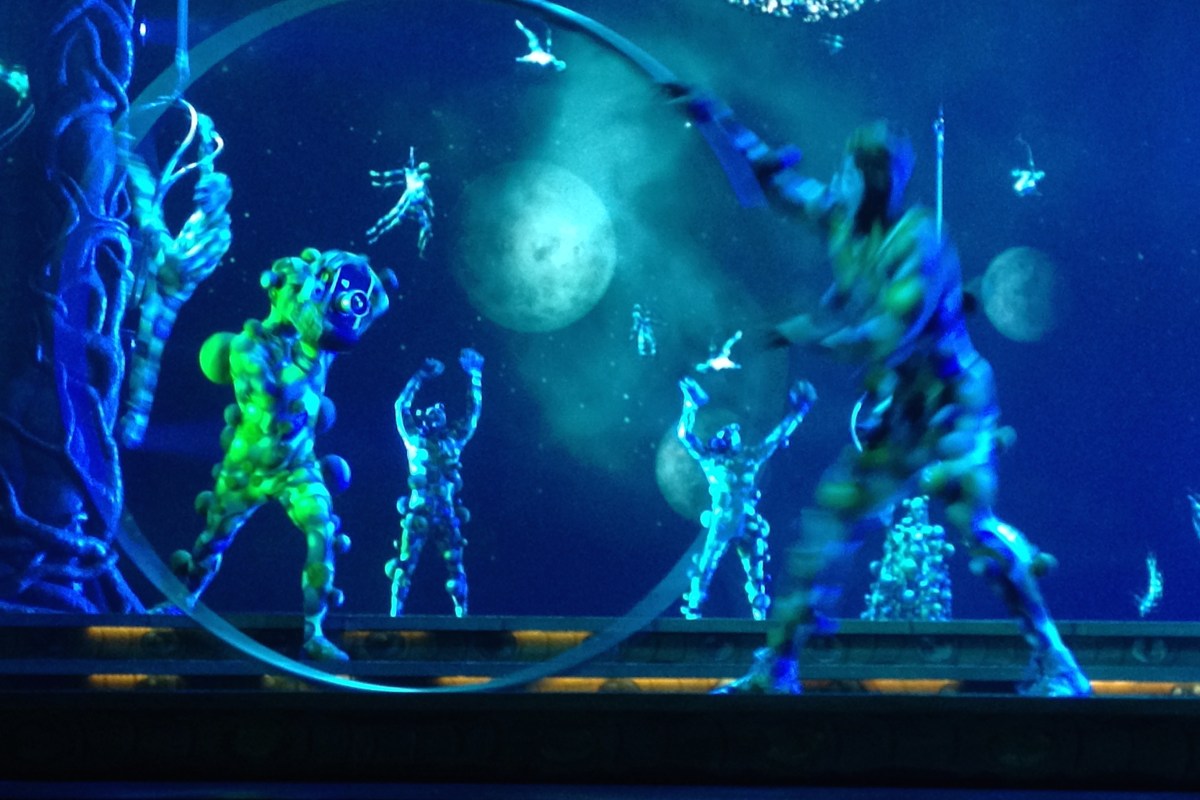
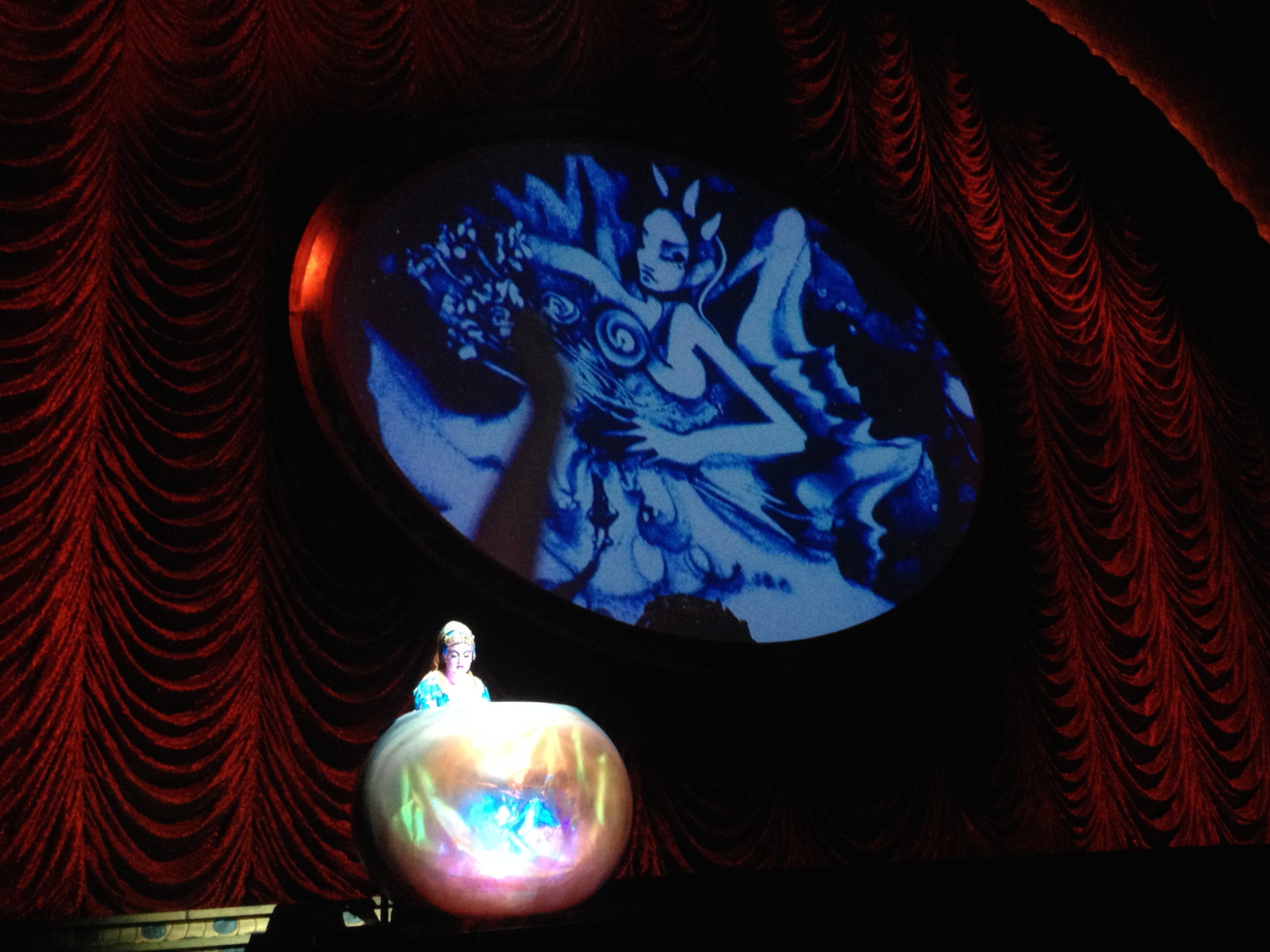
We loved the shows we saw, and Vegas is full of these. They are very much based on spectacle and virtuosity, so don’t go expecting Chekhov. However, you can see everything from the big magicians like David Copperfield and Penn and Teller, to the singers like Donny Osmond and Olivia Newton John, to the exotic cabarets that are too numerous to mention. And then there are the Cirque du Soleil shows, for which Vegas is renowned. We saw one of these – Zarkana – and had a fabulous time. It really is just circus, but done with such lavish and spectacular glam (and skill) that you just can’t help being wowed. We also saw the Blue Man Group, who we have seen previously in New York. They never disappoint: this is funny, feel good fun, with once again an amazing degree of skill and expertise.
We hated the street preachers. As you know, Vegas is a land of vice, with all of its gambling, titillation and hedonism. But it’s also packed with plenty of naysayers, brandishing placards and megaphones and warning everybody that they are going straight to the devil. Now this isn’t our thing at the best of times, but these people showed the problems that happen when American values like freedom of speech and right-wing sentiments come face to face. When they started condemning things like homosexuality, we felt like picking our own placards up and preaching them some of our values.
We loved some of the day trips you can go on out of Vegas – it’s so well located for a number of great attractions (such as the Grand Canyon, that we didn’t do). We passed by another of these canyons, Red Rock, on our way in, though on this occasion we chose not to visit that or the Canyon of Fire, partly because we’ve seen a lot of the natural spectacles already. However, we did make a trip to a man-made spectacle, the Hoover Dam, which was truly awesome. More of that tomorrow!
We hated the prostitution laws in Nevada, and what this leads to: open pimping of young girls on the streets by people old enough to be your grandma. They’re very forthright in what they do, thrusting flyers at you even when you are walking as a couple, as if there is nothing more natural in the world. Whatever your views, it’s problematic when you come (as we do) from a culture that is so differently placed in this regard – and when you have kids who are not much younger than the girls being pimped. Even considering the pro-prostitution perspective and the postfeminist perspective, it still feels ‘off’ and wrongly balanced when you consider who is doing the selling and then who might be doing the buying – and what the ‘service providers’ are actually getting from the transaction. I am sure several people will have strong and different views to us though.
You’ll love Vegas and hate it, as we’ve said. We certainly don’t regret coming, and we’ve had a ball during our stay. Will we come back? Dunno. Perhaps it’s somewhere you have to experience once, but perhaps that’s all you need.
Today has been a real day of inspiration. It was our last day in California (as we crossed into Nevada), but what a great way to leave the Golden State behind.
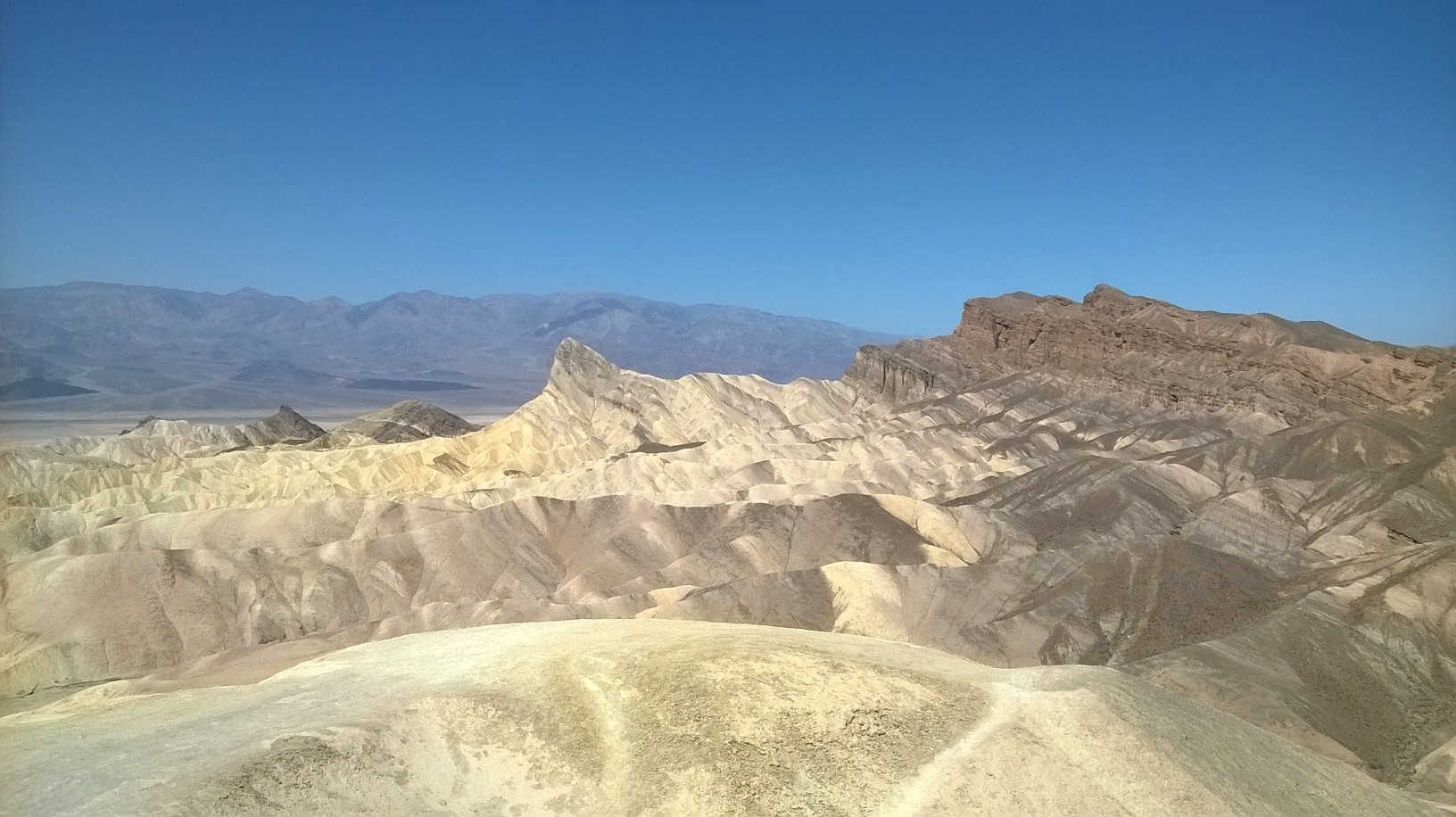
First stop was Zabriskie Point, only a few minutes’ drive from Furnace Creek, and the location of not only some of the most spectacular views in Death Valley, but also a wealth of pop culture references. This was the location for Antonioni’s 1970 film Zabriksie Point, in which the young lovers get together in a stylised love scene in the dunes, staged with performers from California’s Open Theater. This is art cinema at its best and worst – a terrible flop at the box office, but interesting nonetheless. But that’s not all: Zabriskie Point was also the scene for the cover image of U2’s album The Joshua Tree. Not the shot with the actual tree in it, mind – that was taken on the other side of Death Valley not far from Lone Pine, though the tree itself has now fallen down and all that is left is a shrine to U2. The front of the album, though, has one of those black-and-white rock-stars-looking-arty-and-serious-in-the-desert-pics. And that was shot here. But that’s not all either! Perhaps most interesting to us was the fact that the French philosopher Michel Foucault was brought here in 1975, and invited to go on a trip of a different sort. He took LSD, an experience he later said was the best in his life, and perhaps one that influenced some of his later writings. It’s obviously been an alluring place for people, and the fact that there have been so many interesting connections with Zabriskie Point meant that we had to visit it!
Shortly after that, we took a detour off the main road to journey round Twenty Mule Drive, a scenic route of just a few miles between more wind-blown cliff faces and rocky sand dunes. This was part of the route of the original Twenty Mule team that transported Borax in the late-nineteenth century. Spectacular again, though there is so much spectacular stuff to see in Death Valley that you can get rather blasé about it all.
As we came to the end of our Death Valley odyssey, we drew into Death Valley Junction, a tiny village that was once the main artery of the Borax trade. We were keen to come here for a different reason: it’s the site of Amargosa Opera House, one of the most extraordinary theatres in the world.
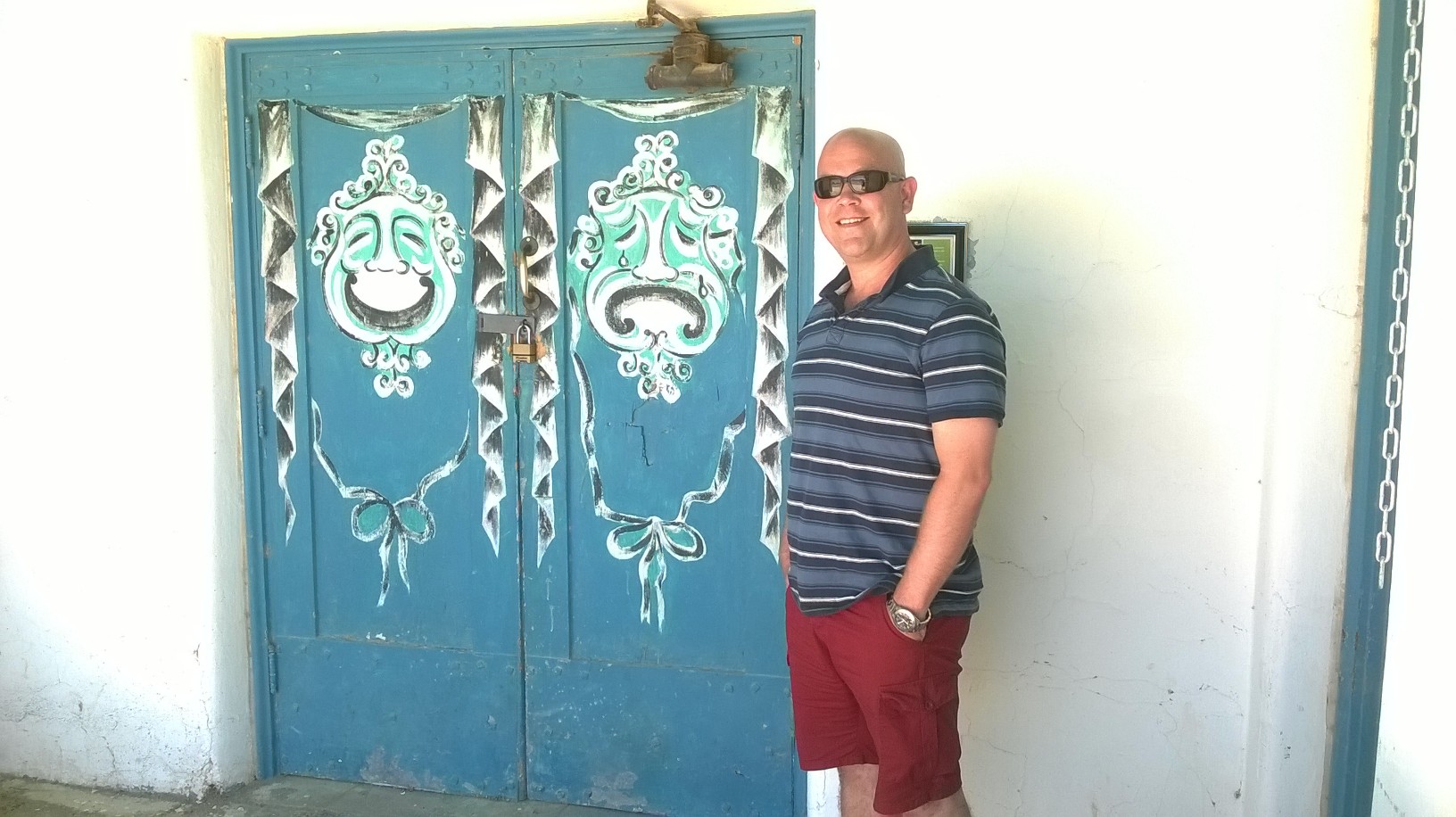
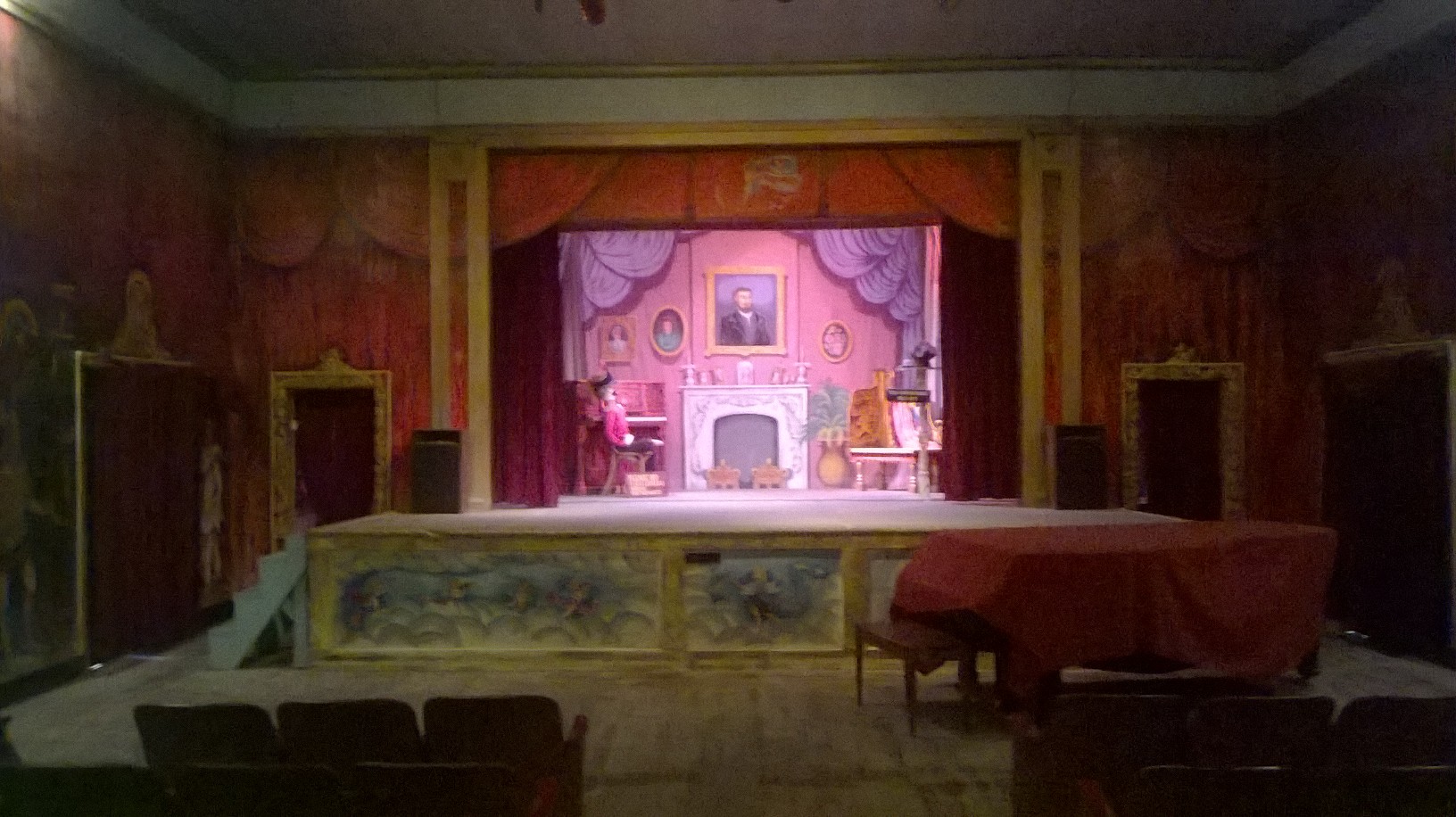
This was set up in the 1920s as part of the mining village, which became a ghost town when the Borax industry left. However, in the 1960s, the ballet dancer and Broadway star Marta Becket discovered it when she got a flat tyre on a trip through Death Valley. At that point, the theatre building was disused and fallen into disrepair. In an instant she decided to renovate it, and over the next few years she lovingly restored it and started performing her one-woman show there. Now, there are not many residents in Death Valley Junction, so audience figures were low. So she decided to paint an audience on the walls of the theatre. The whole process took her 6 years, but the result is the most amazing set of murals on the walls and ceiling of this tiny jewel of a theatre. We were shown around by Gregory, who now runs the attached hotel and performs in the theatre during the winter months. He is absolutely passionate about the theatre, about Marta Becket’s work, and about the legacy she has left – and rightly so. This is really one of the most admirable projects we have ever encountered, and Marta Becket (now 91) must go down as one of the most inspirational women we have come across.
We said our good-byes to Amargosa Opera House to continue our journey. Lunching at a one-horse roadside town called Shoshone (named for the local Native Americans), we then took one of the most desolate roads we have yet travelled towards our final destination. For forty miles, the road meandered through stunning nothingness, sometimes in twists and turns, sometimes in long, straight, never-ending stretches of asphalt. In the course of that hour, we saw just four other cars. This was even quieter than Death Valley!
We had reached Nevada, whose landscape is subtly different than California – red rocks rather than sandy, and the occasional mountain goat in amongst the Joshua Trees. Eventually, we came across the major highway, and it wasn’t long then before we caught sight of our next destination: Las Vegas, aka Weird Town in the Desert.
OK. So we all know that Death Valley is dry, arid and desert-like, that there is narry a plant growing and that you’re more likely to see a coyote dropping rocks off cliffs than you are to see a blackbird. (Though as it happens the roadrunner is a common enough bird in these parts – even if we haven’t seen one!) But before you trek out from the Ranch at Furnace Creek, stop off at the on-site Borax Museum, a wealth of information and a fascinating insight into Death Valley then and now.
To our amazement, it turns out that Death Valley was once a gigantic lake with tropical forest growth and plenty of flora and fauna. We’re going back a few years, mind (like, millions). Most contemporary accounts document the area from around 1850, when coach loads of gold prospectors stumbled into the valley by mistake and promptly proceeded to regret it. They didn’t find a great deal of gold, though the mineral they found that could be exploited was Borax – still a fundamental component of soap, pyrex and glass, and still a major US export. It’s quite amazing to read how these pioneers not only managed to make this hostile landscape habitable, but also managed to forge thriving industries, with mines, rail connections and mapping projects to develop the infrastructure of this uninhabitable environment. Sadly, much of the prospecting yielded very little, so mining towns blossomed and then withered, leaving a host of deserted ghost towns in the desert, and just a couple of existing communities, one of which is the Ranch at Furnace Creek.
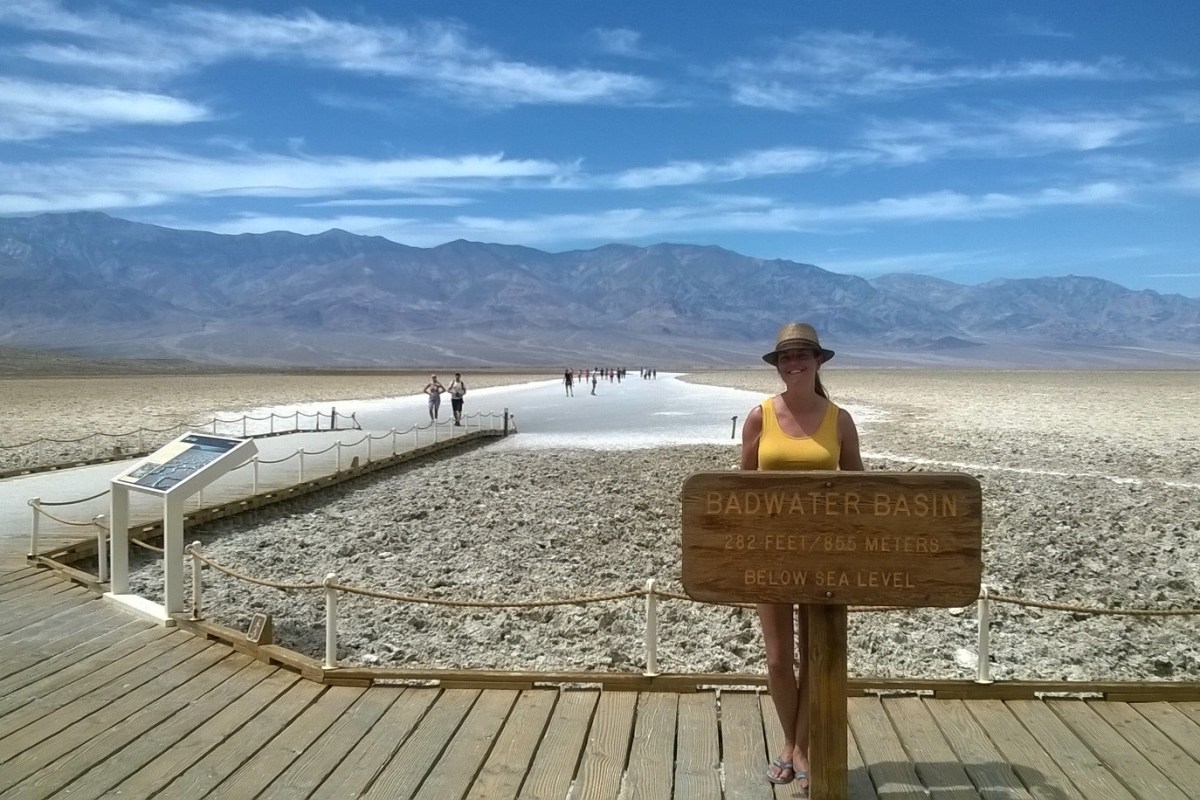
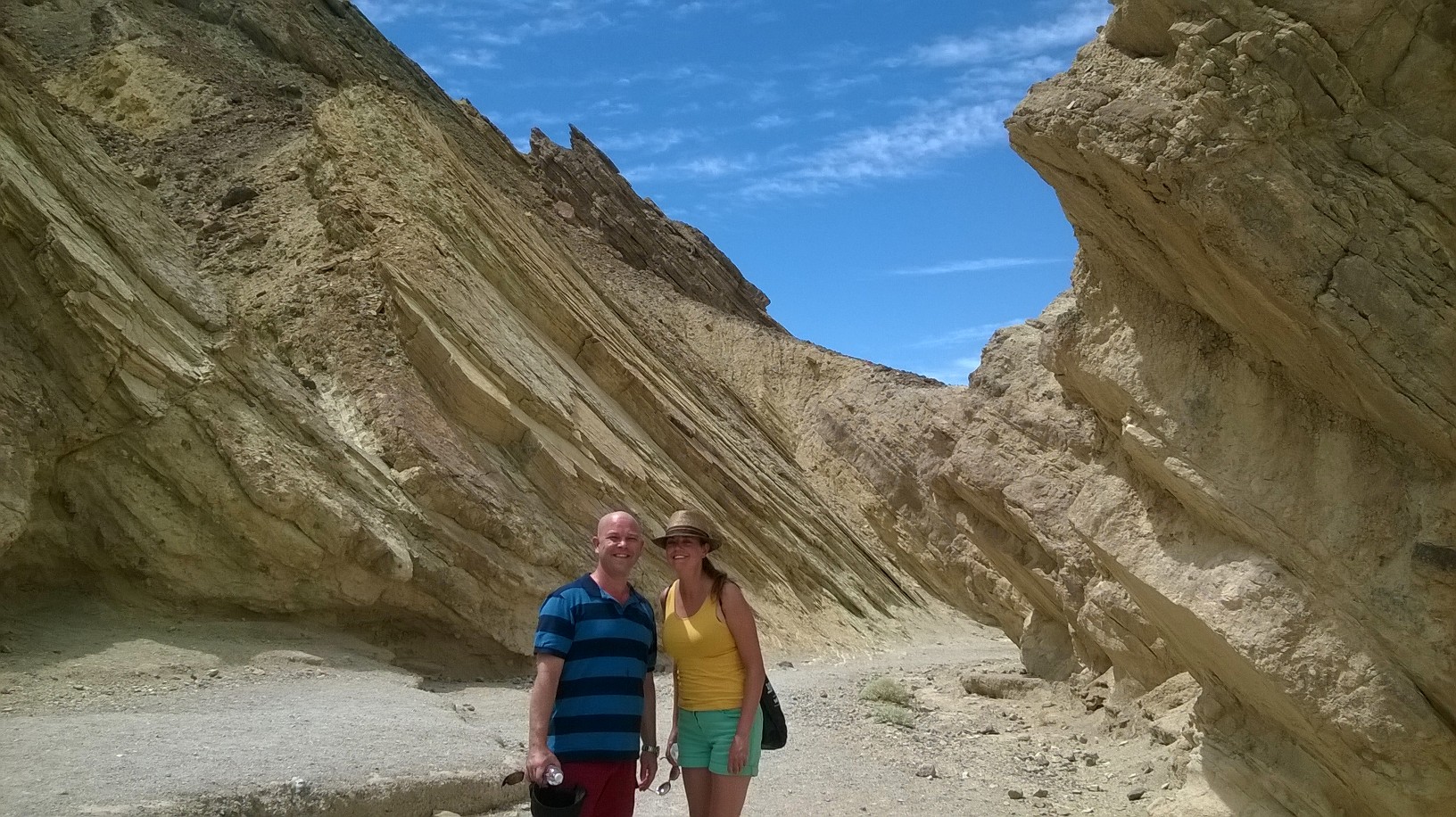
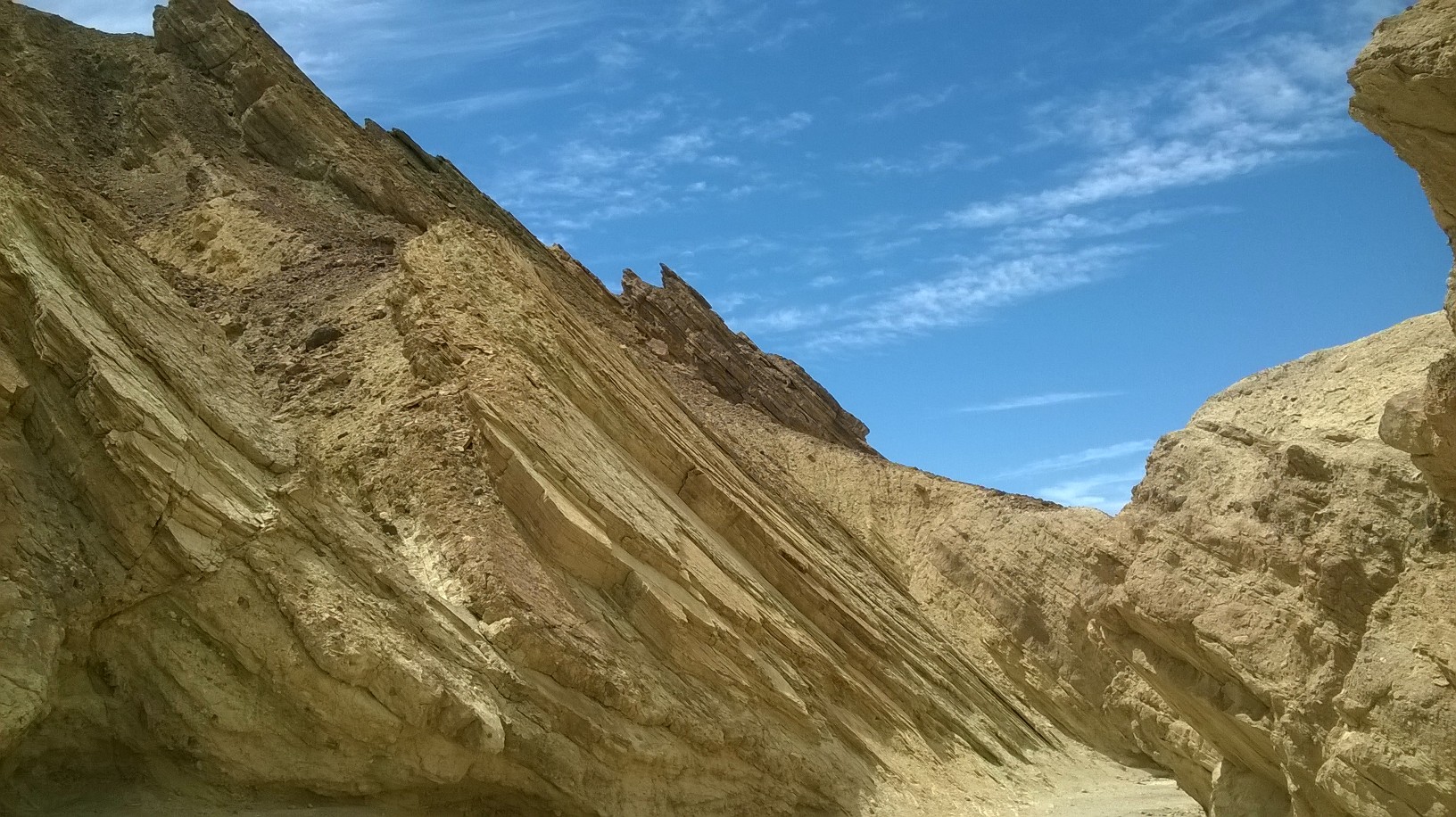
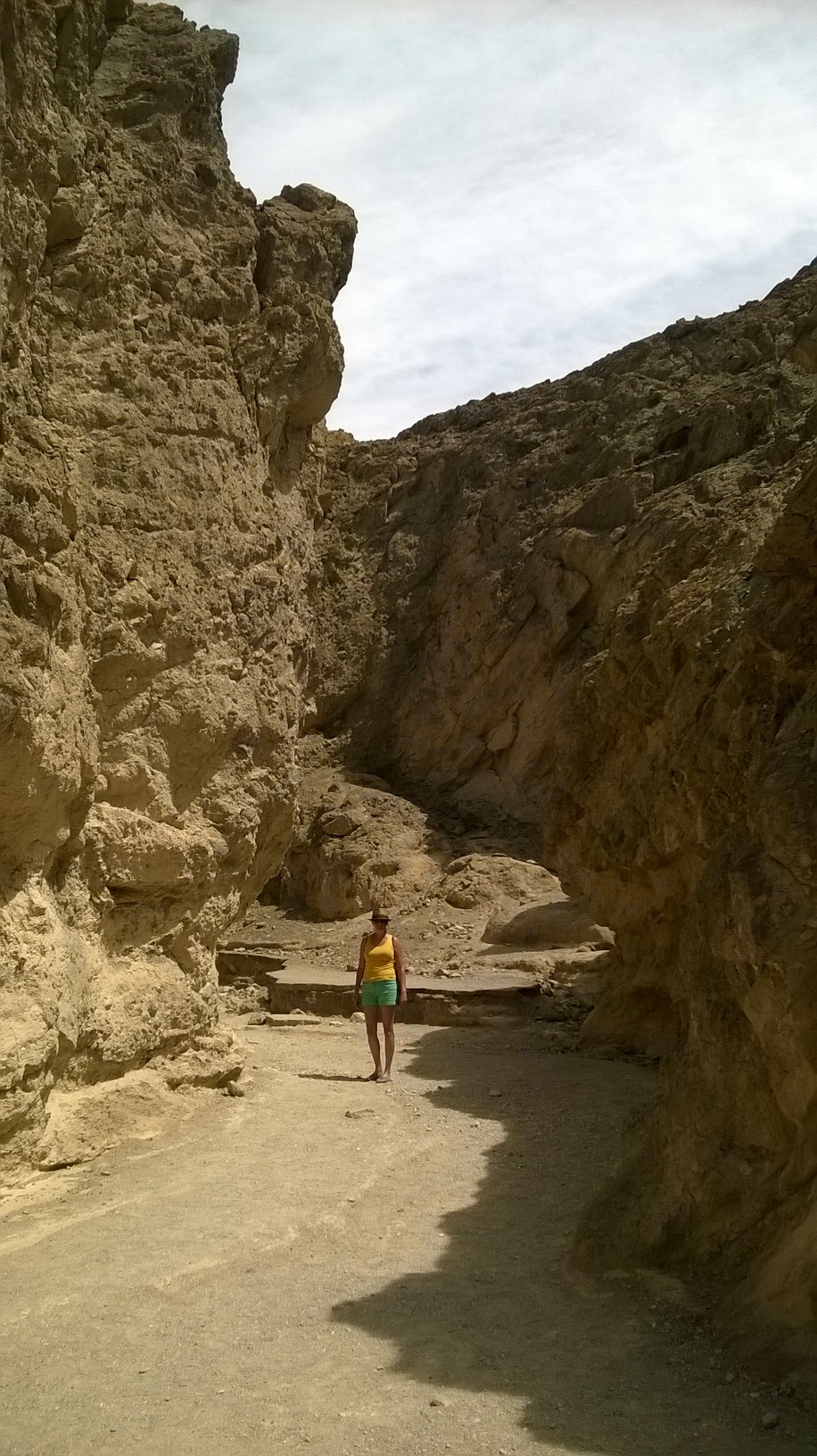
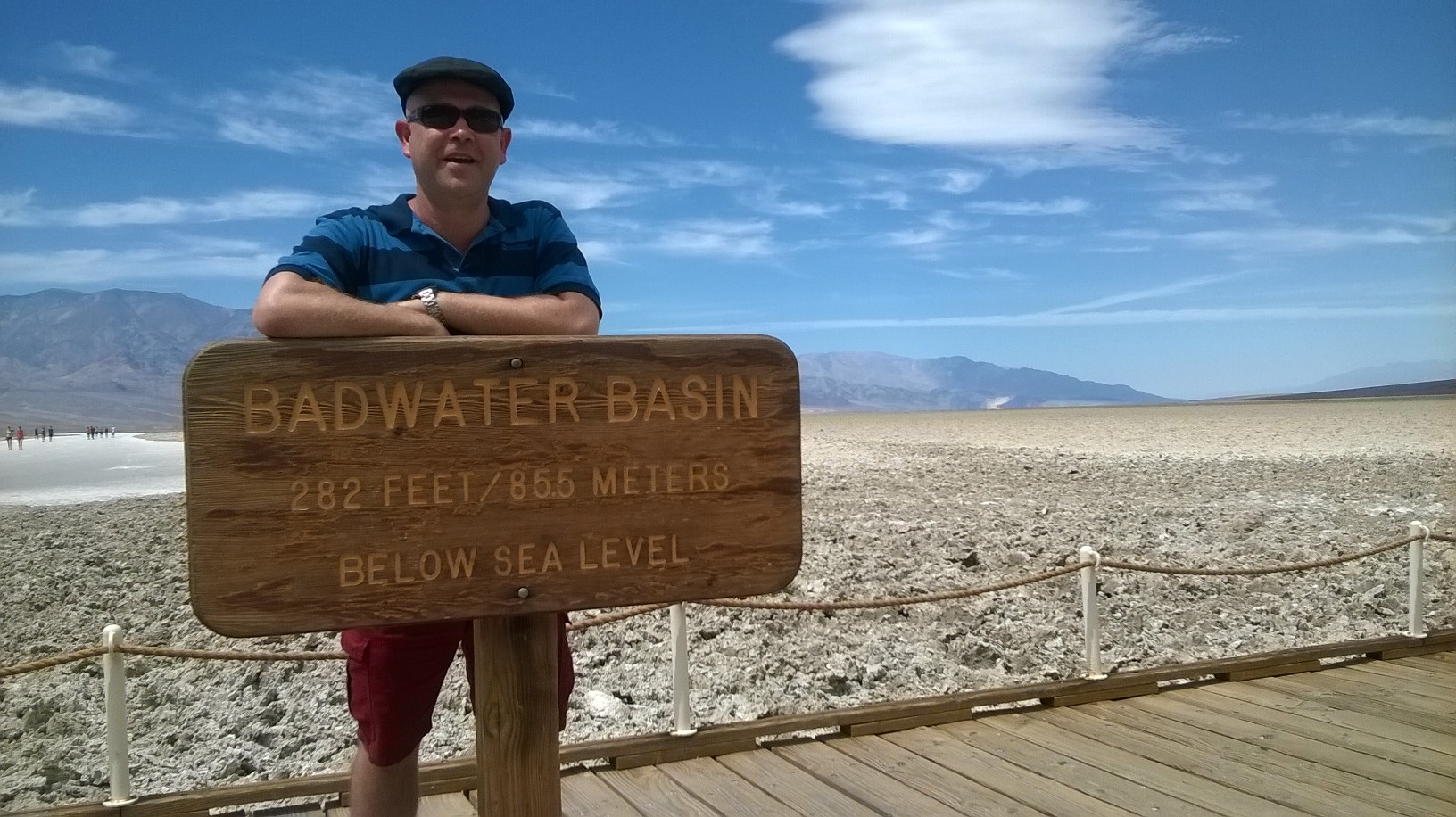
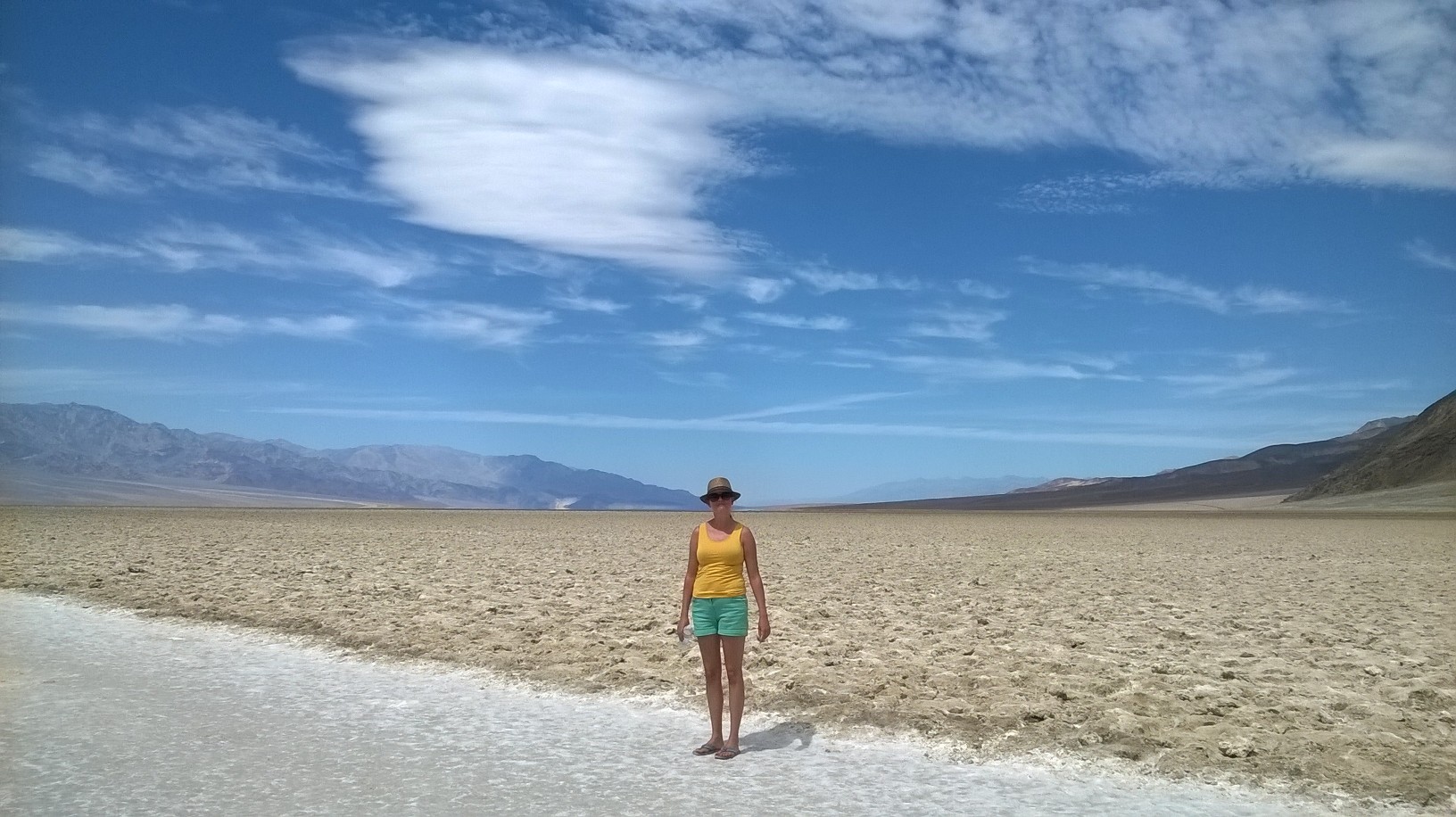
Another surprise is that Furnace Creek itself was established as a leisure resort as long ago as 1940, as lots of the memorabilia, photos and paraphernalia dotted about the complex attests. Back then you could order New York Steak at the restaurant for a dollar, watch movies for an evening’s entertainment, swim in the hot spring pool, and even ride the narrow gauge railway to the most local Borax mine as part of your itinerary. Some of those delights are no longer available (and the New York Steak is a great deal more spenny, though presumably it’s a fresh batch of meat). However, what is available is a wealth of stunning photo opportunities including the lowest point in America at Badwater, the amazing colours of the cliffs around the Artist’s Palette, and the striking scenery of the Golden Canyon. All within an hour’s drive. So we lathered ourselves with suncream, got in the car, and ventured out to explore the delights. A word of advice: this might be the point to make sure your camera gear is top notch; ours isn’t, so what you see here is snapped on smart phones and lacking photographic aplomb. Even so, we’re sure you’ll agree that the sights of Death Valley are pretty amazing!
First, the Golden Canyon:
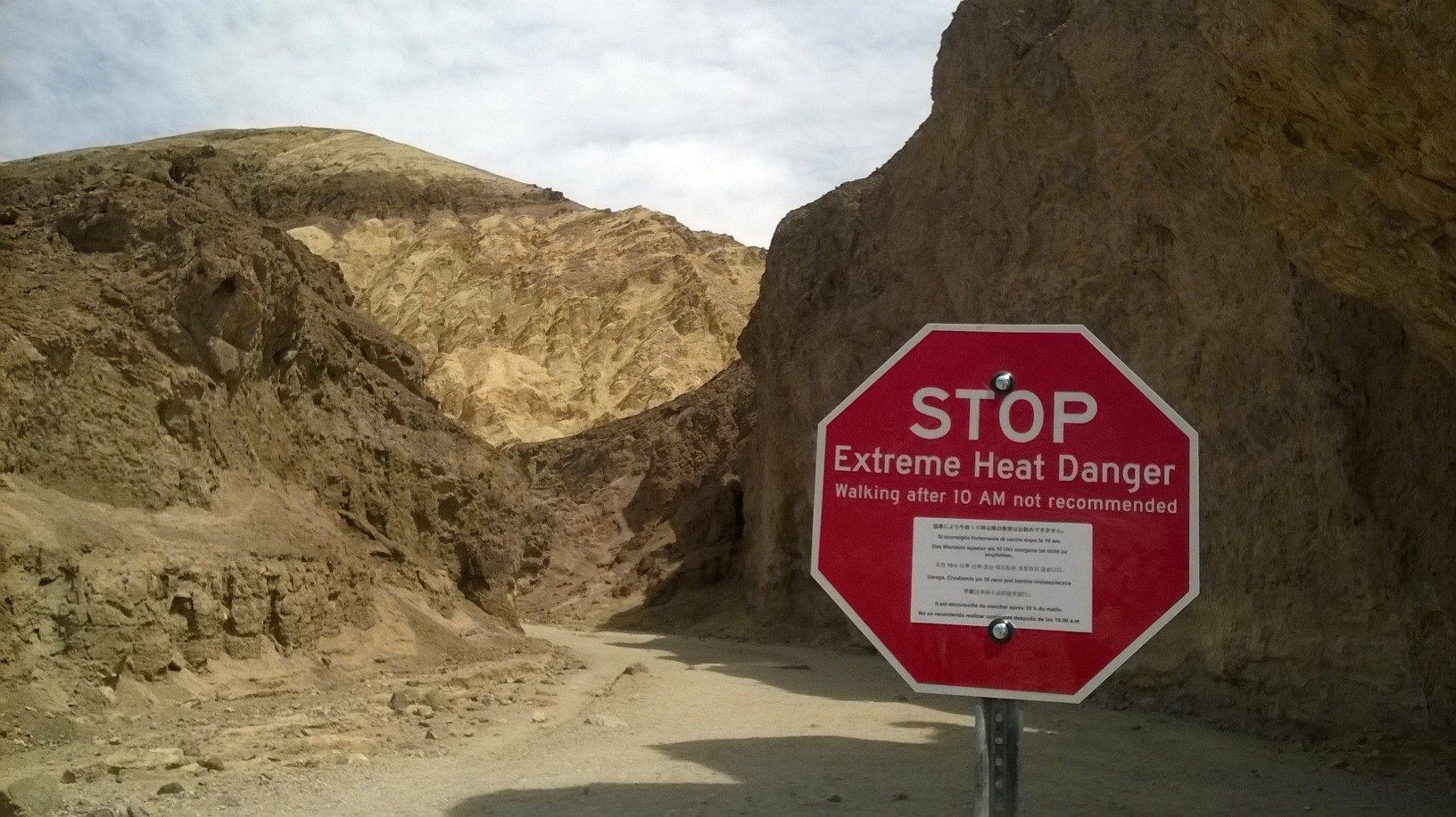
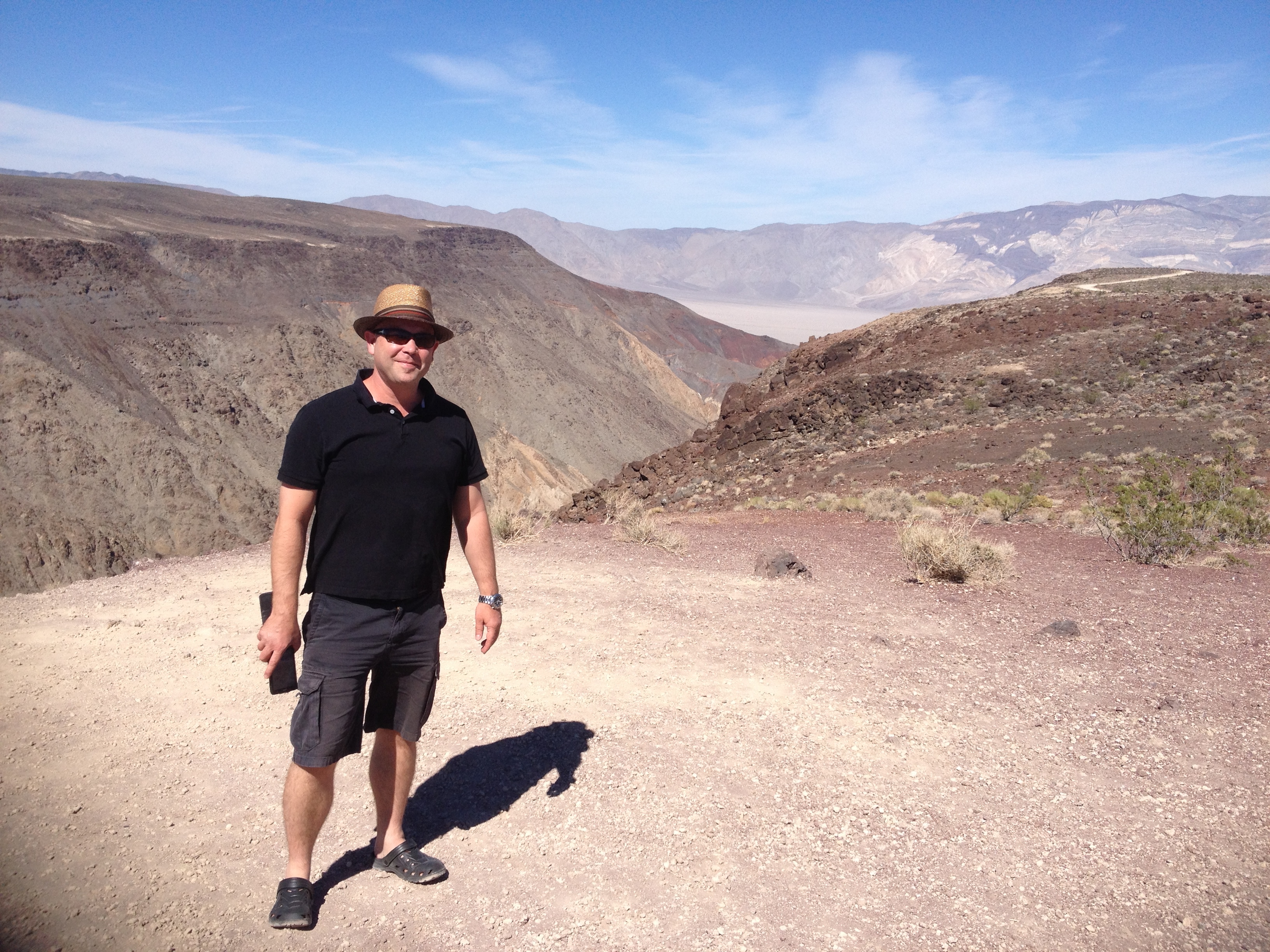
This sign warns against strolling through the canyon after 10am. Whoops, it was 12:06 when we set off to look about Golden Canyon. Don’t fear though, we had plenty of water and wore natty hats.
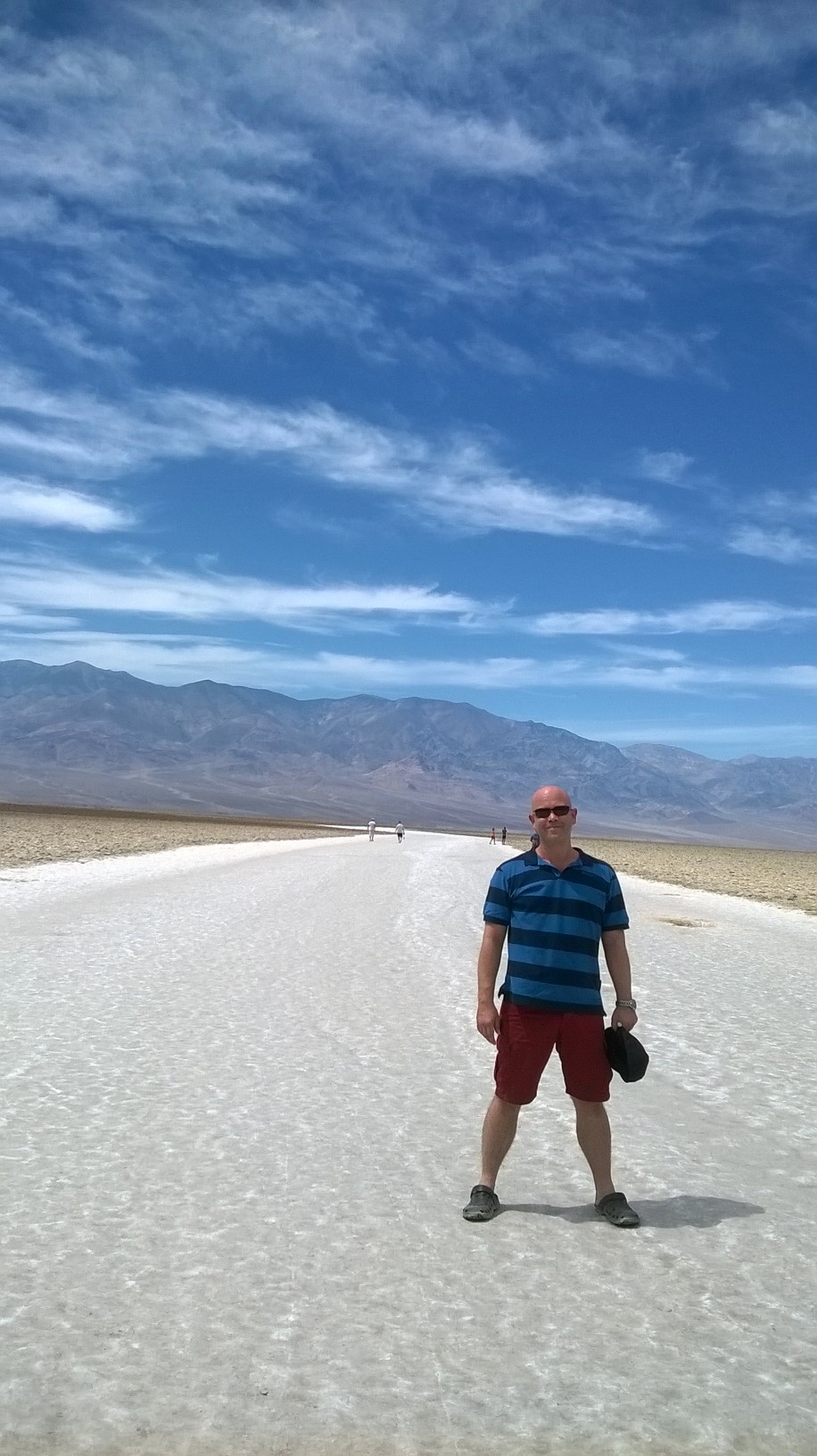
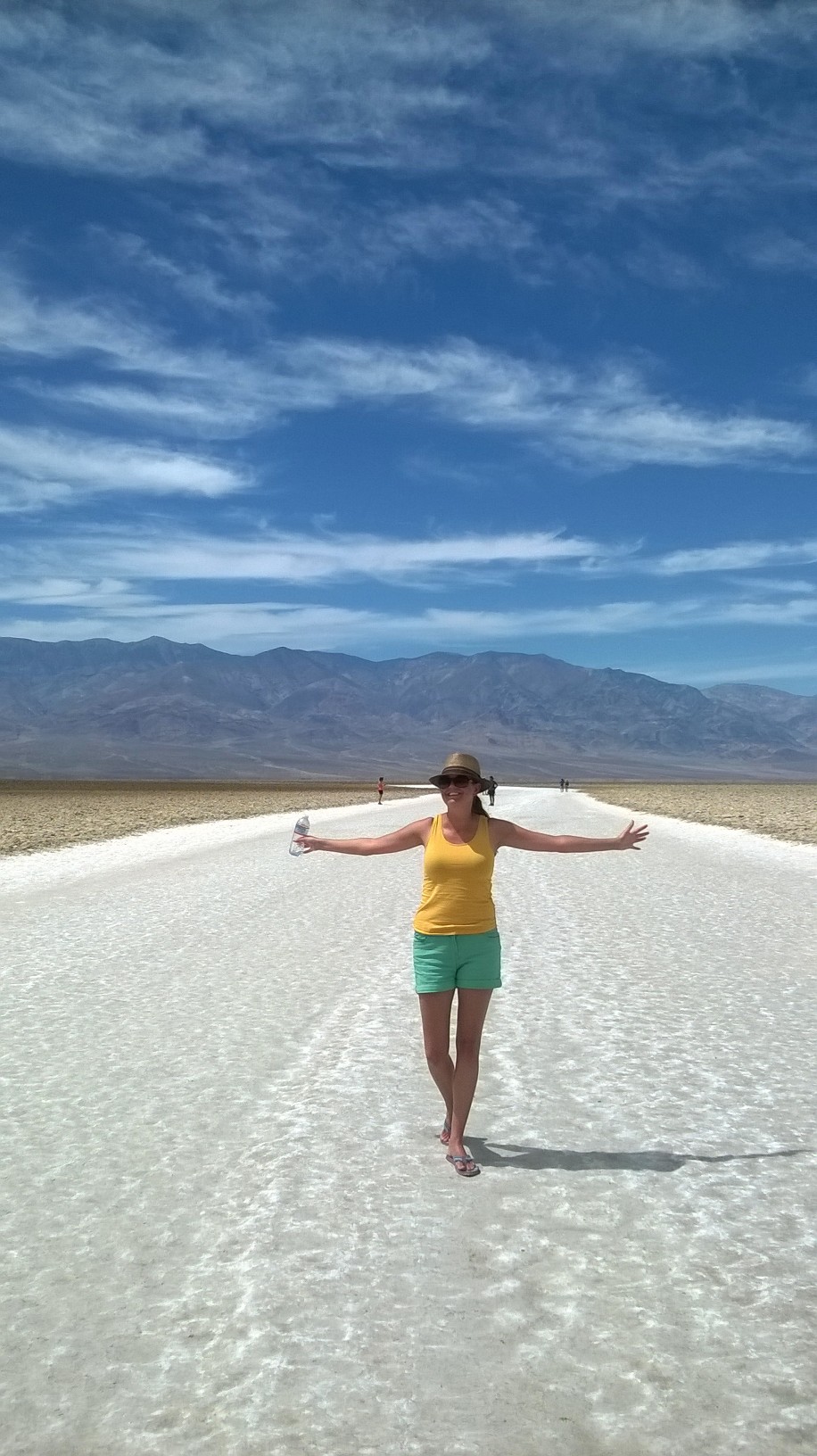
Then Badwater: the lowest point in America
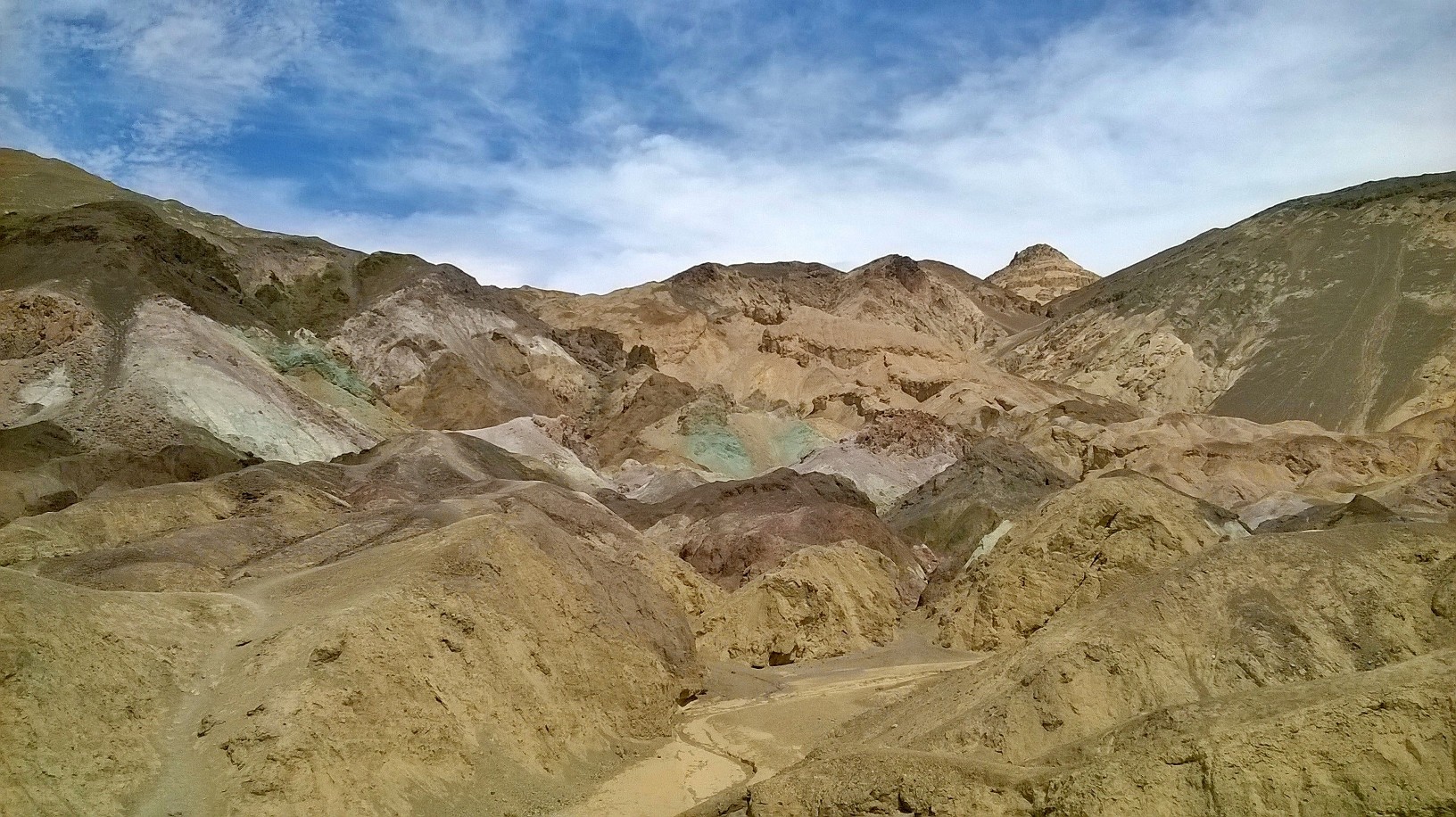
And finally, the Artists’ Palette, with its extraordinary juxtapositions of colour caused by different minerals in the rock formations:
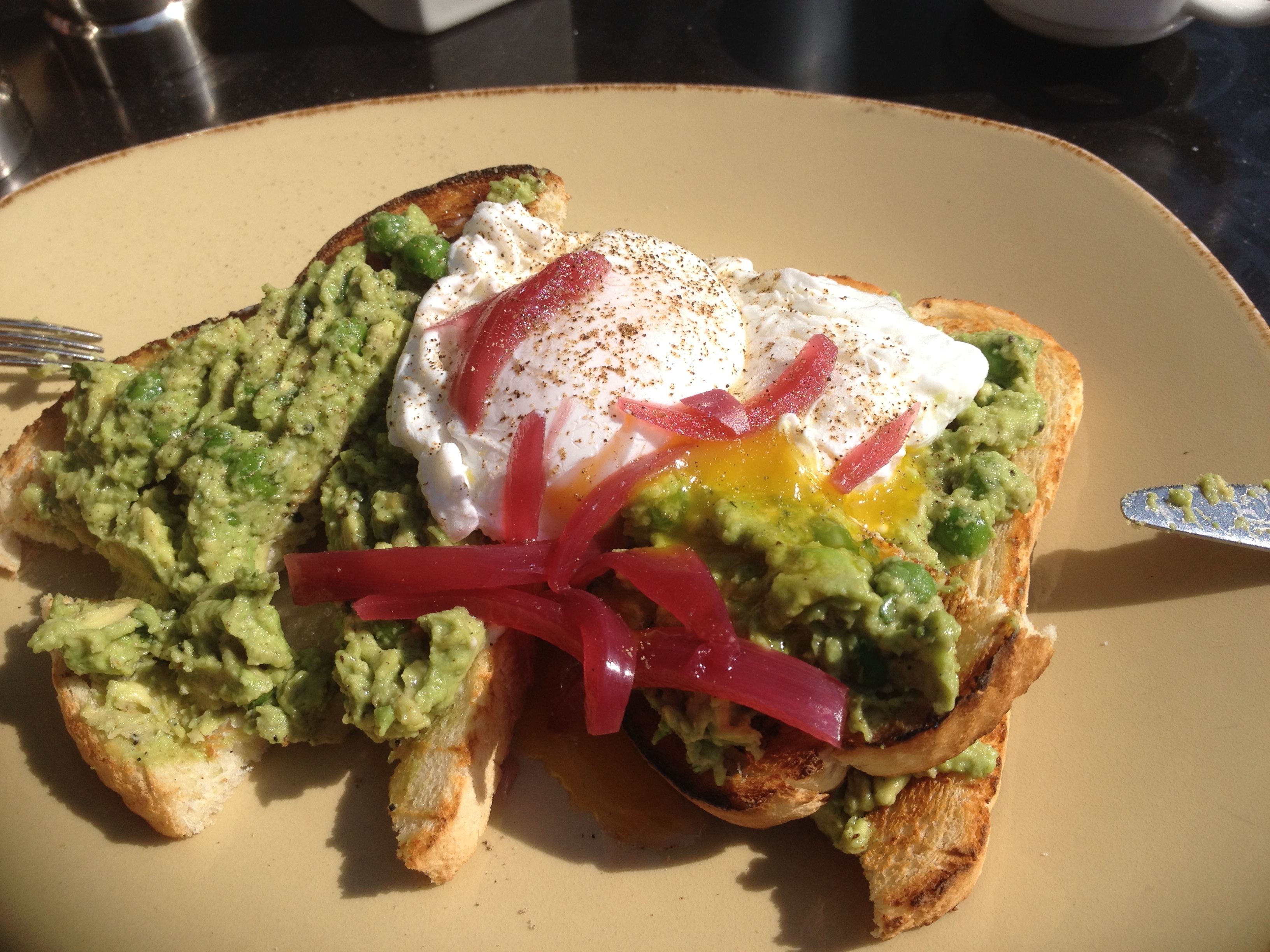
Before we set off we had a decent breakfast at Bar 53 in Mammoth Village, and although we haven’t made much of the food on our blog, we had to make an exception here, for we know our good friend Maricar would enjoy seeing the picture…
avocado, peas and mint on toast with poached eggs. A little bit eaten, sorry, the pic was an after-thought.
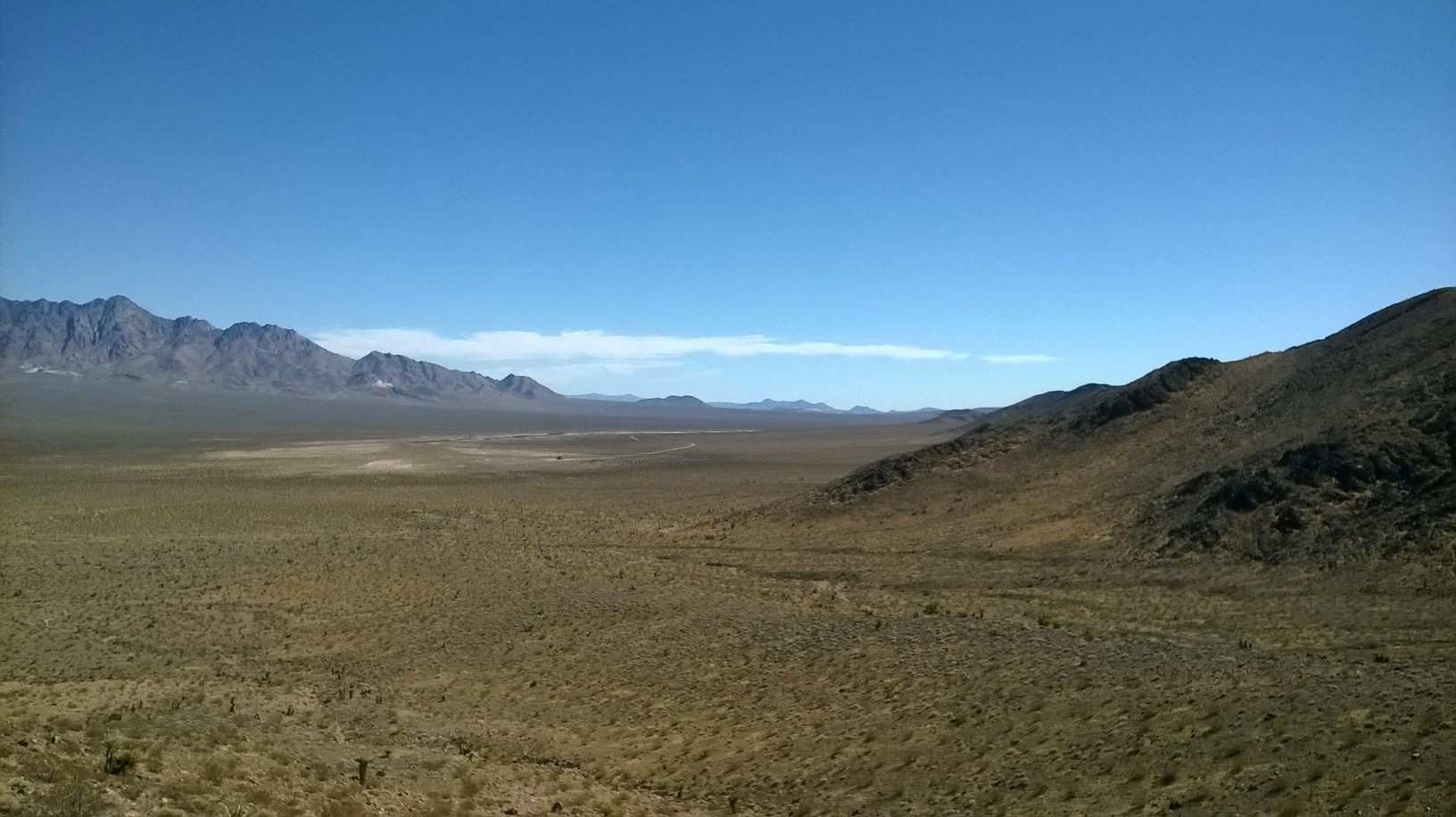
Today was a travel day, and a story of highs and lows. We left the ski resort of Mammoth Lakes, at an elevation of around 8000 feet, and made our way back to sea level, about 200 miles to the South East. Not that there is any sea here, though far from it – this is the arid landscape of Death Valley. Our destination was Furnace Creek, 190 feet below sea level.
Driving the long stretch from Lone Pine to Furnace Creek – interrupted only by the ranger station at Stovepipe Wells, the road goes on and on, through desert wilderness and occasionally down steep, winding mountain passes.
The road is long, with never a winding turn…
Down in Death Valley itself we actually traversed two valleys, and while we were descending, the temperature was on the rise.
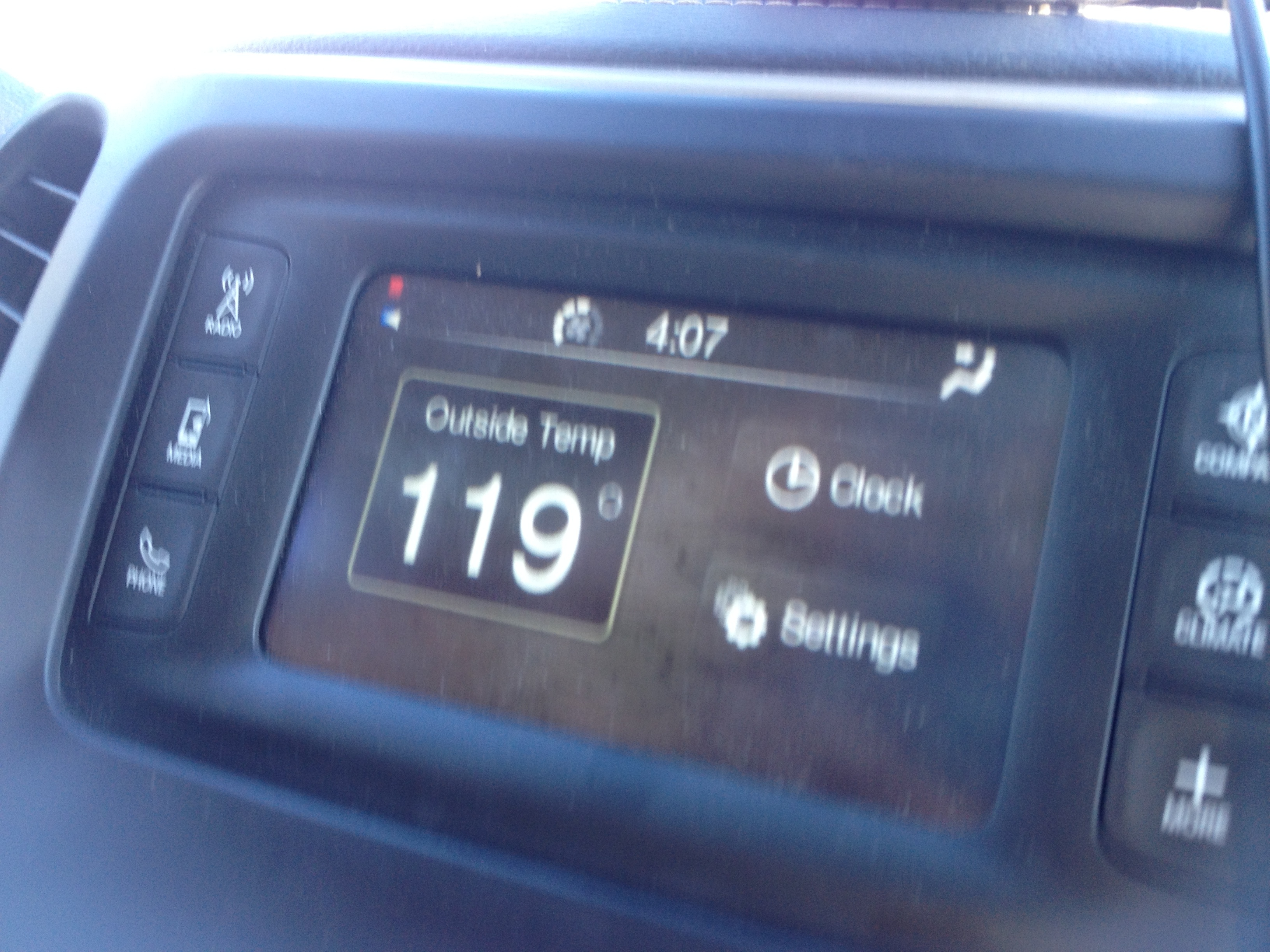
When we left Mammoth Lakes this morning, the temperature had been a cool 66 degrees fahrenheit (about 19 degrees centigrade, very familiar from home). By the time we reached our hotel, the thermometer had soared to a blistering 119 degrees (nearly 49 degrees centigrade).
just for evidence…
In fact, Furnace Creek holds the world record for the highest temperature ever recorded (check that one out in the record book, Max!) – but you’d have had to be here on 10th July 1913 to experience the 134 degree heat (56.7 degrees centigrade).
The Ranch at Furnace Creek is like a little oasis, and very well set up to cater for batty Europeans who visit Death Valley in August. Surprisingly, the world famous golf course (which we view from our window) is a lush green, though there are very few people on the fairways just now.
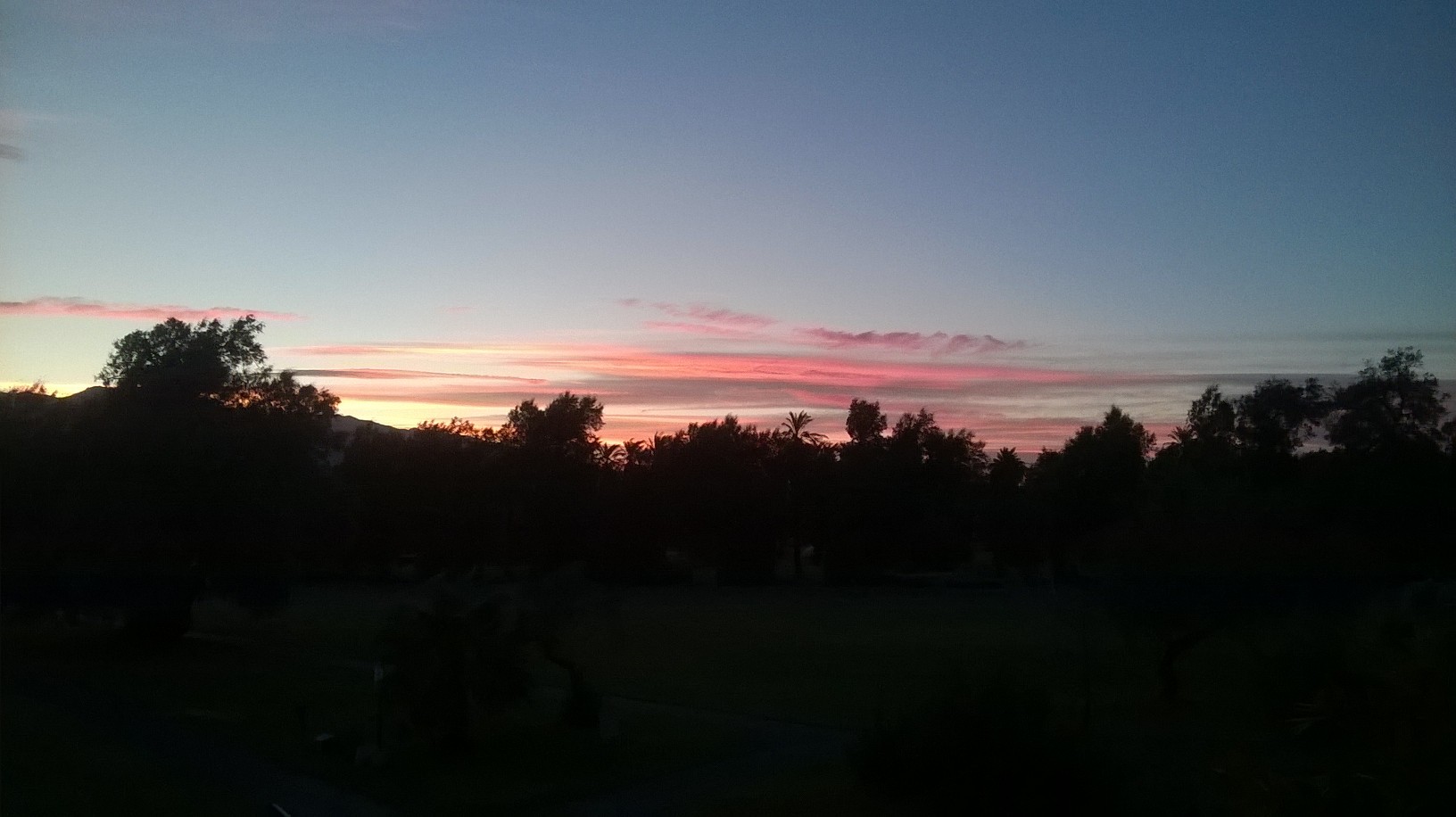
Tomorrow we venture into the hot valley and until then, here’s a lovely sunset over Furnace.
One of the things that has struck us in our journeying through America is how many dangers lurk around corners. We had already been warned about the Mountain Lions and Rattlers; but Yosemite is a whole nuther ball game. Here there are also several breeds of branded Yosemite mosquito, extensive evidence of forest fires that have been raging throughout California, and rock falls or precipitous drops on each side of the road. Then there’s the plague, carried in these parts by your friendly neighbourhood chipmunk (and caught by at least two humans this summer). And finally, the bears. We had to remove absolutely everything from the car in case it was raided and torn apart by hungry animals looking for a Hershey Bar.
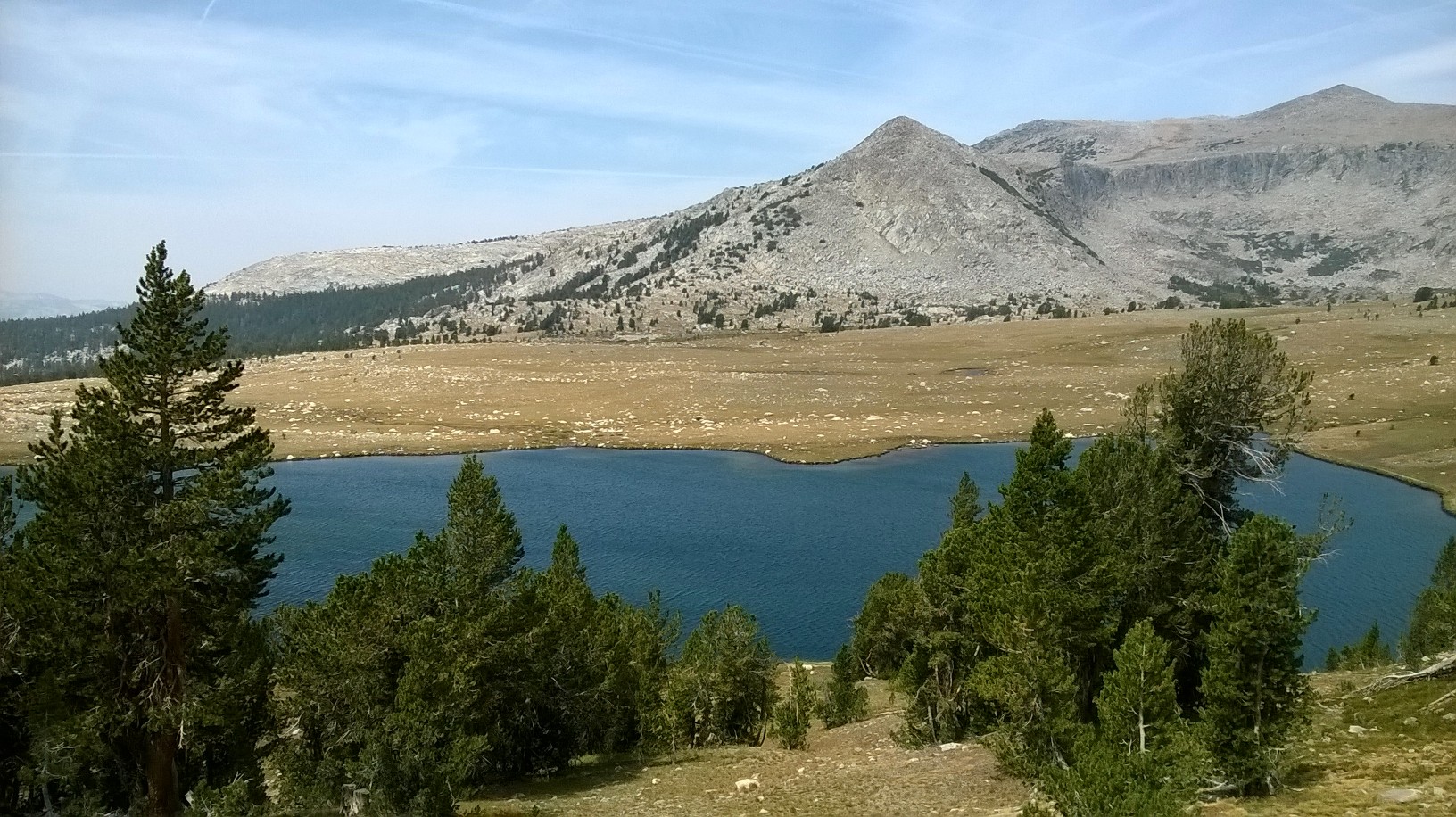
Armed and ready, though, we decided to trek out into the Yosemite wilderness. We chose to do the Gaylor Lakes Trail, which was fairly short, but which took us up a steep, forested embankment to about 10,500 feet, before opening out into a flat grassland with several beautiful mountain lakes.
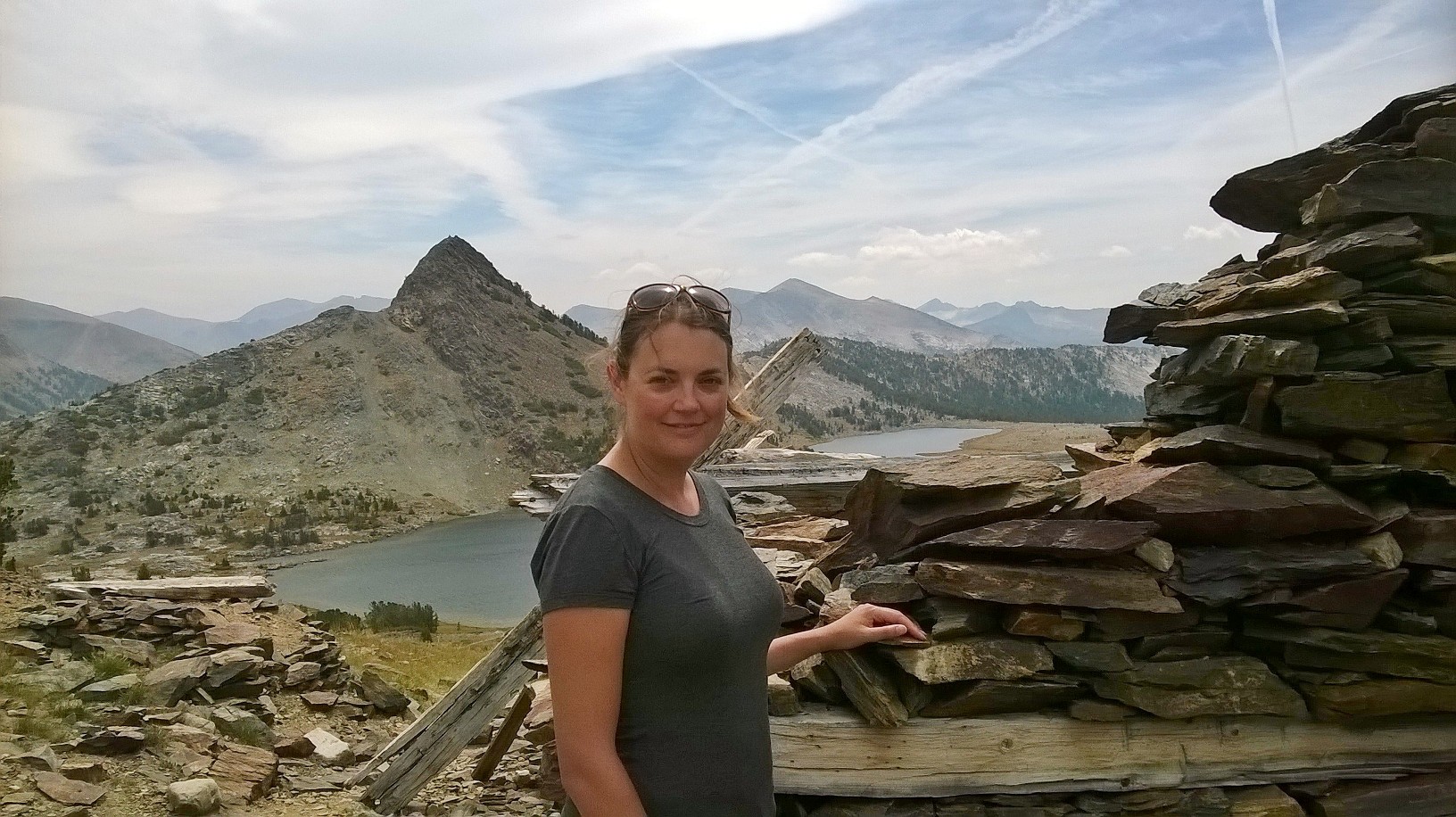
Dominic said Karen could star in this pic…
The views from the top of the trail were absolutely stunning, particularly those looking back on Yosemite behind us. Beyond the far end of the second lake was a narrow path leading up to the Great Sierra Mine, a remote silver mine dating back to about 1880.
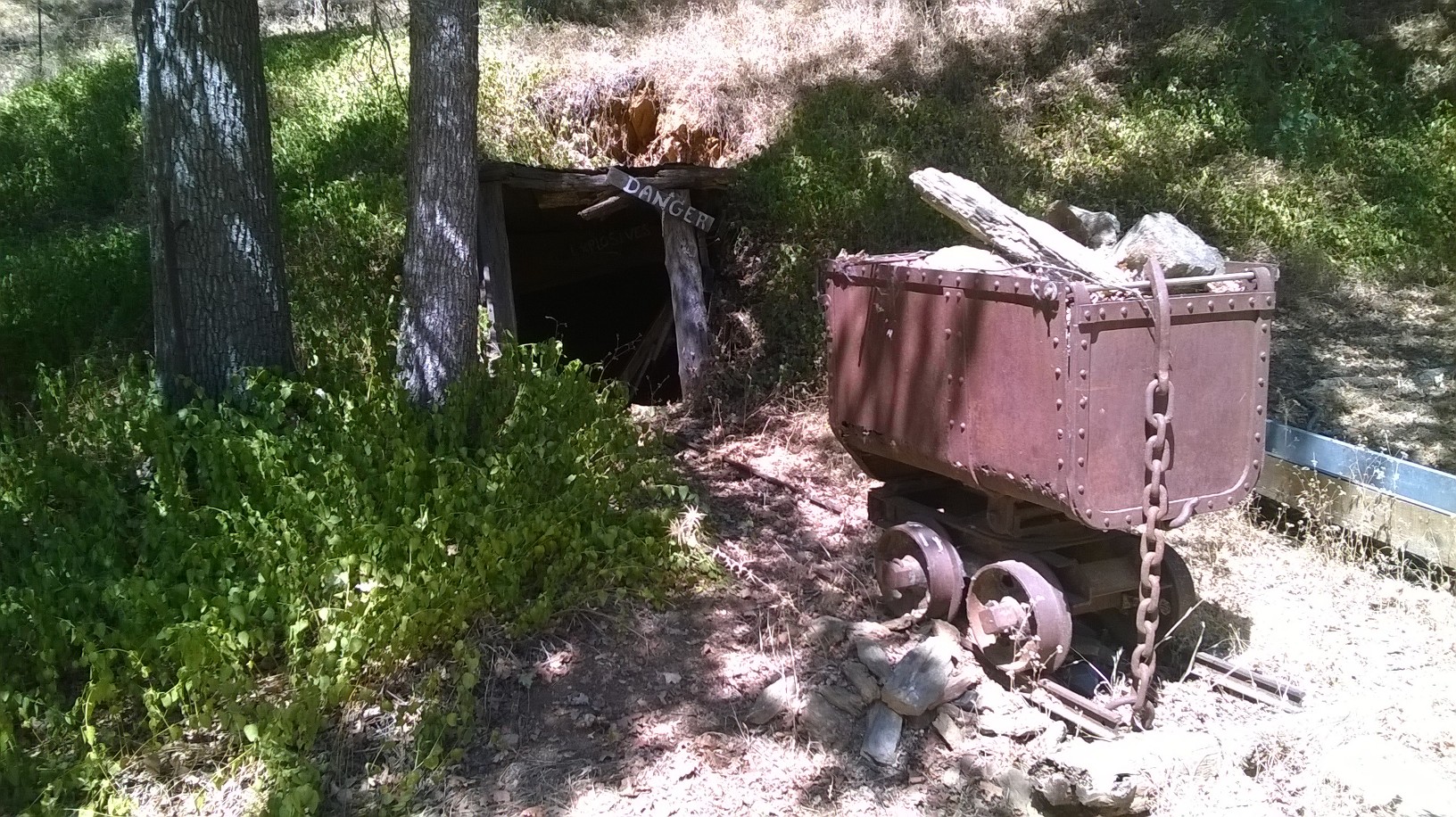
Now, with silver selling for about $14 an ounce (compared to gold’s $1133 per ounce), you can see why it has gone into something of a decline; and the two hour hike to the top of the mine shaft doesn’t exactly make the Great Sierra seam cost-effective any more. Nevertheless, it was this sort of a seam that William Randolph Hearst’s father mined in the 1840s, lugging 38 tons of the stuff back over the mountains to San Francisco. Well, we saw what came of that – it was obviously worth a pretty penny back in the day.
Our hike was truly exhilarating and we had a real sense of satisfaction in reaching the silver mine. And, although you do need to take the wilderness seriously and heed the warnings, the benefits of this wonderful place far exceed the potential hazards (we were quite disappointed not to see any bears – although probably for the best).
But today’s adventures were really only beginning.
We’d come to this side of the park for a very particular reason – to see the extraordinary tufa sculptures of Mono Lake. After a spot of lunch we drove into the lakeside town of Lee Vining, and were at first a bit disheartened because smoke from the Sequoia Park forest fire had completely overcast the sky, making our chance of seeing these sculptures more or less impossible. However, we stopped in at the visitors centre, run by Mono Lake Committee, and watched their promotional film about the lake and their efforts to save it. This really altered our perspective on the lake, and following the advice of a really helpful volunteer from the committee, we opted to go on the guided tour later that evening, by which time, we hoped, the smoke would have cleared.
So with a bit of time to kill we climbed a volcano.
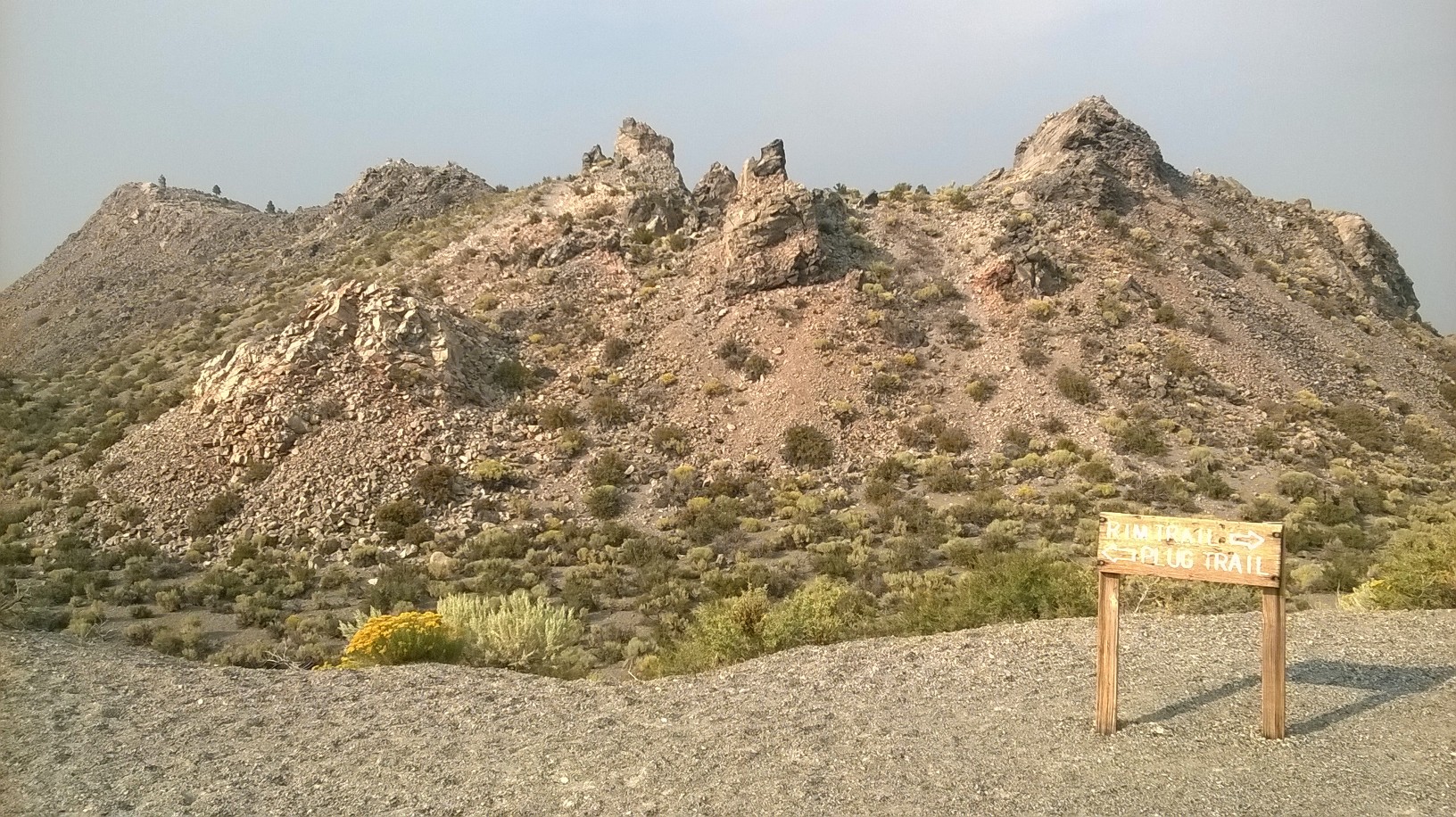
This was the Panum Crater, a plug volcano that was formed only about 650 years ago. It’s just a short off-road drive from the highway, and easy to hike up through the pumice field to take a look at the plug itself.
By the time we came down, the sky was beginning to clear a bit, so we ventured further on to the South Tufa beach area, where we met up with our wonderful and very knowledgeable guide Andrew.
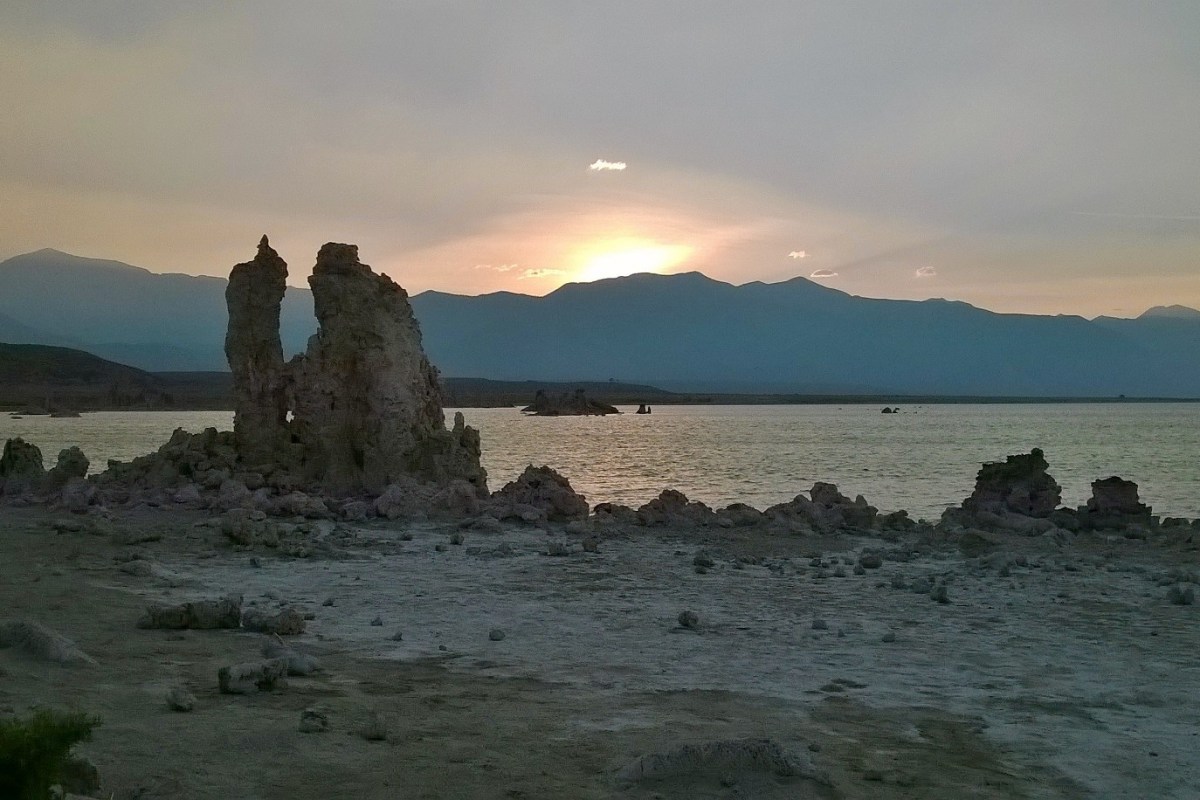
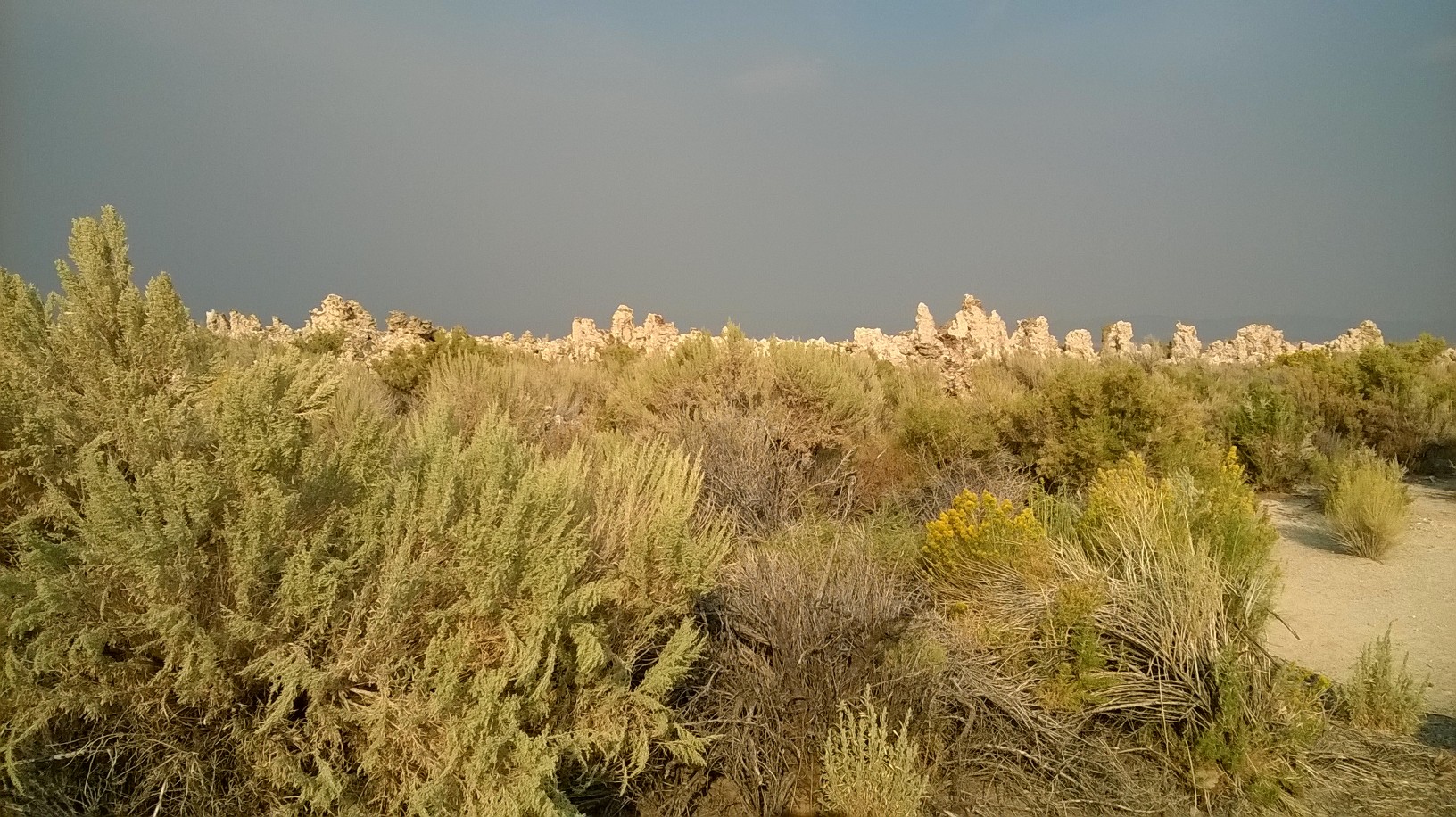
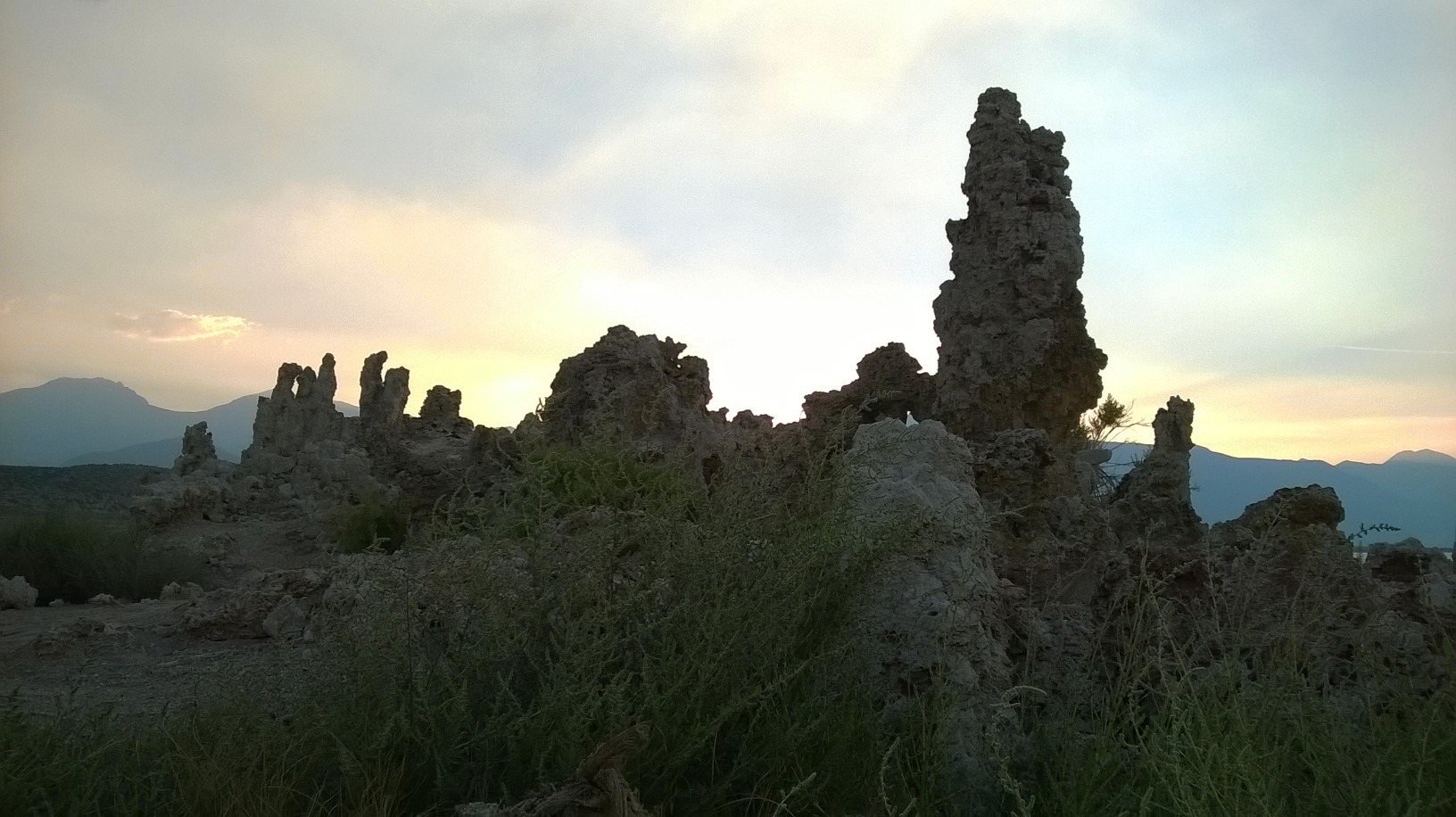
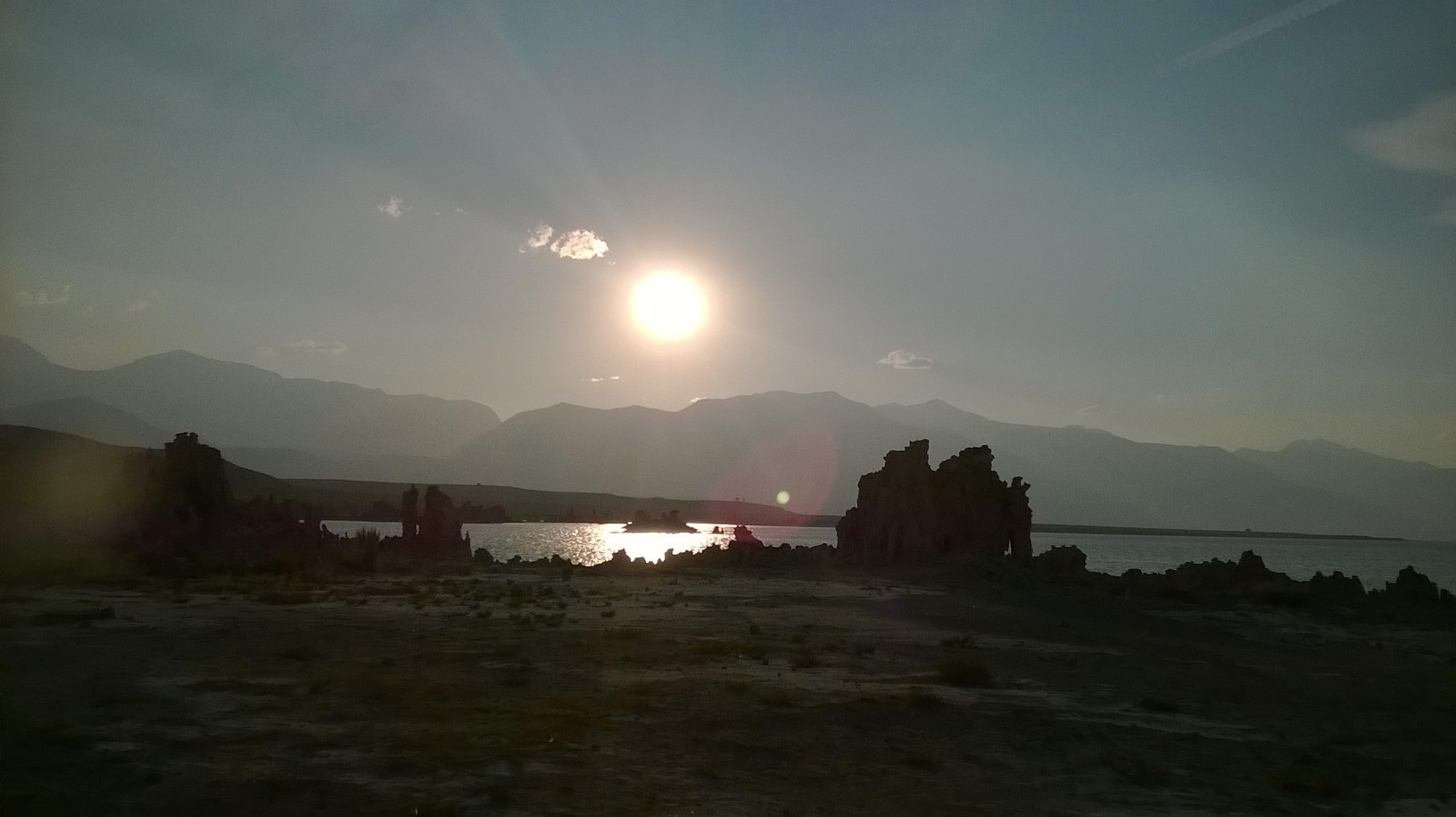
Mono Lake is extraordinary, as you can see from these pictures. And the tufa, which are limestone sculptures formed when fresh water streams bubble into the alkali waters of the lake, are ghostly, ethereal and other-wordly. They give the place the look of a lunar landscape, or a prehistoric terrain. Strangely, though, we were told they are probably only about 200 years old.
However, although most visitors come to see the lake in order to gaze at these extraordinary tufas, the story of the lake itself is even more extraordinary, and it was this that really turned our interest in Mono Lake on its head. It transpires that these tufas were all formed underwater, and that until 1941, the Lake would have been several vertical feet higher, and covering significantly more land. But in 1941, the city of Los Angeles (over 300 miles away) decided to pipe water from the surrounding streams by aqueduct to supply the growing city, and as a result the lake shrank in size, devastating its natural ecology and threatening its habitat. It was only thanks to the decades-long battle of the Mono Lake Committee that a landmark victory was achieved against the big boys in LA. In 1994, a high court ruled that the diverted watercourses should be rerouted to feed the lake again until it had reached a compromise level. The good news is that the ecosystem of the lake has been saved, and it has now risen several vertical feet; the bad news is that current drought conditions have presented a natural threat to the ongoing security of the lake. It looks like it will be several years before the lake reaches the height that was agreed by that landmark ruling. But we have been really inspired by the work of the committee in rescuing this extraordinary place and in saving the lake for the birds and marine life that inhabit it.
This whole area, if you are travelling in California, is an absolute MUST-SEE. The marketing material states that Yosemite is the ‘best place on earth’…they could be right!
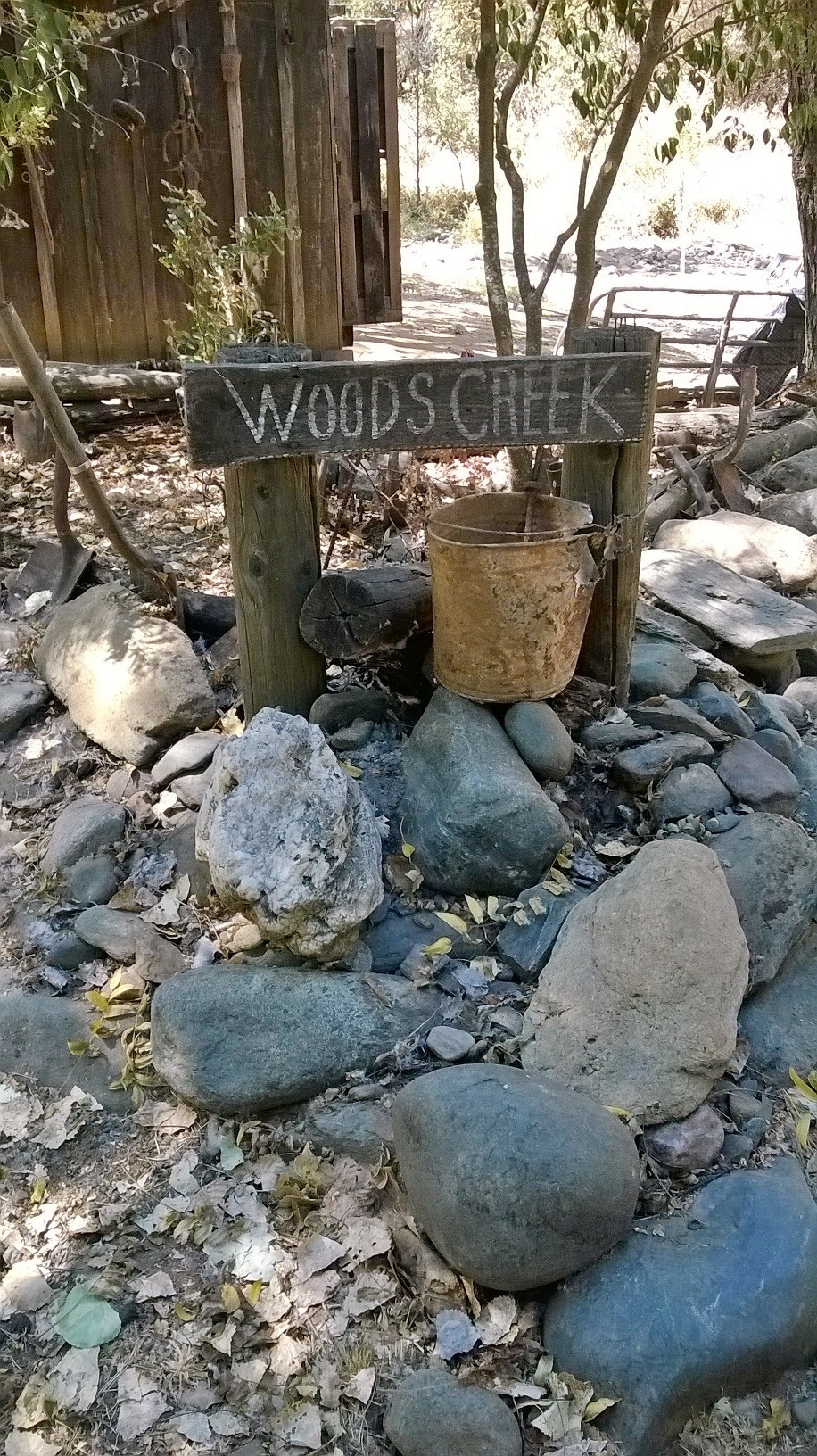
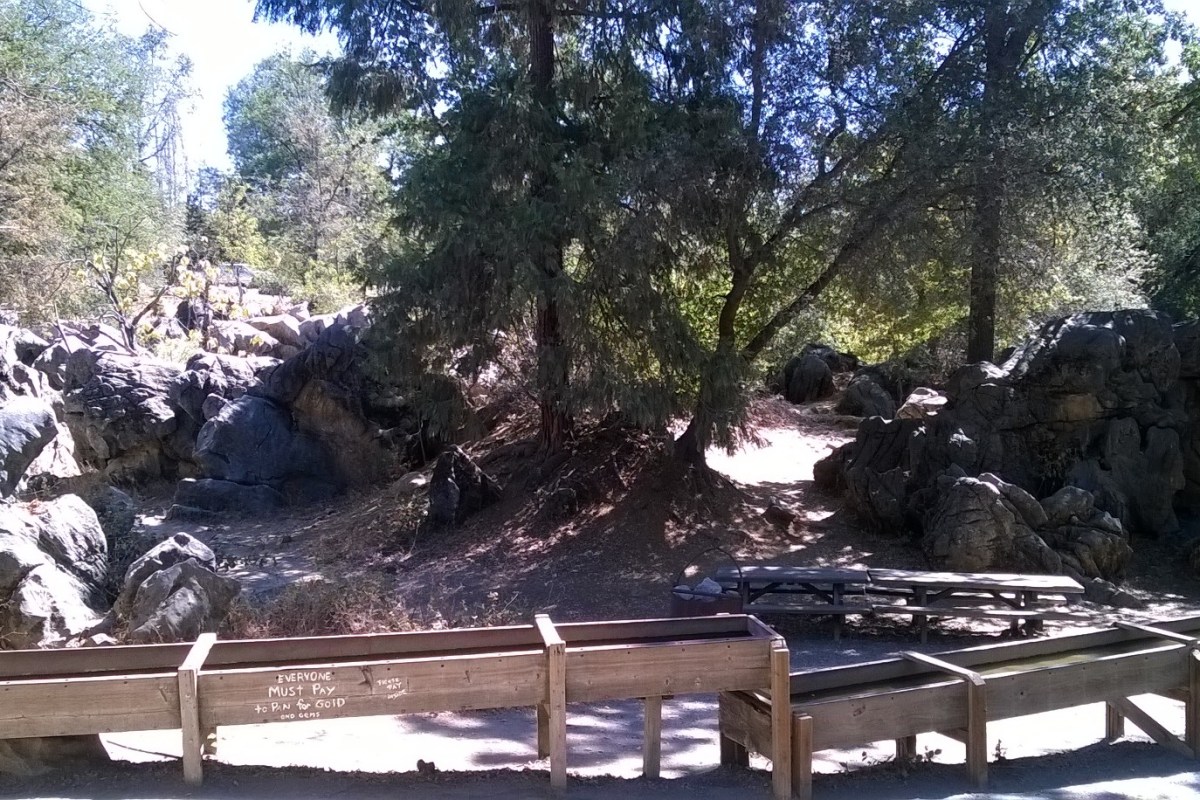
Today has been one of the highlights of our trip so far. We had a fantastic 2 hour gold mining lesson down at a dry creek with Frying Pan Frank, Brent and T.J (and a couple of their dogs).
We were a bit sceptical at first, we honestly thought that they would chuck a few flakes of gold into the earth so we would come away pleased. But, this was evidently not the case. We worked hard to extract gold, and we learnt so much from these professionals. Frank (known as Frying Pan Frank, because he’s a good chef) has his own claim, and he showed us how to prospect and go through the various stages of cleaning up the soil, sifting through it and then finding the gold. He has his own step by step way of going through the process, and his obvious desire to share his skills makes it easy to learn.
Karen using the dry washer.
We also learnt how to use the dry washer – and this helps to get things done a bit quicker. Brent’s father set up the spot along the creek so that ‘everyone could have their chance at the experience of prospecting and finding gold’, and school kids have enjoyed learning these skills here.
We felt that not only did we have a super, enjoyable morning, but that there was a sense of ‘passing down the skills’ which we really valued.
We would totally recommend the experience, so if you ever come along to Jamestown be sure to look these guys up. If you think $180 is expensive for 2 people, we think the quality of the teaching and the fun that you have really is worth it (in fact, we’d recommend a slightly more expensive three-hour session). Oh, and you never know you might also come away with some gold. Whatever you find is yours to keep. We found a little bit – Frank reckons about $20-30, but I don’t suppose we will be in a hurry to sell it. It’s a great memento of our time here!
So check these guys out here: http://www.goldprospecting.com
and here: https://www.facebook.com/pages/Gold-Prospecting-Adventure-LLC/157108184330085
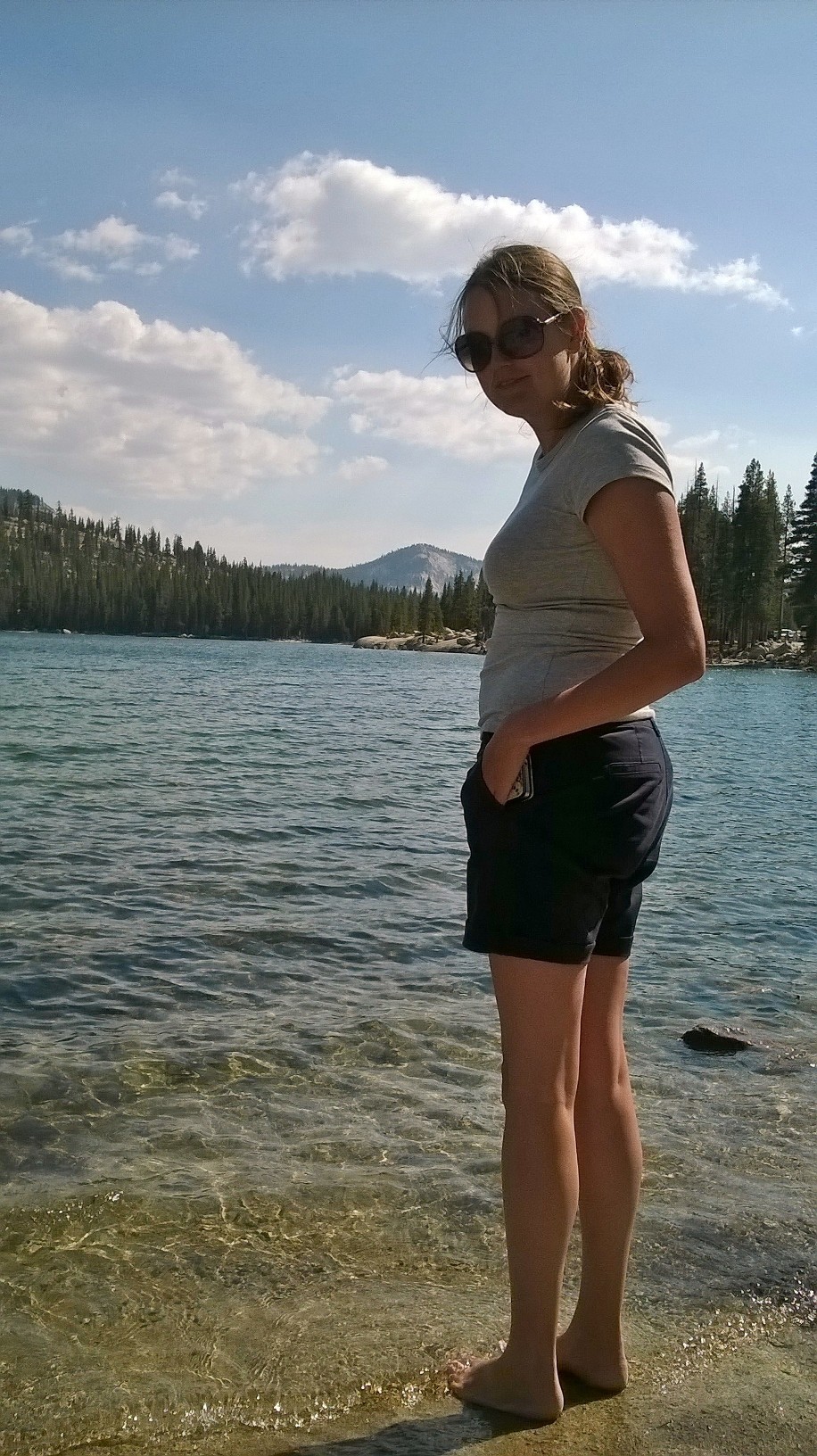
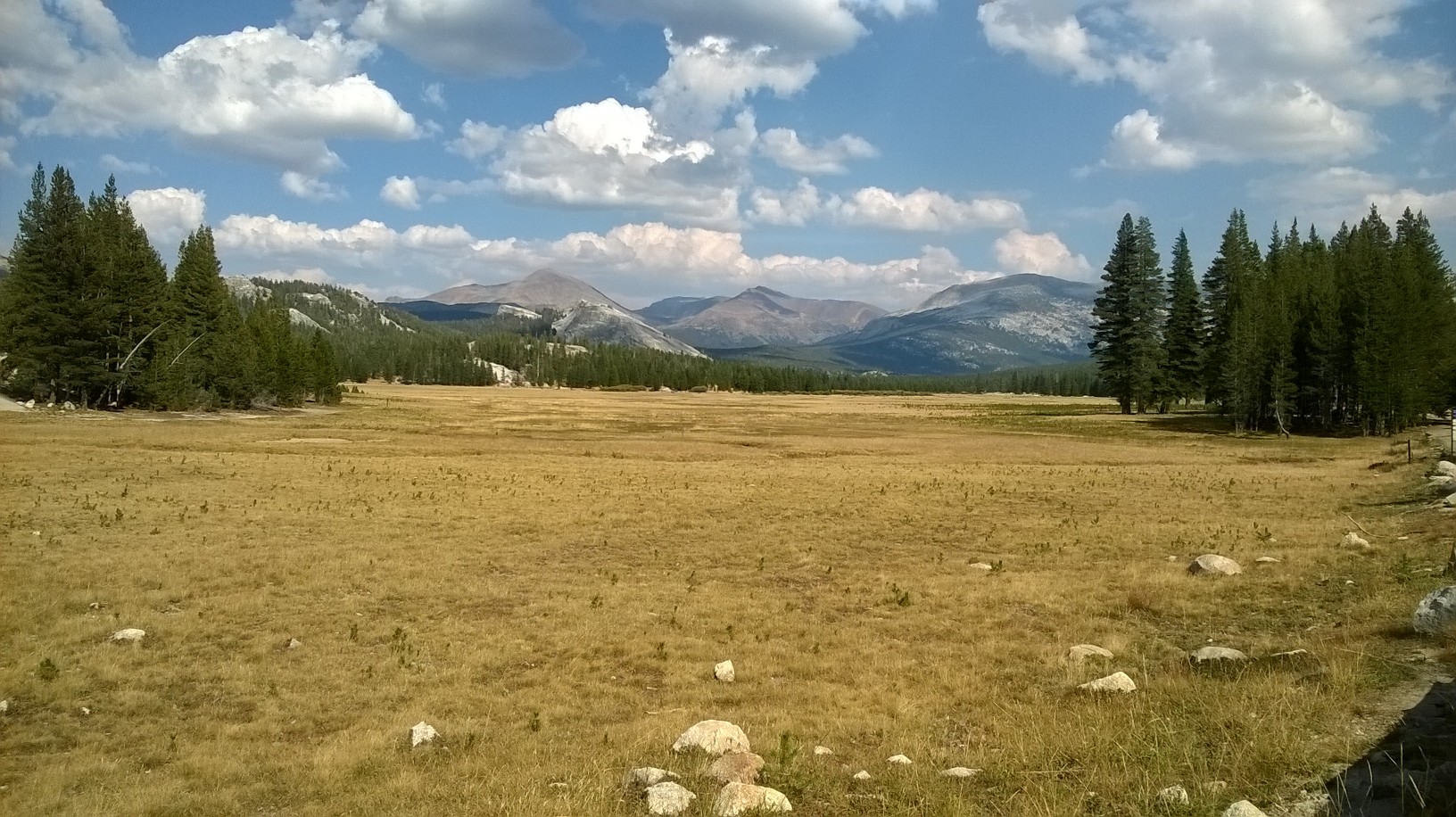
Then it was on to Yosemite…Wow! This park is amazing. The sights are extraordinary and change regularly throughout the park. Most people tend to come in to the park from the West for a day trip to see the stunning waterfalls and perhaps do a spot of hiking. We’ll be doing some of that tomorrow (from the East side, minus the waterfalls – because of the drought), but our purpose today was slightly different: we were driving through the whole park from West to East on Highway 120, a distance of over 50 miles on windy roads getting higher and higher on the Sierra plateau. It’s slow going, but well worth it, and every few miles the scenery completely changes from extensive pine forest around Yosemite Creek to staggering vistas of white rock around Olmsted Point, to verdant stretches of watery flatland like the Tuolomne Meadows. The many lakes in the park are just stunning with their mountainous backdrops: especially Tenaya Lake, which even has a shoreline and a beach. We could have spent days just taking pictures and soaking up the scenery. There are beautiful lakes that you can swim in and hikes all over the place. We can’t wait to come back tomorrow and experience some more, though today’s drive has been a really magical experience, taking in the park as a whole in a snapshot and really opening our eyes to the majesty of its natural beauty.
We have stopped for the night at Mammoth Lakes Inn, just beyond the park. This is a ski resort from about October until July (we know, a long season). We found the hotel service to be a bit rubbish, so we won’t dwell on that, and why would we when there is so much beauty to experience up the road in Yosemite, and we will continue doing that tomorrow.
Undisturbed by Flo (the ghost) through the night, we were in high spirits until Karen jumped in the shower and the knob fell off, so to speak. Turns out we had only been put in the room in which she karked it (Flo, not Karen)! So with shattered porcelain shower knob in hand we meekly took our seats for breakfast, and I think we got away with it… we’re now in room 7 with a teddy bear rather than a ghost for company.
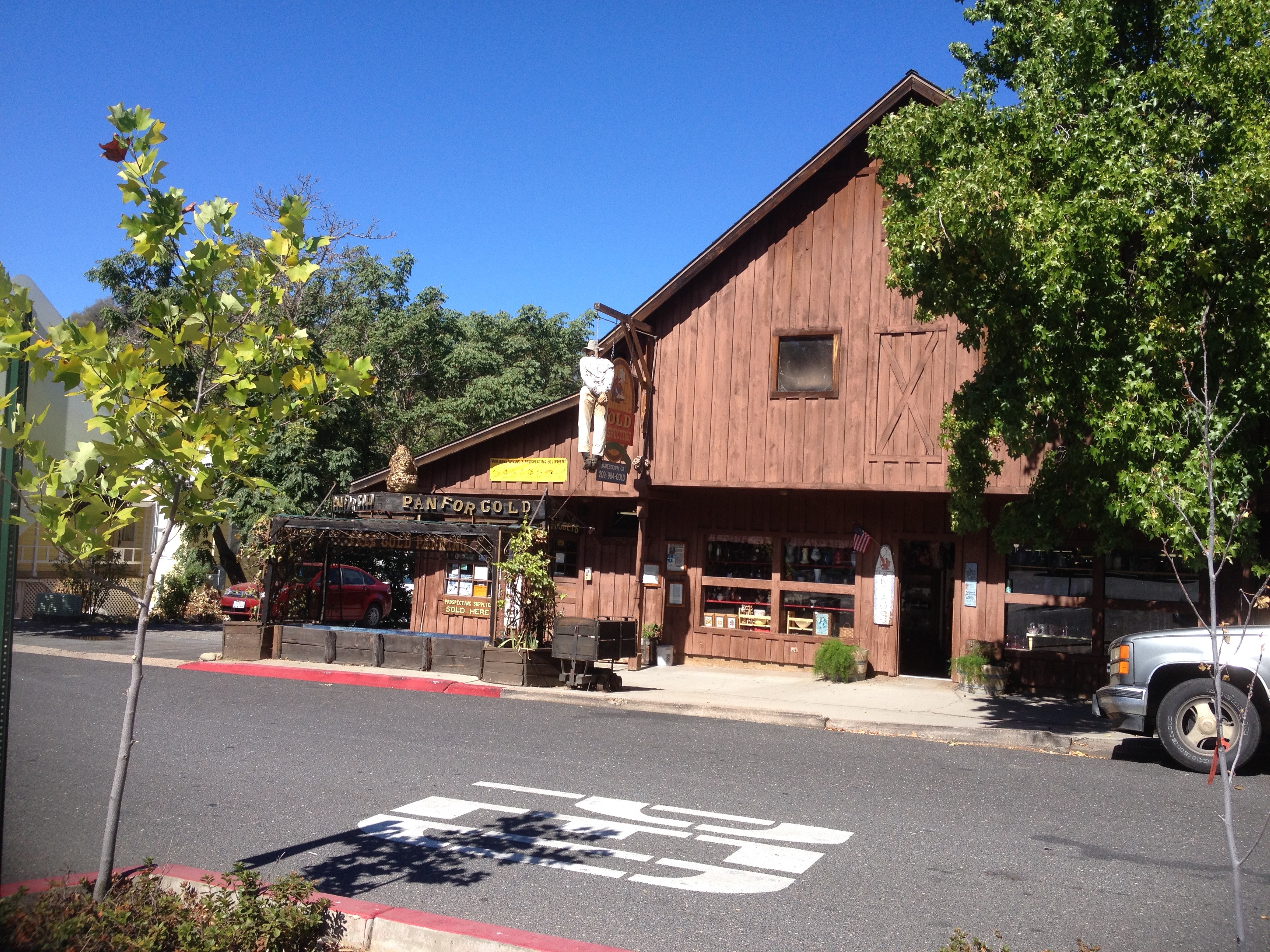
Anyway, we’re getting off the point, because our real destination today was Jamestown Gold Prospecting Adventures, across the way (“you can’t miss the claim jumper hanging in front of our store”). Here we met Bryant, a real retro ’49er with plenty of gold on show in his shop (and plenty of gravel in his voice!)
Hanging claim jumper.
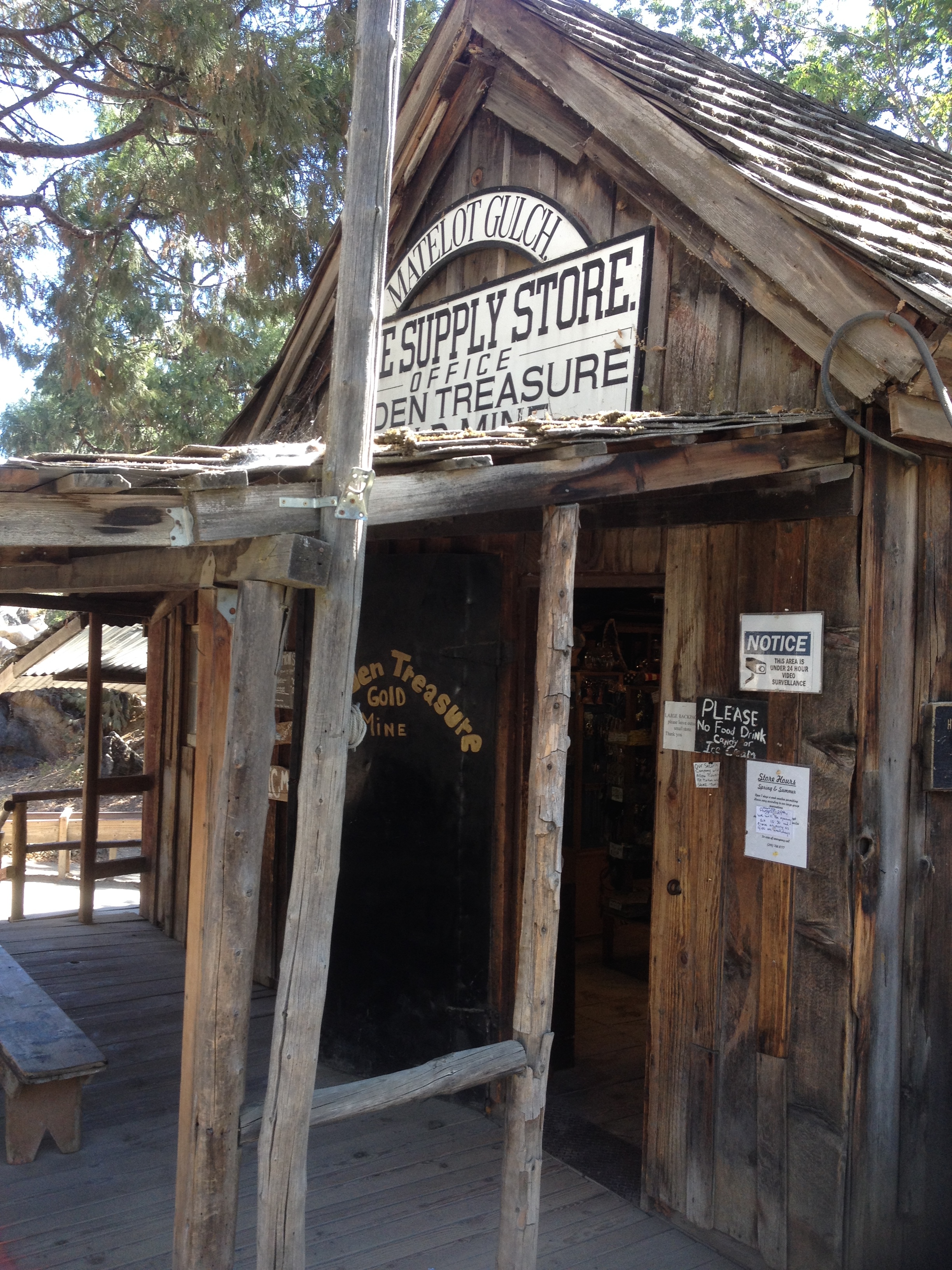
Bit of a hitch… we have to wait until tomorrow for the proper panning, but we had heerd tell of another opportunity down the road, so we hopped on our trusty steed and galloped off on a tour of mining towns… Copperopolis, Angel’s Camp, and first of all, Columbia, a living gold town.
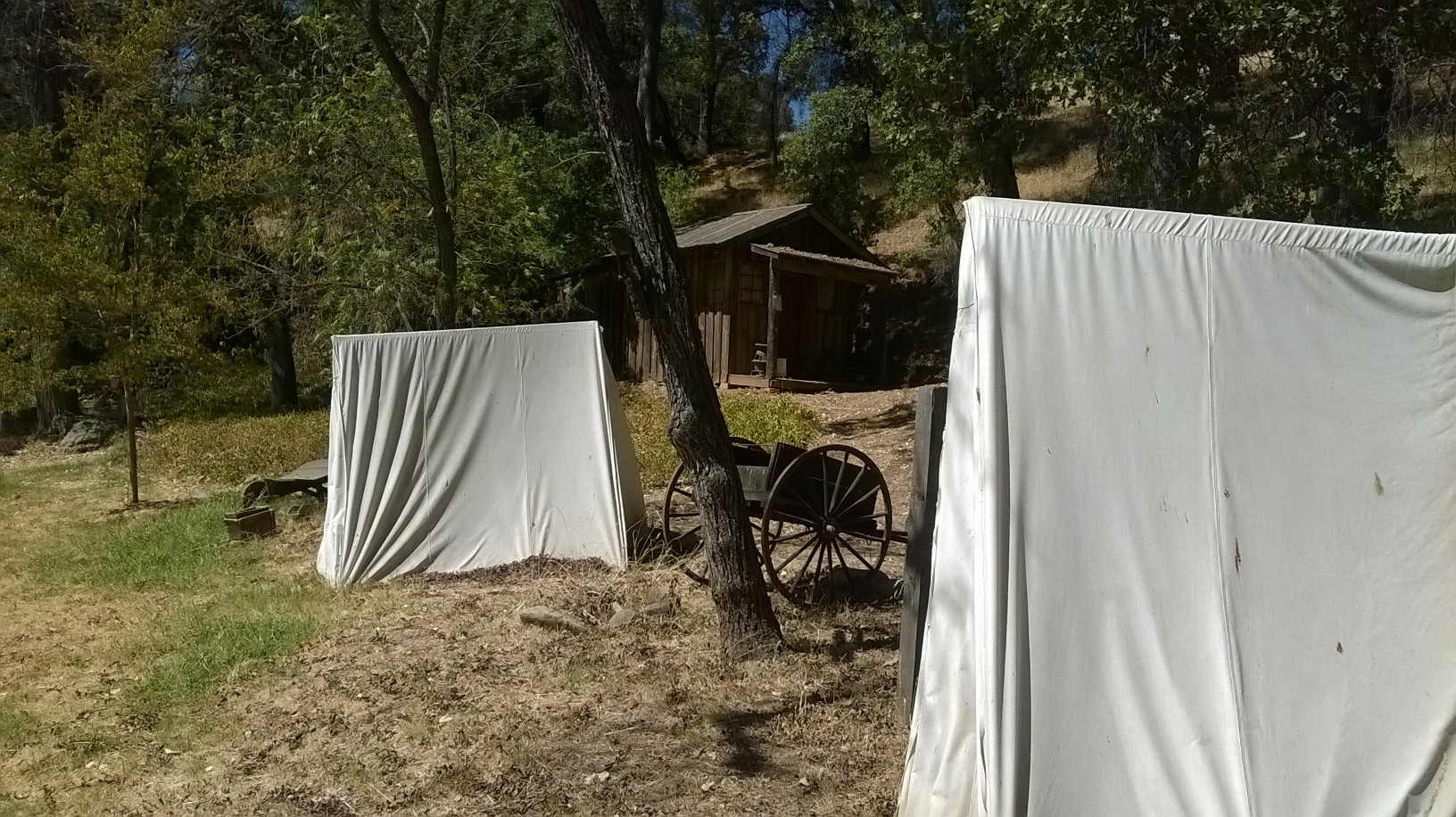
Wow. Columbia really is authentic. It’s sort of part-musuem town, and part real-town. Like all of the other towns in this area, there are hardly any inhabitants, so there’s a sort of ghost-town atmosphere in and around the smattering of tourists and the handful of be-costumed shopkeepers. We skirted the bank and the local livery store to find the mine, and started to pan in the searing heat of temperate California.
Naturally, we expected to unearth fat lumps of the yellow stuff before tea break, so we were a bit disconsolate when our first few attempts yielded naff all. Eventually we spotted a couple of glittery speckles, but you know what they say: having harvested a goodly portion, we took our gains to the mine-owner only to find that it was fool’s gold, and we was fools.
Ah well! Lunch in the period saloon on site (Sarsaparillo is a bit like Dr. Pepper), and then a tour of the museum itself and a quick lesson in what gold really looks like. Then for good measure we did another spot of unsuccessful panning. Better luck tomorrow.
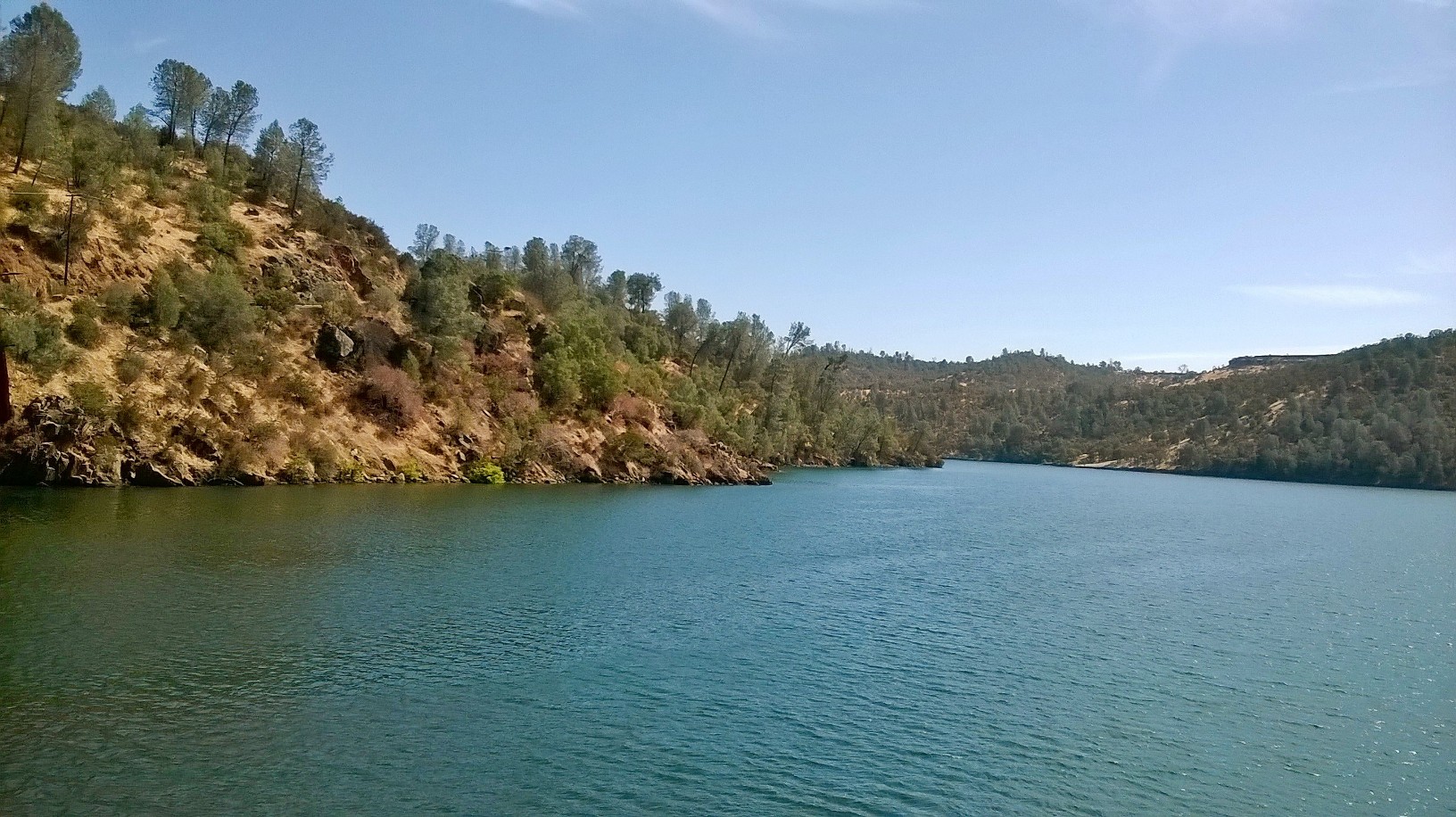
Nevertheless undaunted, we did a little tour of the area, through another gold town called Angel’s Camp, a copper mining town called Copperopolis, and around a beautiful lake, Lake Tulloch, which unlike many of the watercourses in the area is weathering the current drought pretty well.
The scenery is stunning, and in this sort of heat, really harsh. You can see what hard work gold mining really was – and if it made anybody a fortune, it was money well earned!
scorched lands and dry river beds.The Golden Chain Highway Bridge. This goes over the Melones water course which in this part is quite dry.Lake Tulloch is holding up better.
Leaving wine country we headed East, though the impression was that we were going further into the West. It was wild west territory we were hitting, and the landscape changed markedly from the lush greens of the valleys to the yellow prairies and then the speckled hillsides of gold rush country.
apparently best burgers in the valley. They were pretty good!
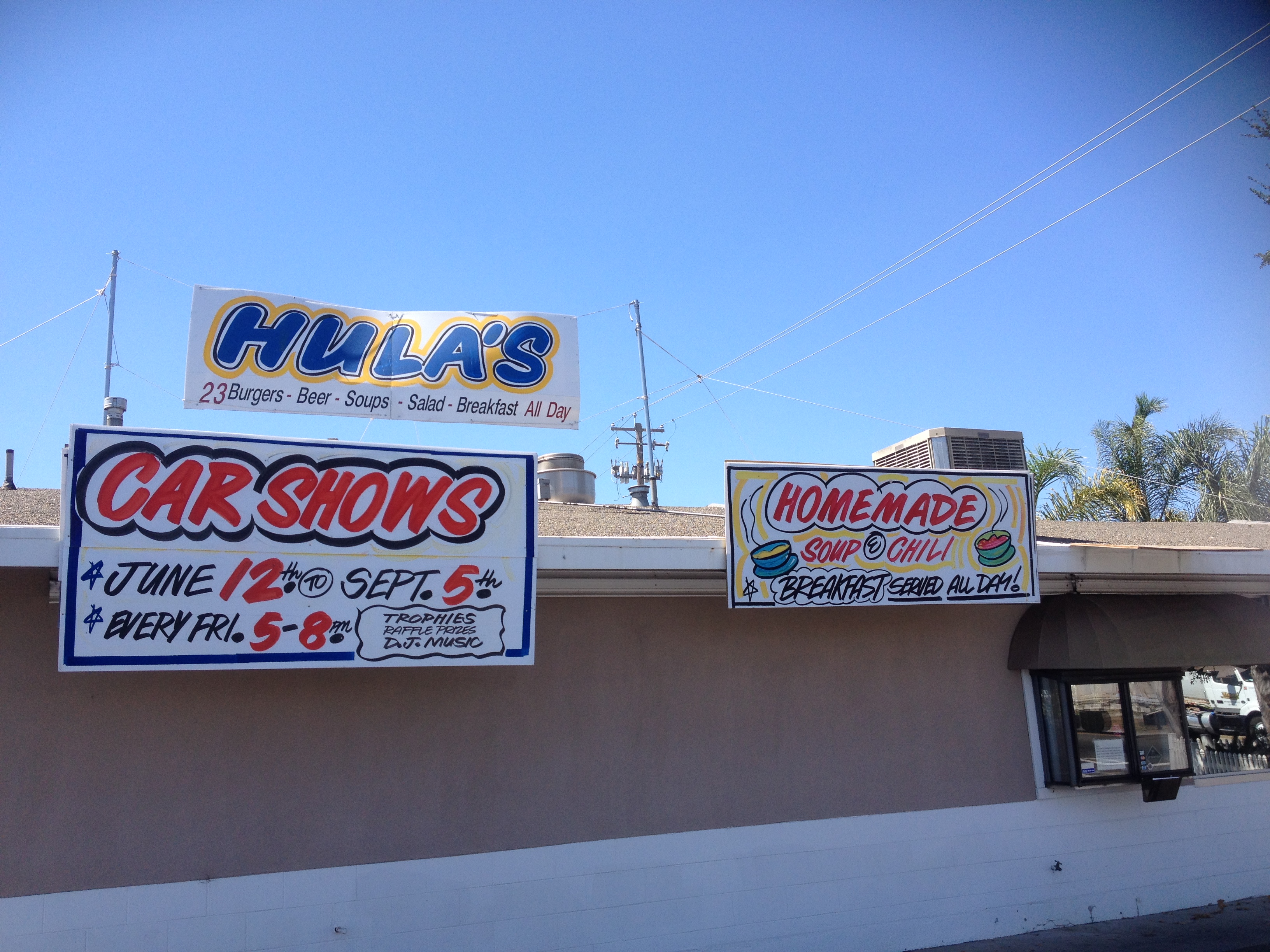
Stopping for lunch at a classic American Diner with a Hawaiian twist (!!!) – Hula’s in Escalon – we reached our new digs mid-afternoon. Riding in on our trusty black stallion, we felt every bit the outsider coming into town. Dominic yearned for his all-black jeans and shirt so he could look like a proper bad cowboy; and Karen fished in the suitcase for enough petticoats to pass in this town as we clattered into the saloon.
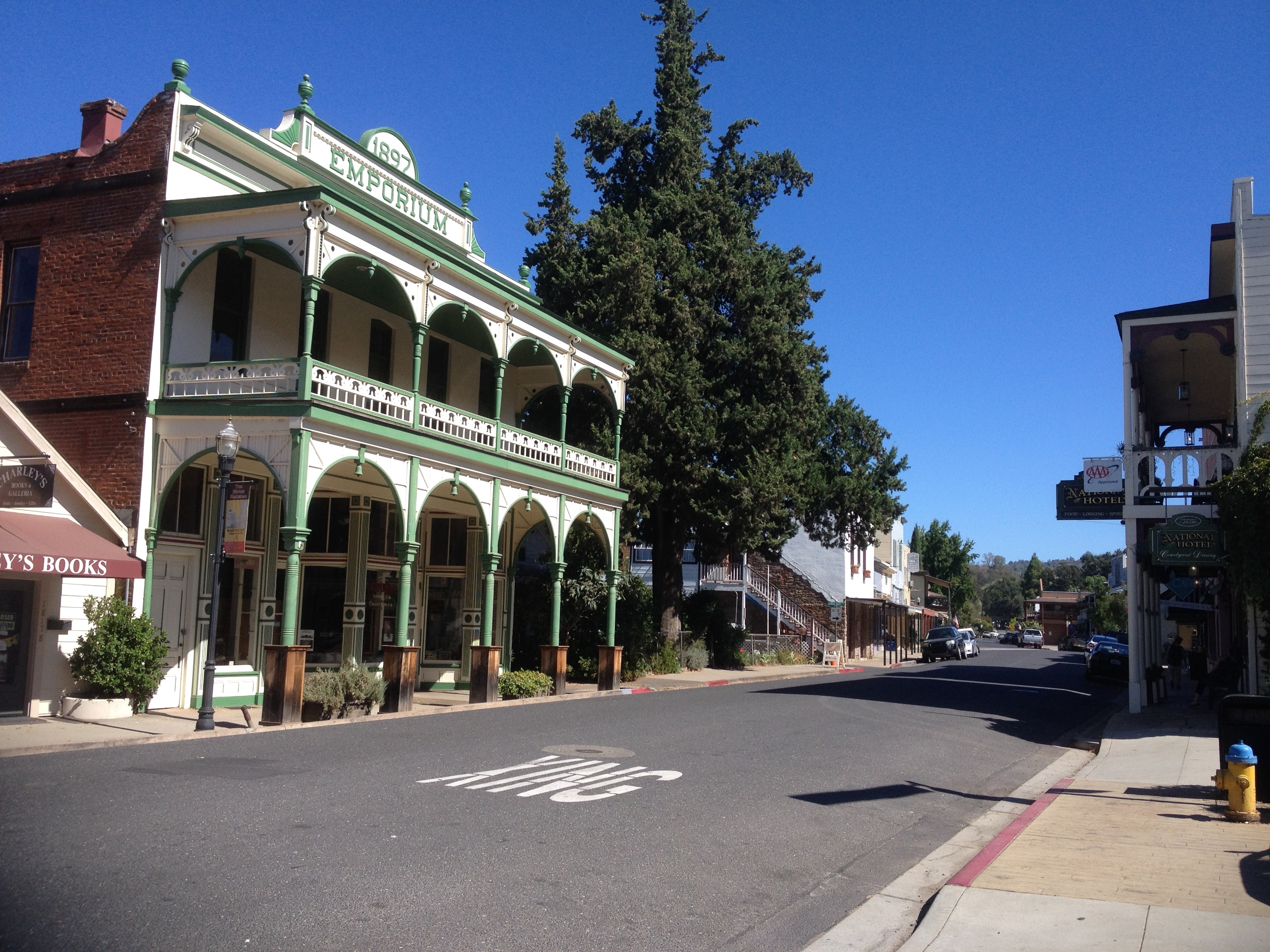
“Y’all look like you need a drink,” came a voice from the corner. And here we met Sabrina, the charming bartender of the National Historic Hotel – hosts in the past of many a western film crew.
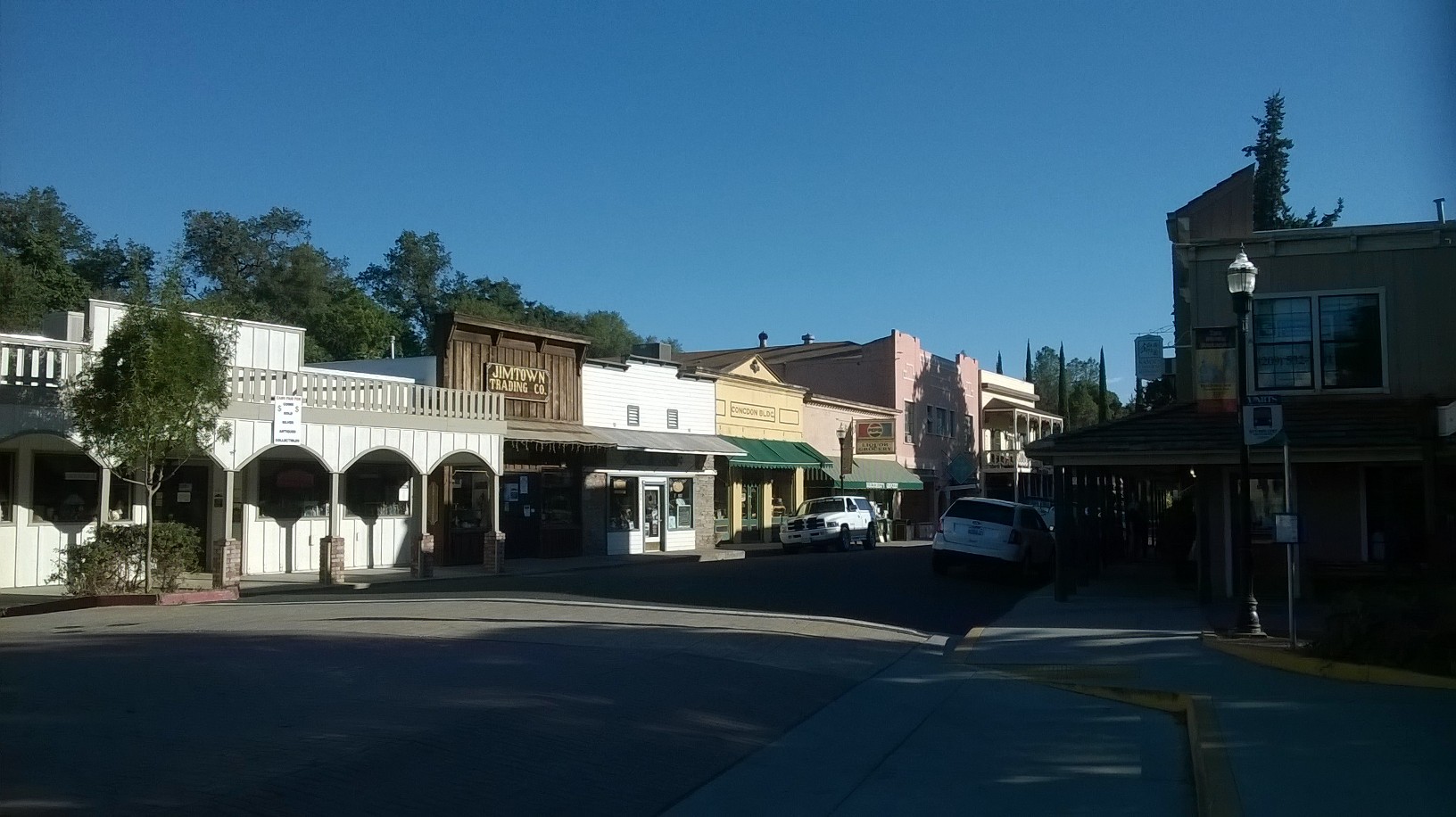
As you might expect, the hotel, like the town, is right out of the nineteenth century, and comes with everything from a stoop to a soaking room (bath) to a resident ghost, and stories of shoot-outs. A tour around the town took two-and-a-bit minutes, but we lengthened it by taking plenty of snapshots just to confirm to the locals that we were indeed the out-of-towners. By 6pm we were absolutely baked because the outside temp was still 101 degrees fahrenheit. Considering that the hottest temp ever recorded in the UK is 98 degrees, that is damn hot!
As we settled into a pint and lots of chat with Sabrina and the proprietor Stephen, we heard all the stories, and felt like we really should be outside by the camp fire waiting for sundown and the howling of the coyotes. We heard about Christopher Lloyd filming Back to the Future 3 here, and enjoying a couple of whiskey’s of an evening; we also heard about Black Bart the bank robber, a San Francisco school teacher by day, who was finally caught just down the road but who never revealed where his $10m was stashed; and we heard about Flora, a young girl who was planning her wedding when her fiancé got shot and killed in the saloon bar: Flo died of a broken heart two days later, but still haunts the hotel to this day.
Dominic’s reading Sam North’s excellent book “Diamonds” at the moment, which is all about the Sierra Nevada Diamond Rush of the 1870s. Well worth a read, especially when you are holed up in the very towns that were part of those early prospecting days!
Tomorrow we’re going panning: there’s gold in dem dere hills.
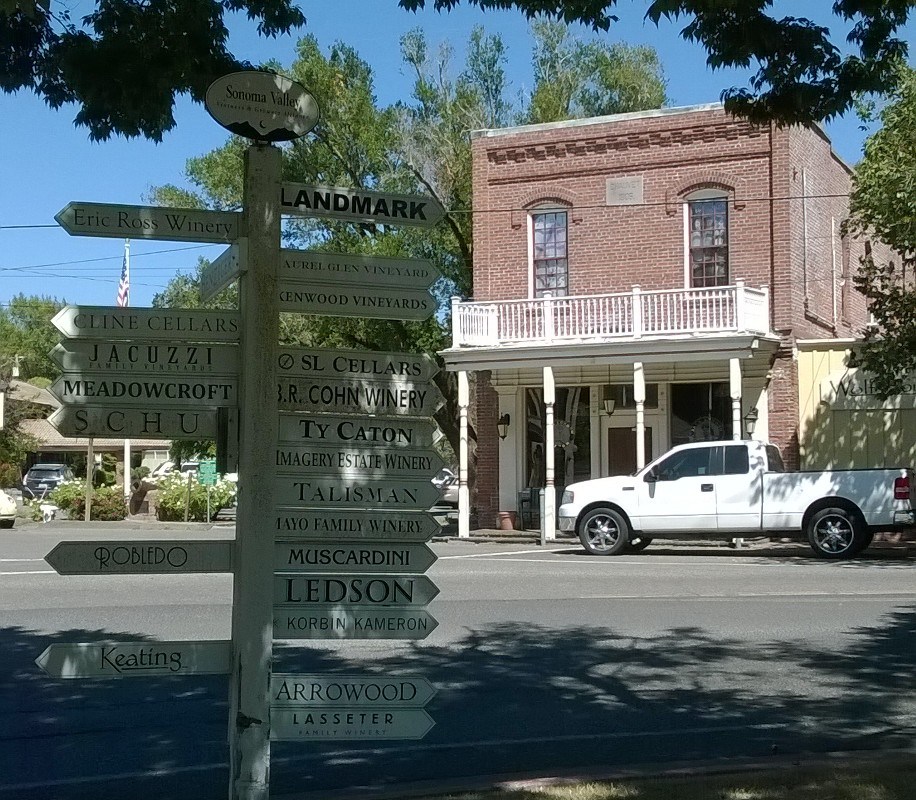
We woke this morning in Sonoma with a slight fog, but it’s really rather nice. The chef at Gaige House tells us that most mornings begin overcast but quickly clear, and that the locals find this refreshing.
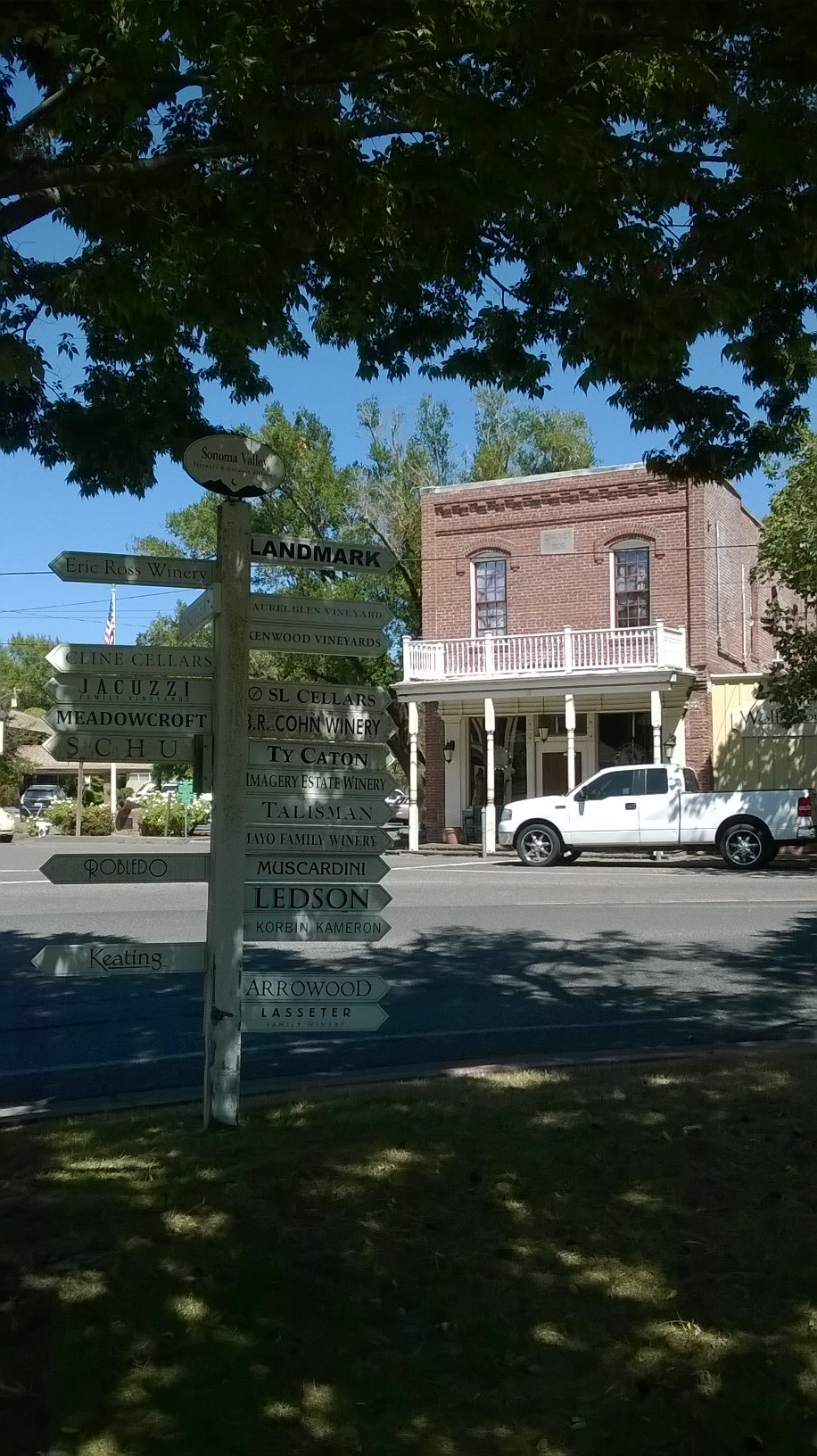
We took a stroll down the main street of Glen Ellen to find this strange house with a lot of iron features, which is quite unusual. In fact as we stood taking pictures a local chap drove by and shouted out “how weird is that house, eh, I love it”, so it’s quite famous amongst the community it would seem.
Glen Ellen is a tiny hamlet, with a population of only about 750. But one former inhabitant is the celebrated novelist and explorer Jack London.
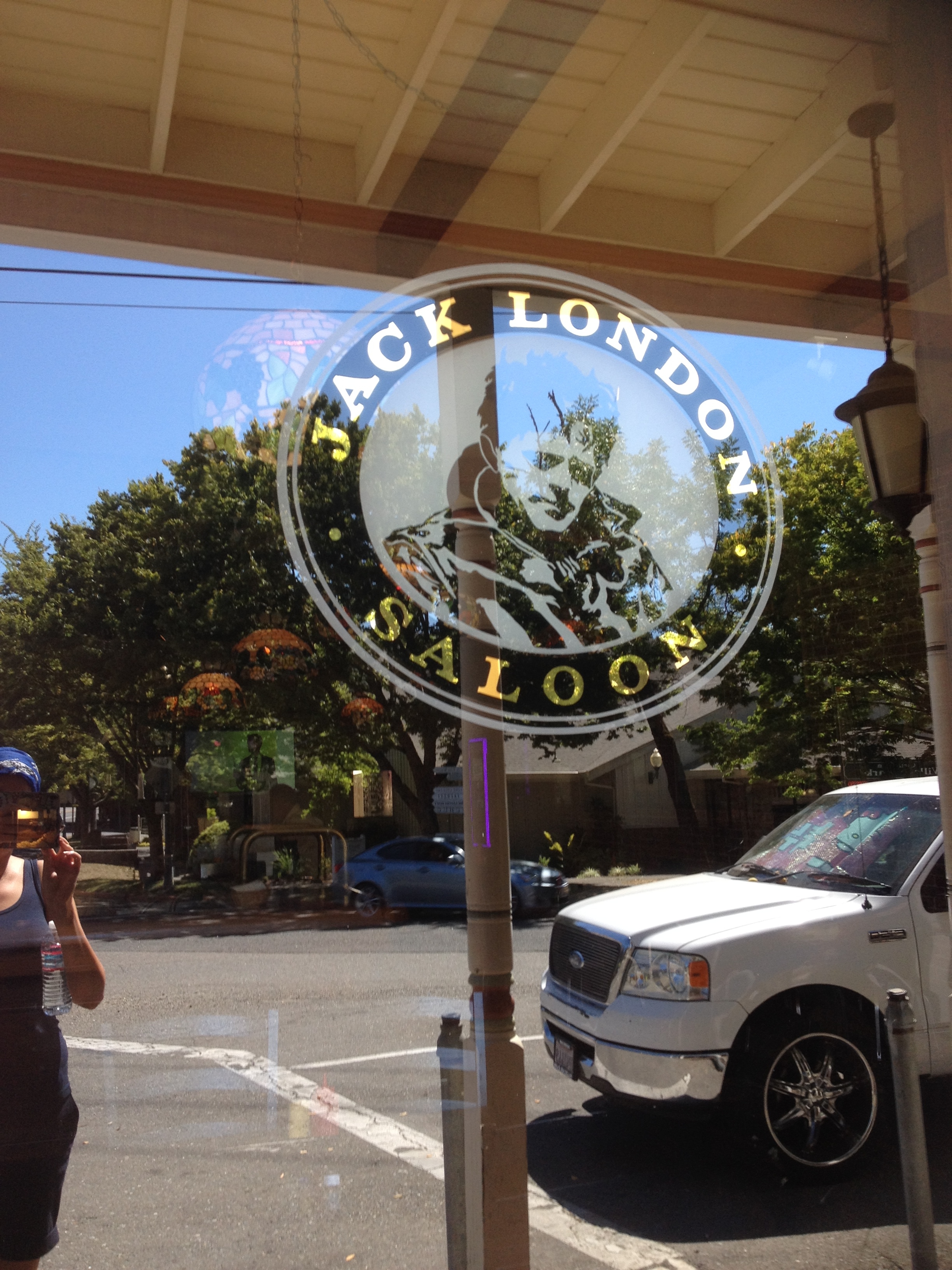
Jack London was born in 1876, and seems to have had a most amazing life – he was a gold prospector in Canada, an Oyster pirate in the pacific ocean, a rancher and pig farmer on his property in Glen Ellen, a journalist for the Hearst organisation, and, most famously, a novelist. After having 600 rejections from publishers, he finally managed to have some of his short story material published, and from about 1900 until his death in 1916 published over 50 novels. Amazingly, he combined this with a relentless round-the-world touring itinerary, building his own yacht (for $30,000) and setting off via Hawaii for the pacific islands. Lots of his stories chart these adventures. Not surprisingly, Jack London has become Glen Ellen’s claim to fame, and many of the buildings – like this saloon – trade on the back of his notoriety.
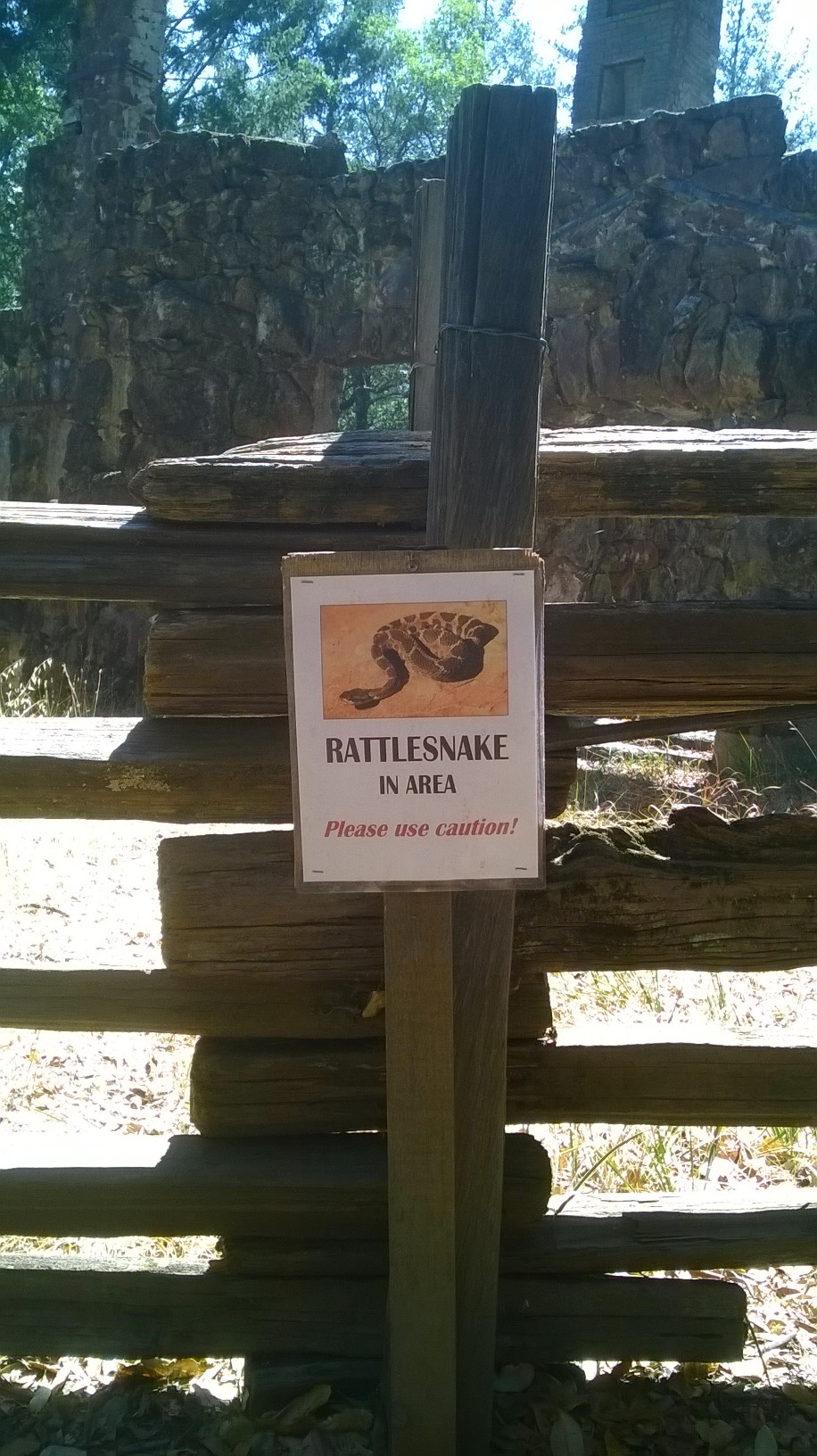
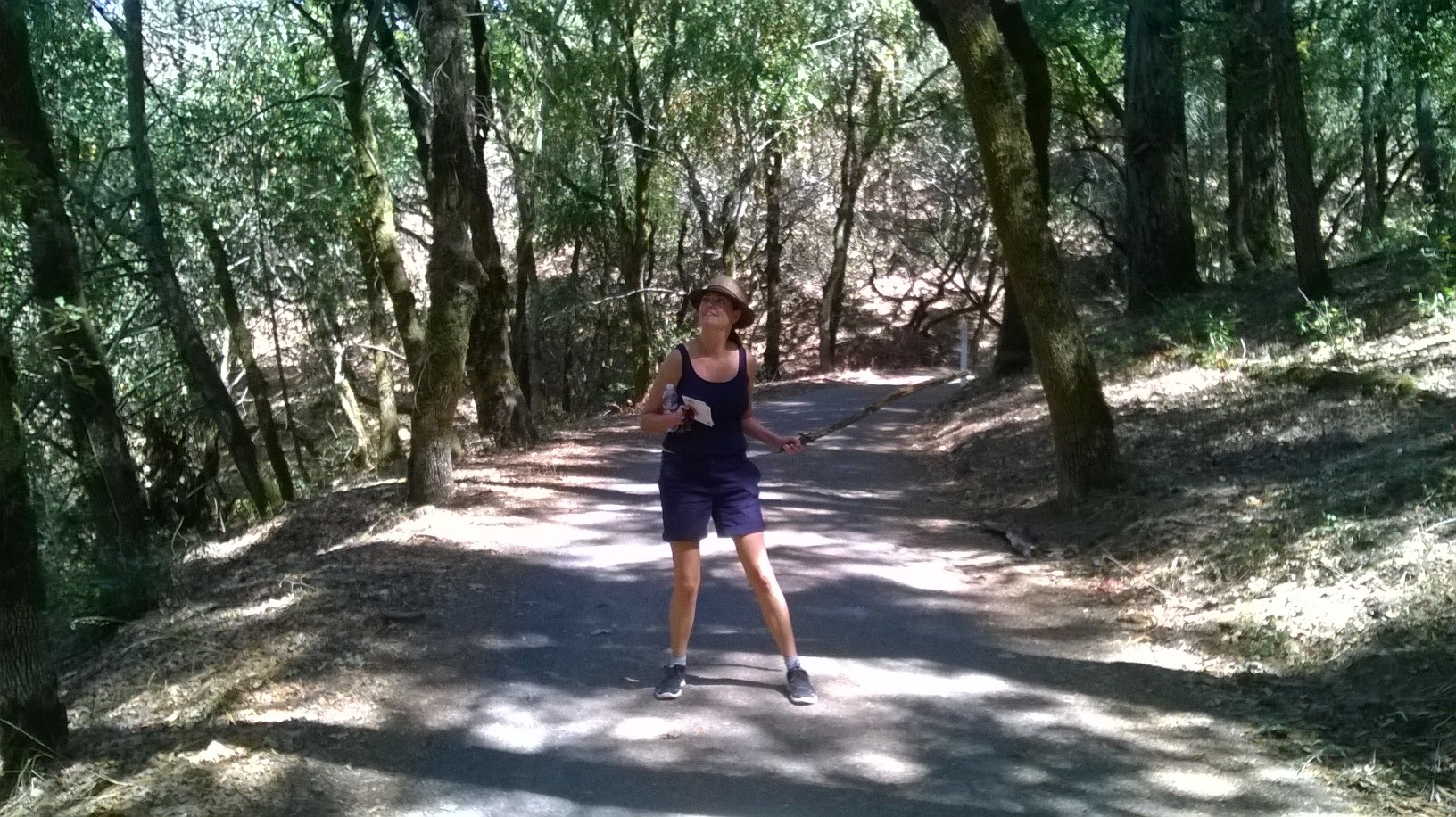
We decided to spend some time hiking around his old farmstead, which has now become a state historic park. We hadn’t realised quite how controversial and interesting his life was until we visited the museum and grounds. It’s such good value: we paid $10 for entry which included our car and both of us (although you could have up to 9 passengers – so for big groups, it’s even better value). We thought the museum in the House of Happy Walls (a home dedicated to Jack and Charmian and left by Charmian to the California State National Parks) was full of interesting material about their lives and their travels. The walk around the grounds was quite haunting, and a bit daunting given the warning regarding rattlesnakes and mountain lions. But, never fear…Karen prepared herself with a dry brittle stick in our defence!
Karen, armed in defence of rattlesnakes and mountain lions.
Unlike at Muir Woods where we were asked to be very quiet and respect the sounds of nature, on this hike we were asked to make lots of noise to scare off the predators….hmmm, so we got Dominic to sing some of his favourite show tunes – that would surely keep them at bay!
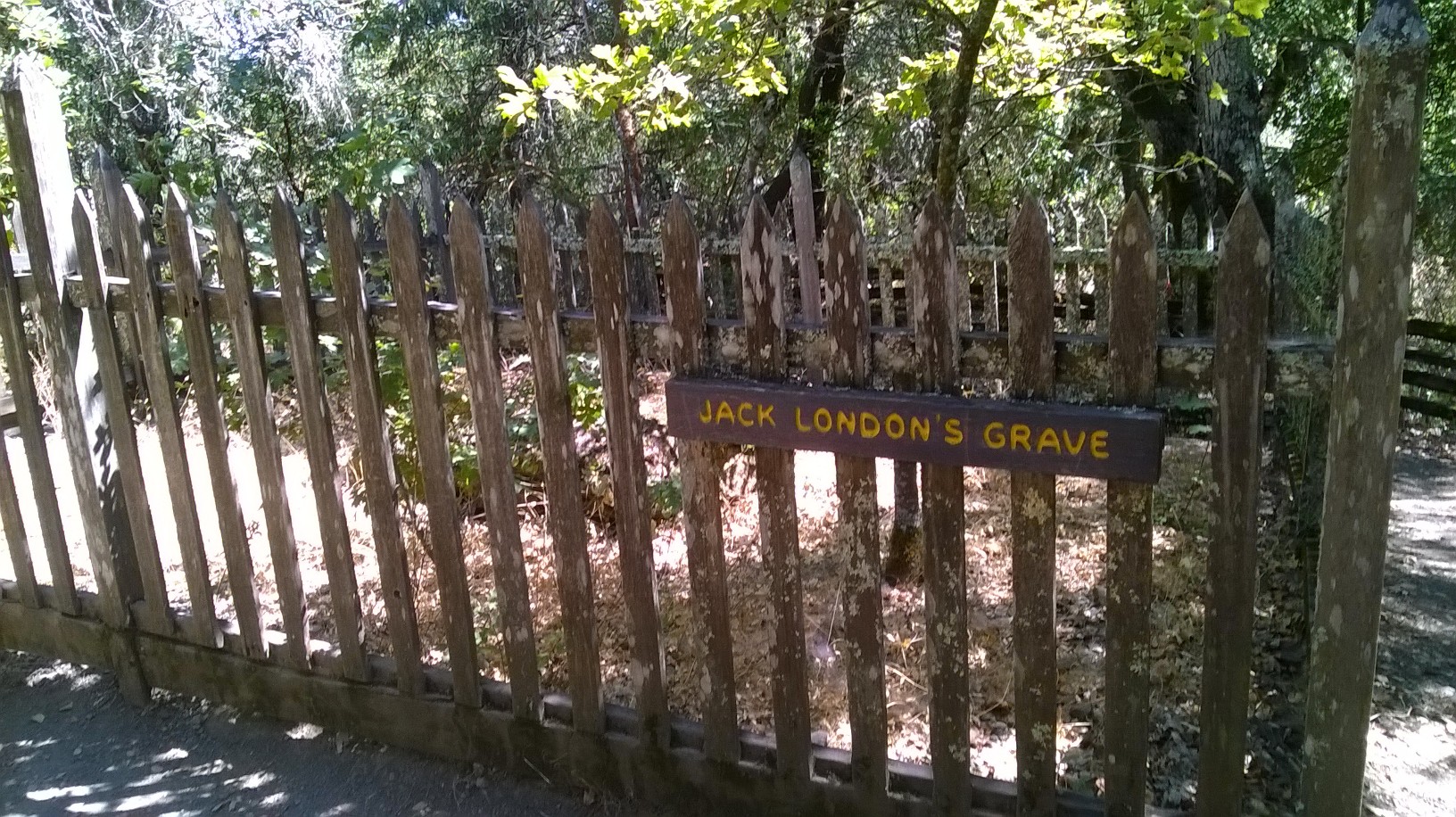
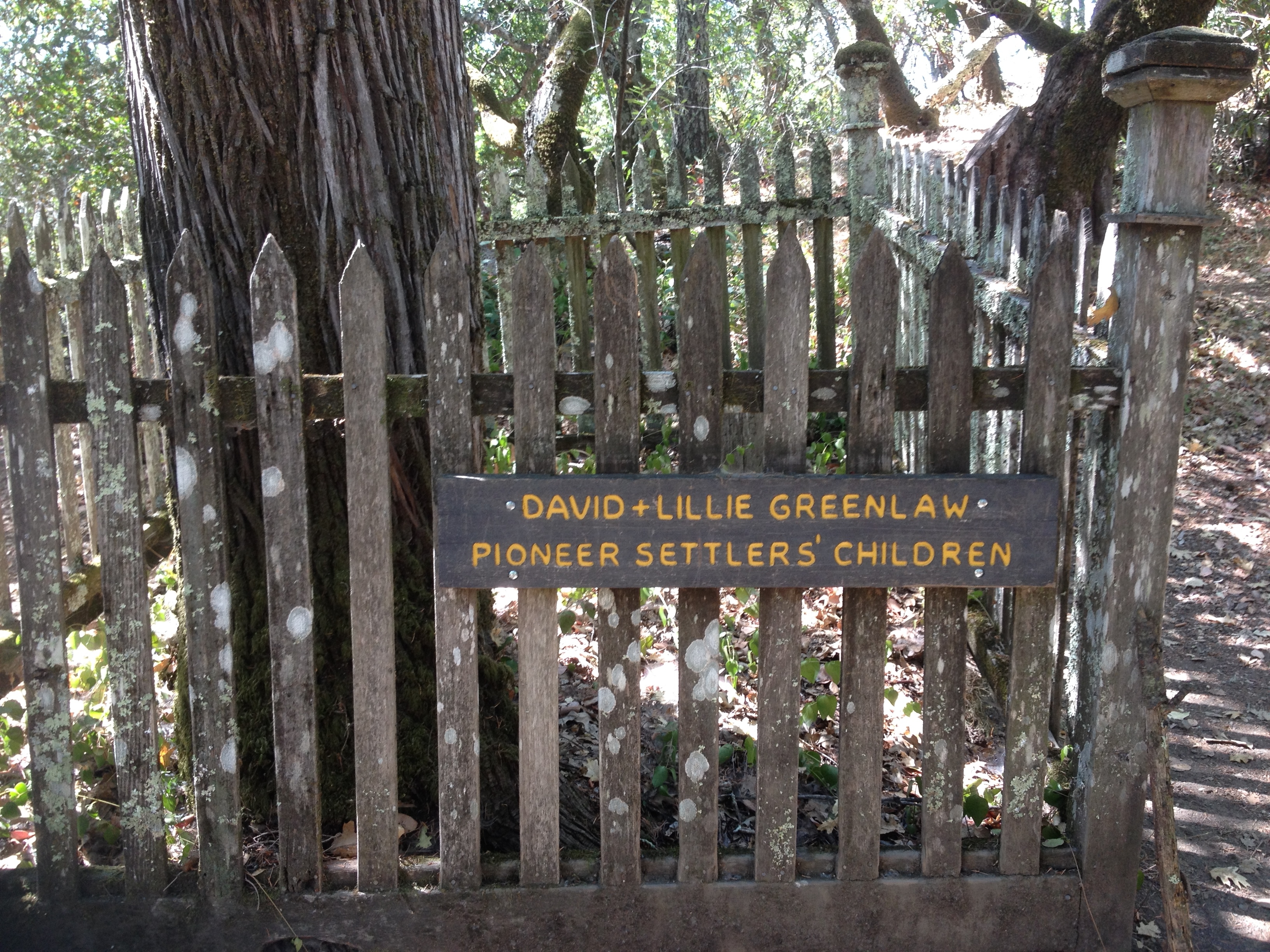
It was quite heartbreaking to see the graves of two youngsters whose family had settled on the land. Sadly, when things hadn’t worked out for the family the parents had to leave the little graves of their children behind. So, this is where Jack said he would also like to be buried, which he was when he died from kidney failure aged just 40.
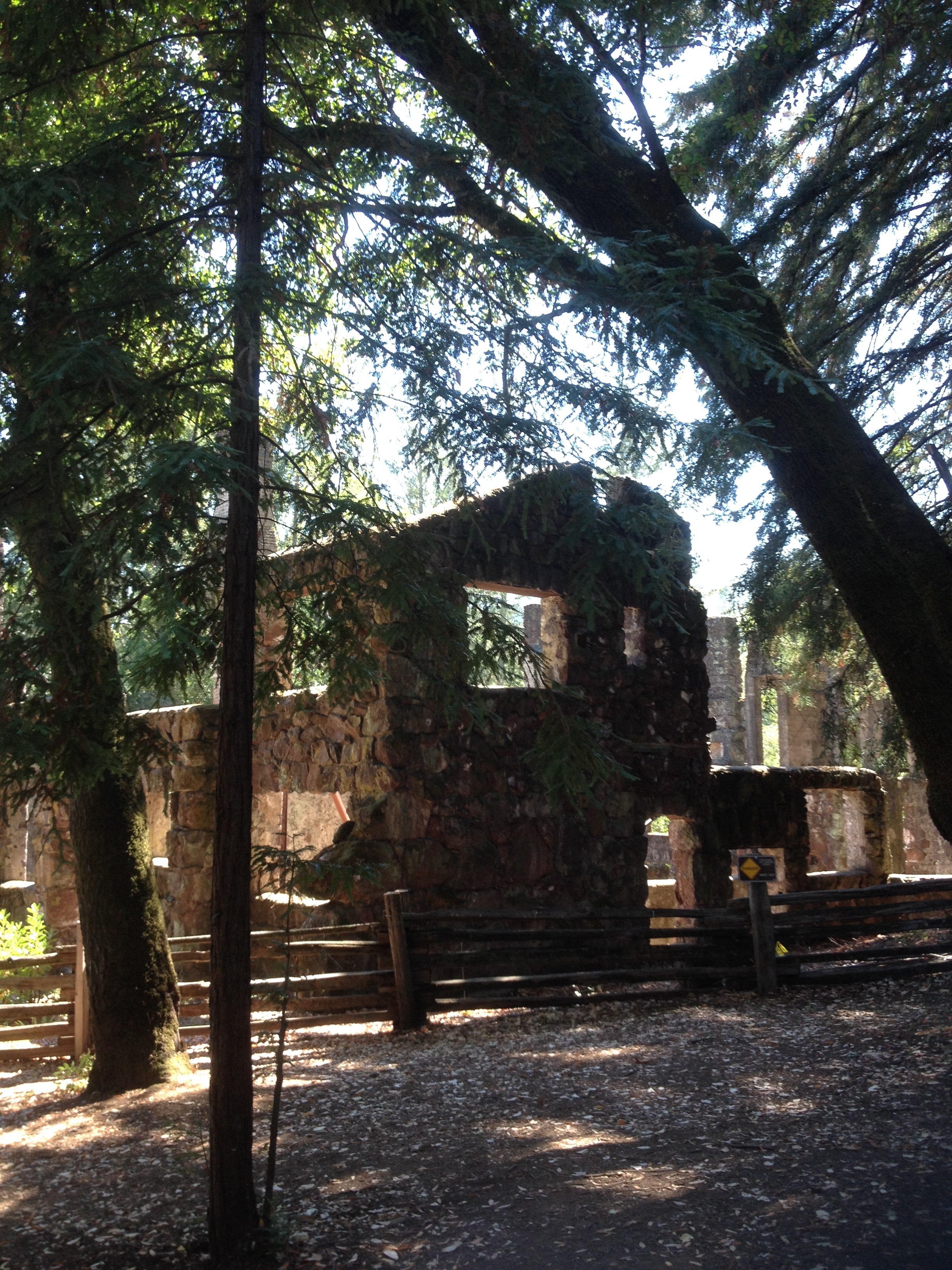
It’s a lovely spot, peaceful and quite enchanting with all the trees, and not far from his dream house – Wolf House. This is also a sad story, a house that was never lived in because it burned down a month before Jack and Charmian were to move in in 1913. There are various rumours about the fire including, from the locals, the suspicion that the fire was an insurance scam, intended to leave Charmian an inheritance when the ailing Jack died. Whatever the situation, it is still a tragic tale. This whole place, and Jack and Charmian’s journeys are about lives lived to the full, brightly, but not without their ups and downs. The stories can’t fail to touch everyone in some way.
Empty shell of the burned out Wolf House (Jack London’s dream house).
Well, even though this is the heart of wine country it seemed more appropriate to finish today off with a pint in Jack London’s saloon. Karen got her chops round some saucy chicken wings, and all was well with the world…













































 Seeing the world through the eyes of a Savage