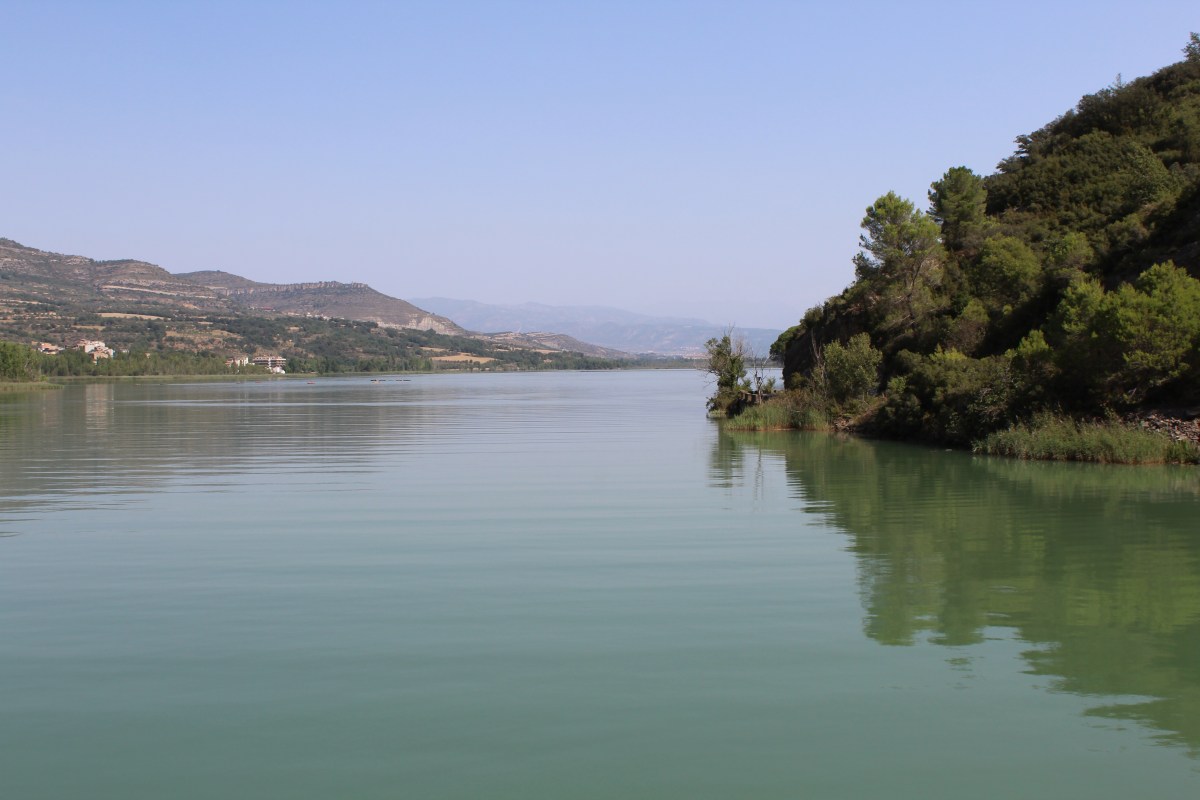
Leaving Talarn we headed today towards the capital of the province, Lleida. It’s not a long journey but it twists and turns following La Noguera Pallaresa river, another gorgeous gorge with stunning scenery. So we stopped quite a lot to get some more snaps for the album. These are the blue waters of the Embalse de los Terradets reservoir.
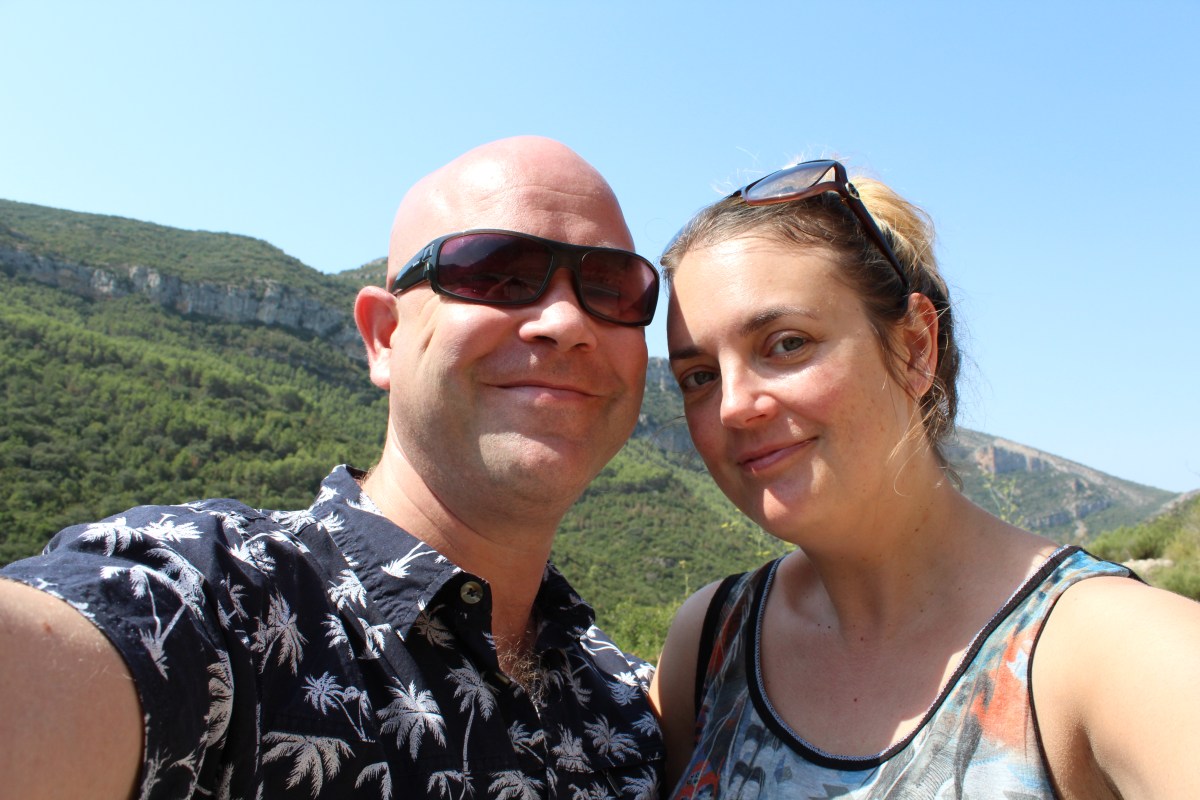
Lots of opportunity to practice our selfie shots… (we know…could do better!)
And alongside the lake are tunnels hewn out of the rock itself, looking like the naves of churches built into the cliffs.
After all this scenery, it’s a completely different landscape in the final few miles before Lleida, when the hills drop away and the industry begins. Coming into Lleida there’s not much to write home about – except for the San Miguel brewery. Think there might be a cold one waiting in the fridge…
Coming into a new town is always a bit strange, and you have to find your bearings. Lleida’s not the most inspiring city on its first impression, especially if you find yourself located as we were in the commercial district. Lots of shops, and in the back streets quite a lot of run-down residential areas. We even struggled to find a bar or a restaurant.
And although we have a nice apartment, it’s got a fundamental problem. We’ve gone with AirBnB throughout this trip, partly to be able to self-cater, and partly to get a more homely feel from the places we stay in. This apartment is fine in lots of ways, but it’s basically part of a hotel… and the air conditioning leaks into the bathroom… quite a lot… blimey…. get the towels… and a bucket… We’ve gone without air con for days but when you have it and you’re in the middle of a city in the roasting heat and all you have is a drippy air-con unit…. Looks like this is getting a frowny face from us on AirBnB!
Talarn is an idyllic little village in the province of Lleida, with a handful of narrow cobbled streets and a church… and virtually nothing else. There was one restaurant, Casa Lola at one end of the street and another, Cafe PanYa at the other. There was a church, of course, and there was a pharmacy which never opened.
But we had come here to get away from it all and partly to work on a book we’re writing together – so we were very happy with very little going on. On the outskirts of the town was a small open air swimming pool and bar where we spent a couple of afternoons just relaxing.
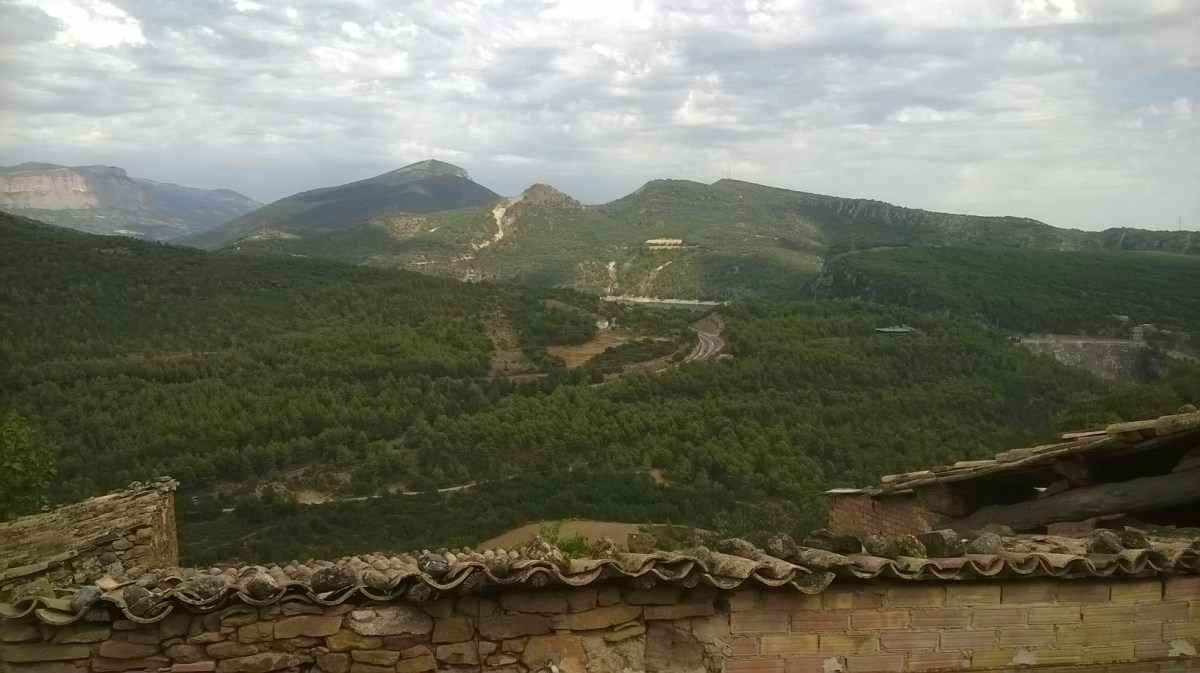
Talarn is built precariously on a plateau rising up above the landscape. How the buildings manage to stay perched on top of this rock is a mystery, but they do. Just a mile or so away from the town nestles a beautiful reservoir, with the most turquoise water you’ve ever seen. On one side the sluice from the dam sprays water into the valley, and huge fish swim in the calm waters on the other side.
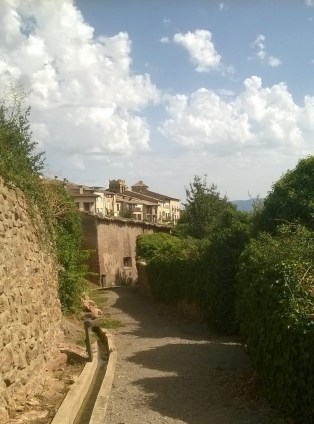
We promised to do a little bit of hiking too – and although we didn’t get very far, we followed the Cami del Terrissos down from the plateau and underneath a railway viaduct towards the historical ice cave. Sadly, the route to the ice cave itself became too overgrown for us to keep going, but it did mean we got to see some of the countryside around Talarn looking pretty peaceful and picturesque.
Despite its tiny size and the sense that the village was asleep for the summer, the municipal groundsman was preparing for the village festival, making a huge racket every morning trimming hedges and emptying bins. He hung up lots of bunting noisily and transformed the main square into a party venue. To our surprise, when the festival opened on Thursday night, the village suddenly became packed and started swarming with townsfolk enjoying a community meal in the square, an illustrated lecture of some sort, a film festival (mostly Catalan) and a stand-up comedian who must have been hilarious judging by the occasional laugh.
We bumped into very few people while we were here – our conversation with the chef from Cafe Lola resulted in us ordering most of the food in the village despite only going in for a drink: we’ve not quite mastered the language yet. Actually, that’s been a bit difficult, even for Dona Karen who is a natty little Spanish speaker. Problem round here is that everyone speaks Catalan, few people want to speak Spanish, and absolutely noone seems to understand English. They all thought we were French or Italian, which either shows how few UK tourists come to this neck of the woods, or it shows how deftly we pass ourselves off as bona fide Europeans. Must be the berets.
We did meet a really lovely guy, Paul, who runs the local hostel. He was looking forward to the beginning of the festival, when he held a disco into the small hours of the night. Since it didn’t start until midnight, it was a bit late for us – maybe we’re not so European after all. But we did enjoy a couple of really nice evenings in Cafe PanYa, a small family-run pizza business with a courtyard and more killer views over the valley. Honestly: picturesque beauty is so run-of-the-mill for the people round here that it must get quite dull.
While we’ve been here though, there has been a series of terrorist attacks in Barcelona and just down the coast in Cambrils. We’ll be in Barcelona in a day or two – it’s sobering to think that another vibrant European city can be targeted by yet another act of terror.
Today was a driving day, covering around 320km and passing through some of the most stunning scenery en route. Our journey took us through several gorges and canyons in the foothills of the Pyrenees, where we saw white water rafters shooting the rapids of the Rio Gallego. The towering fingers of the Mallos de Riglos are really spectacular, and we had to stop for a photo opportunity.
We paused for lunch at a nice wayside inn before descending into Huesca, where the San Lorenzo festival is in full swing. Well… this was siesta time, so the town was pretty sleepy and the fiesta was just setting up, though most of the residents were costumed up in their traditional white and green clothes.
Coming out of Huesca the road took us through the Tunnels of Olvena – check that out on Google; it insists you want the “Tunnels of Love” 😉
There are about ten tunnels in a row, all very short, enabling the drive through the Olvena Canyon to be smooth whilst still giving you incredible views of the scenery – here’s a virtual ride through the tunnels of love, courtesy of RoadTrooper, a big bike and some stirring music!
Finally, after taking the mountain road from Puente de Montanana, with hairpin bends and more great views, we descended into Tremp, and tonight’s destination, Talarn.
Just in time for a glass of vino blanco as the sun sets.
Hooray, it’s sunny today and hot, giving us a great opportunity to get out and explore Pamplona, with its mediaeval fortress, its quaint old town, and its recollection of another classic movie scene: the opening of City Slickers from 1991. City Slickers is an underrated film, but who can forget Billy Crystal and his pals legging it through the cobbled streets chased by a pack (herd?) of bulls.
Disappointingly, we came on a Sunday, and a month late to catch the festival of San Fermin. So there were no bulls, and no Billy Crystal, and the bullring itself was shut. But these minor location issues aside, we managed to recreate a little bit of the atmosphere of the famous bull run.
Nevertheless, one advantage of seeing the town when it is quiet and when lots of the shops are closed is that you get to see the many murals that decorate the shop grilles throughout the old town.
Karen was particularly taken with this one. Not sure if it is because of the dog or the feminist message. Throughout this region there is a quite a strong swell of political sloganism – not least because of the campaigning for Basque independence.
While Dom circumnavigated the bullring, looking for a way in (there wasn’t one: it was shut. But it has a capacity of 19,700 and is the third largest in the world), Karen spotted a fungus.
It’s been a shame not to have the thrill and exhilaration of Pamplona on a weekday, when we can imagine thousands of people running through the streets pursued by bulls. However, the local council have usefully provided a statue of the event for those of us turning up late. And to be honest, it’s quite a bit safer.
Love the pinchos – sometimes spelt pintxos. These are tapas dishes served in every bar you go into from breakfast to last orders. The local custom is to drop everything, gather around the counter, and have one or two in each bar – so a pintxos crawl is rather like a pub crawl. They are usually loaded with seafood, tortilla, or spanish ham. Always with a glass of wine on the side!
San Sebastian is about 100km up the coast from Bilbao, and has got a bit of everything – it’s an elegant city with some stunning architecture calling up the charm of the riviera; it’s a beach resort with a couple of stretches of golden sand; and it’s a pintxos lover’s paradise, with narrow, crowded alleyways lined with tapas bars aplenty.
And it’s home to the San Sebastian Film Festival, where in 1958 Alfred Hitchcock’s film Vertigo had its world premiere.
So what a treat that the local museum had a Hitchcock exhibition…
Not sure the museum attendants liked our antics 😉
Also saw the very lovely exhibition of photographs by Louise Dahl-Wolfe – beautiful portraits and fashion photography.
Heading inland now, into Basque country, and to the bull running capital… Pamplona!
OK, technically this is day 2, but since we didn’t even manage to get out of the country yesterday we have officially started again: welcome to Day 1 (again) of our road trip.
And this time we’re off like the crackers. 5.30am we’re up (5.30am. On holibobs!). 6.30 we’re at the airport (ain’t gonna go missing the flight again!) Quick brekky cos you absolutely have to before you get on a plane. And 8.35am we leave. Bye bye wet tarmac and hello….
…wet tarmac. We land in Bilbao to find the most dismal skies and a torrential downpour. The temperature’s about two degrees lower than Blighty, and we’re in our shorts. This is Spain, people!
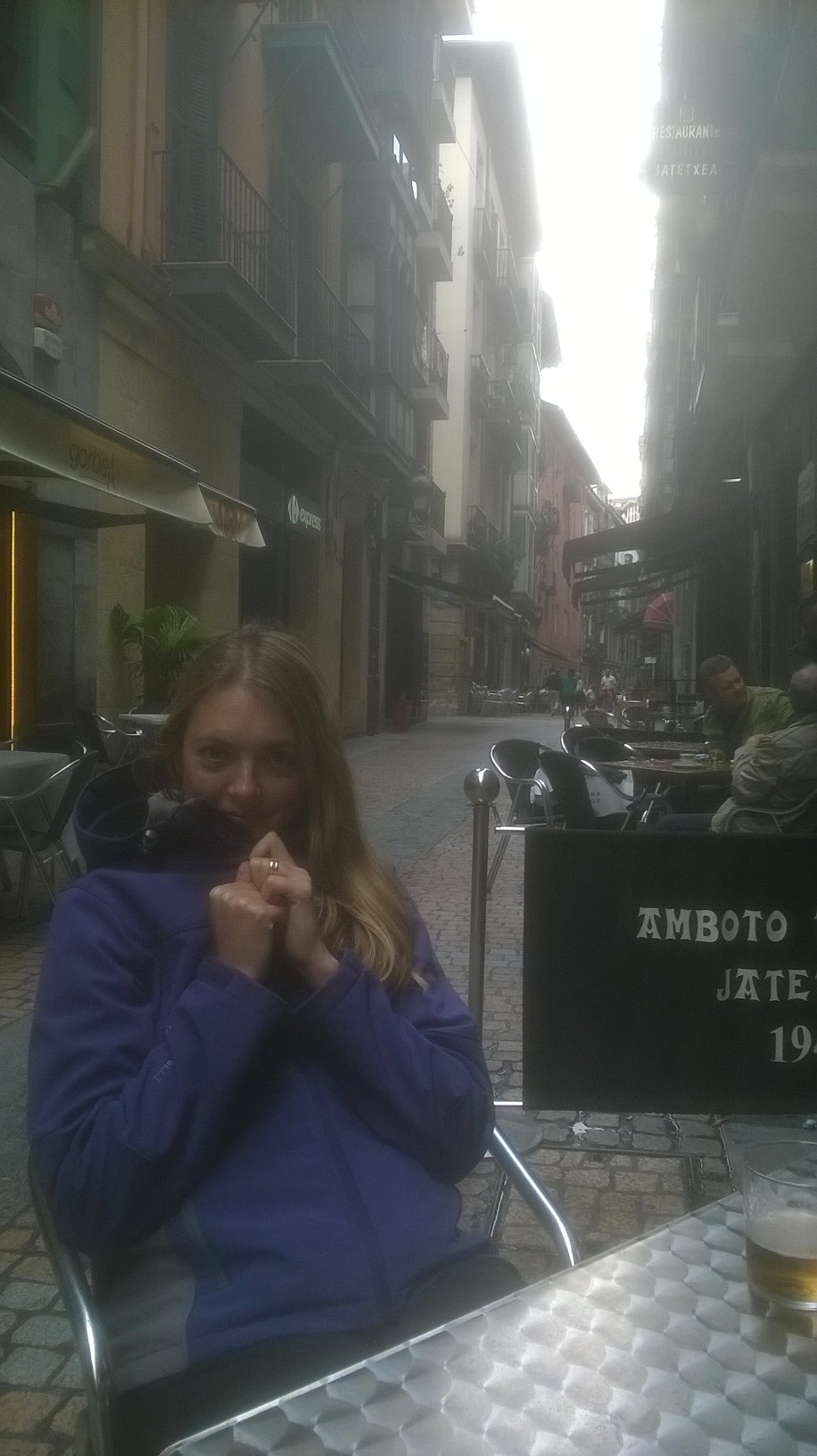
Still. Chinup and all that. After all, we have got to Spain today, which was better than we managed yesterday. And we find our digs. Making the most of it, we head out for a jolly walk as the skies start to clear (now in our cardigans and jeans, wellies at the ready). But Bilbao is actually quite pretty and the old town is very nice. A couple of cervezas later and we’re getting right in the holiday mood, as you can see.
Now, you might be wondering about the before and after shot of Karen. Turns out Dom’s camera has been so long unused that he’s been taking pics through a thick layer of dust. Look what happened when we cleaned up the lens. Now even rainy August looks spruce and dapper.
Bit worried about the charcuterie selection at this particular bar, but hey!
Just about 45 minutes from Vegas is the site of one of the most extraordinary engineering projects of the twentieth century: the Hoover Dam, overseen by Herbert Hoover and inaugurated under Roosevelt’s presidency in 1935. For the last eighty years this has captured and controlled the waters of the Colorado River, providing water for seven states and preventing all sorts of flood damage to farming communities downstream.
It’s bigger and smaller than you might imagine: side to side, it seems somewhat smaller than the impression you have from the movies. But up and down it is every bit as big, and really daunting close-up. Peering over the parapet of the Visitors’ Centre takes some nerve!
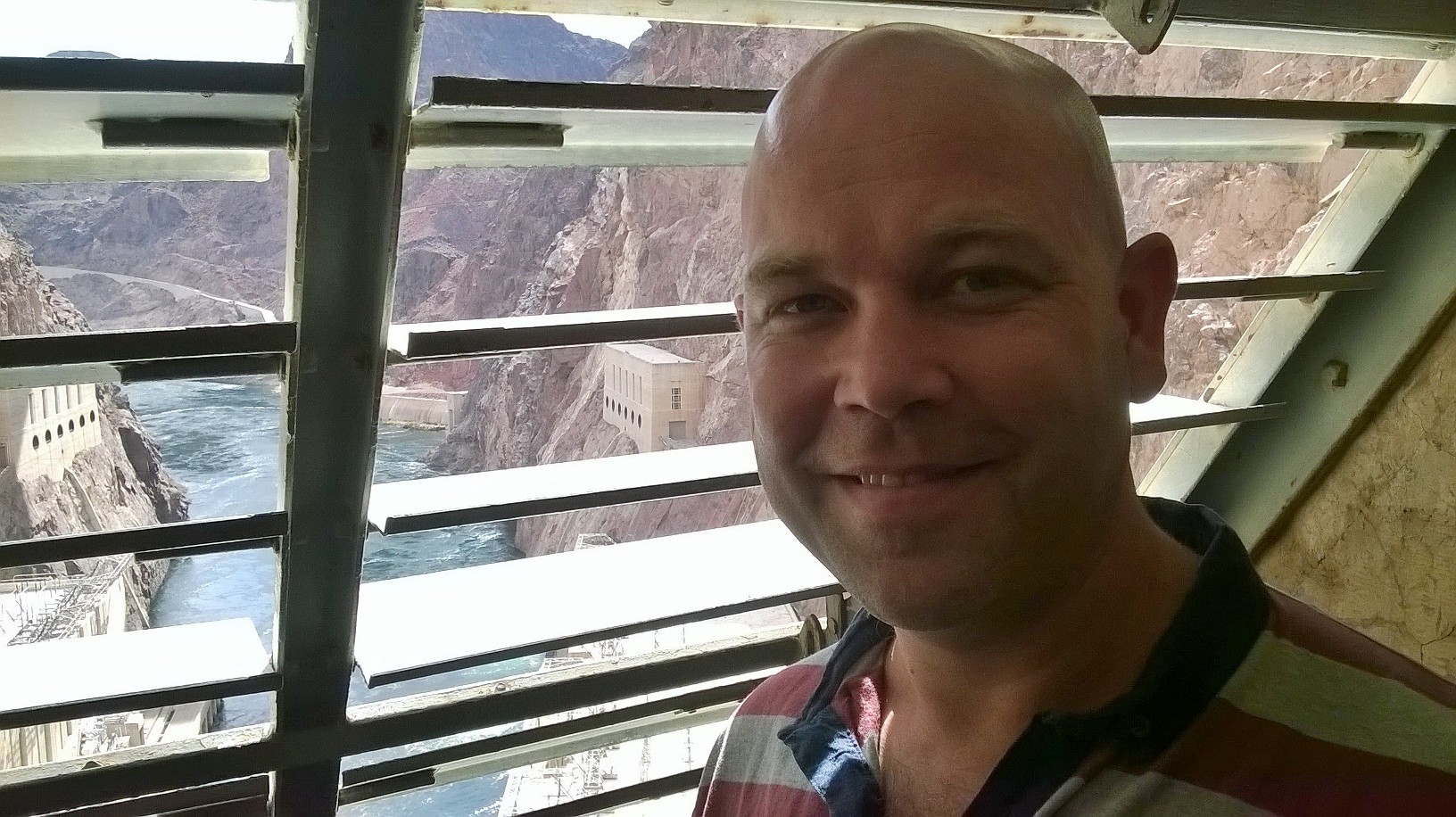
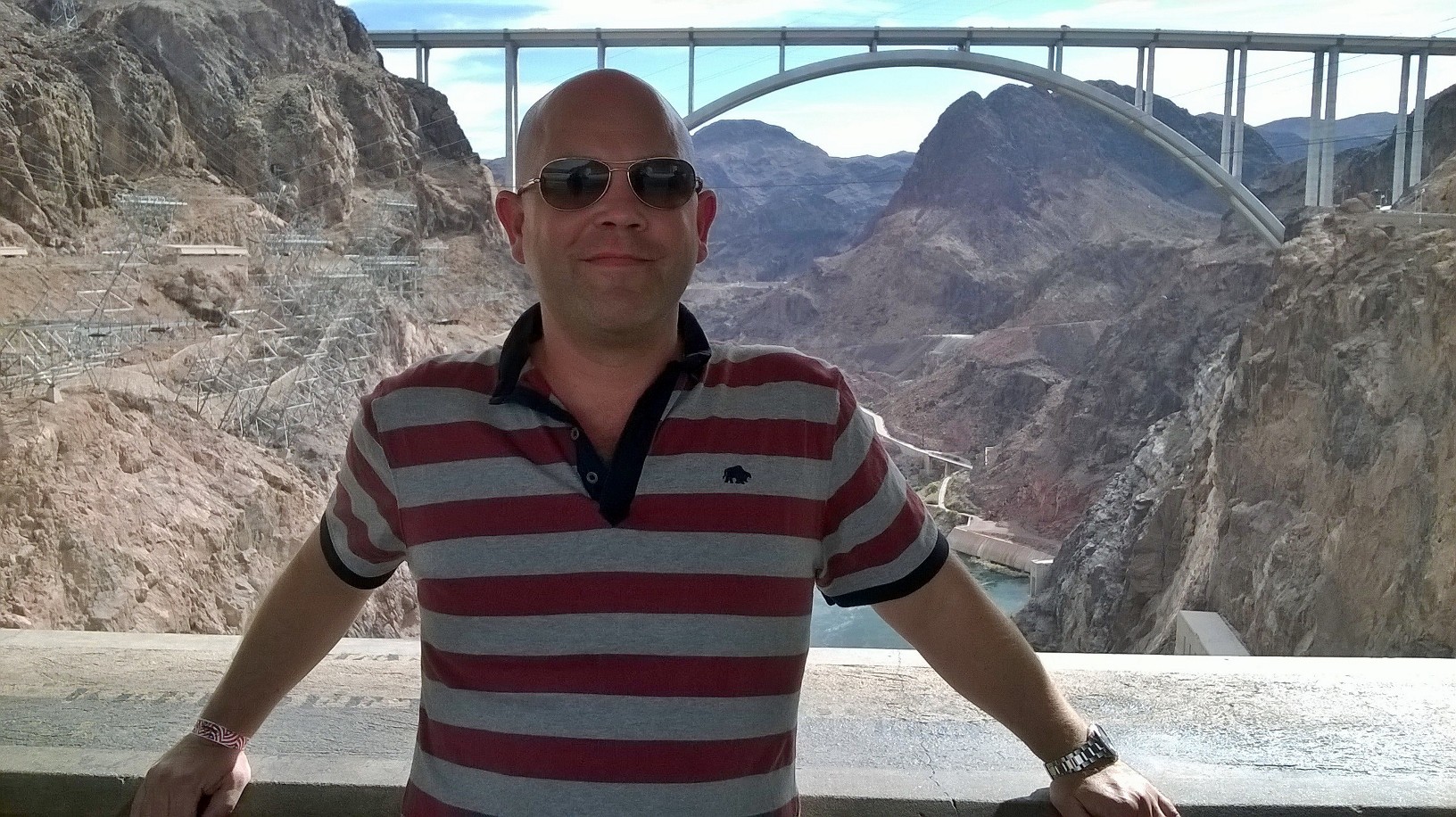
The tour around the dam allows you inside, outside, up above and down below, and it’s really interesting to hear how the engineering works. Of course, the photo opportunities are probably the most interesting aspect of the tour, so here are some of our snaps.
From inside one of the Dam’s tunnels.Karen in Dam tunnel…aka the Da Vinci (wo)man.
At the head of the dam is Lake Mead, an enormous reservoir used for watersports and hydro-electric power. You can see on this photo the tide mark of the highest level the water’s ever reached (in 1983, just seven feet below the top of the dam), and the lowest (today, way below what it should be).
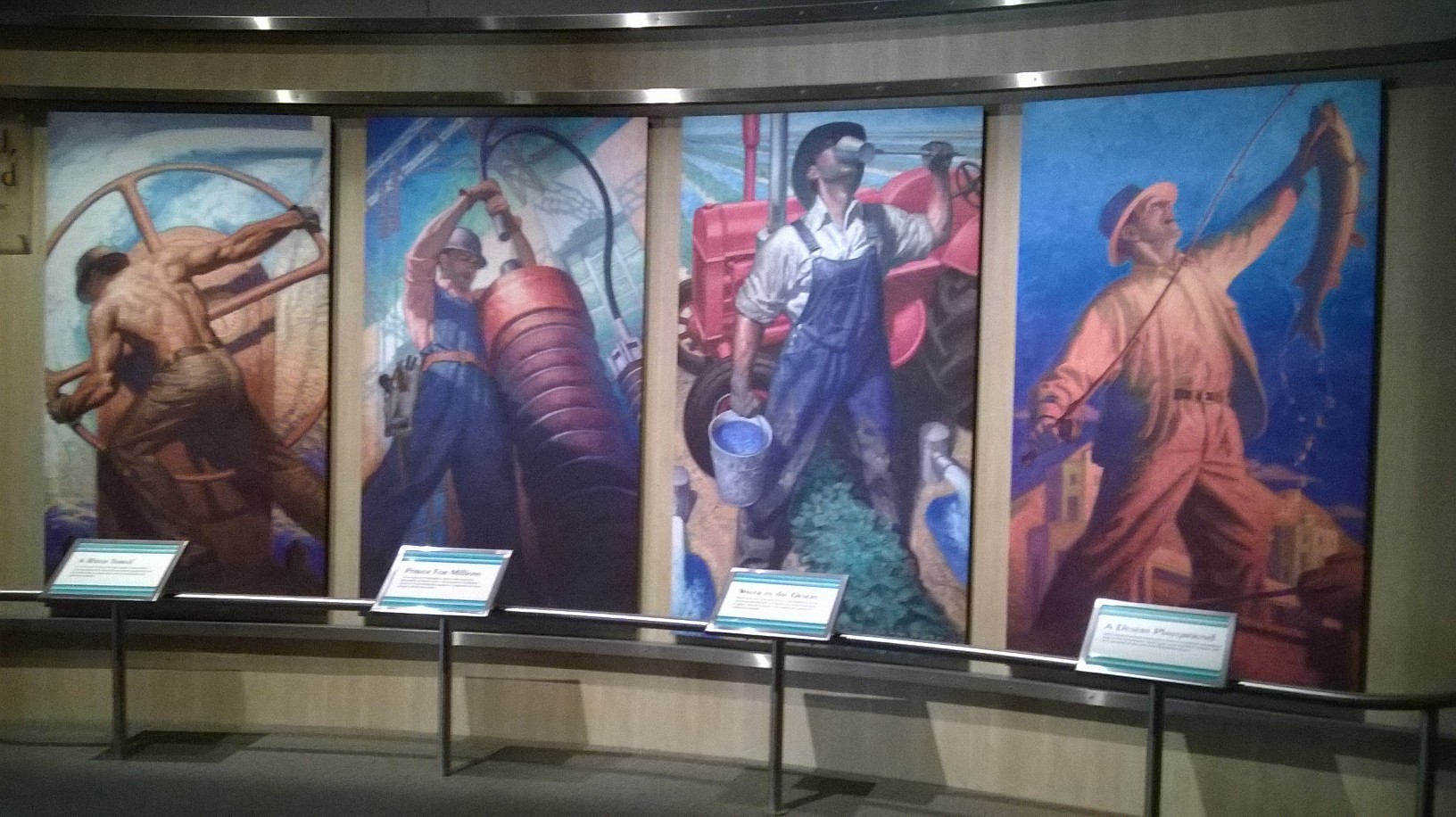
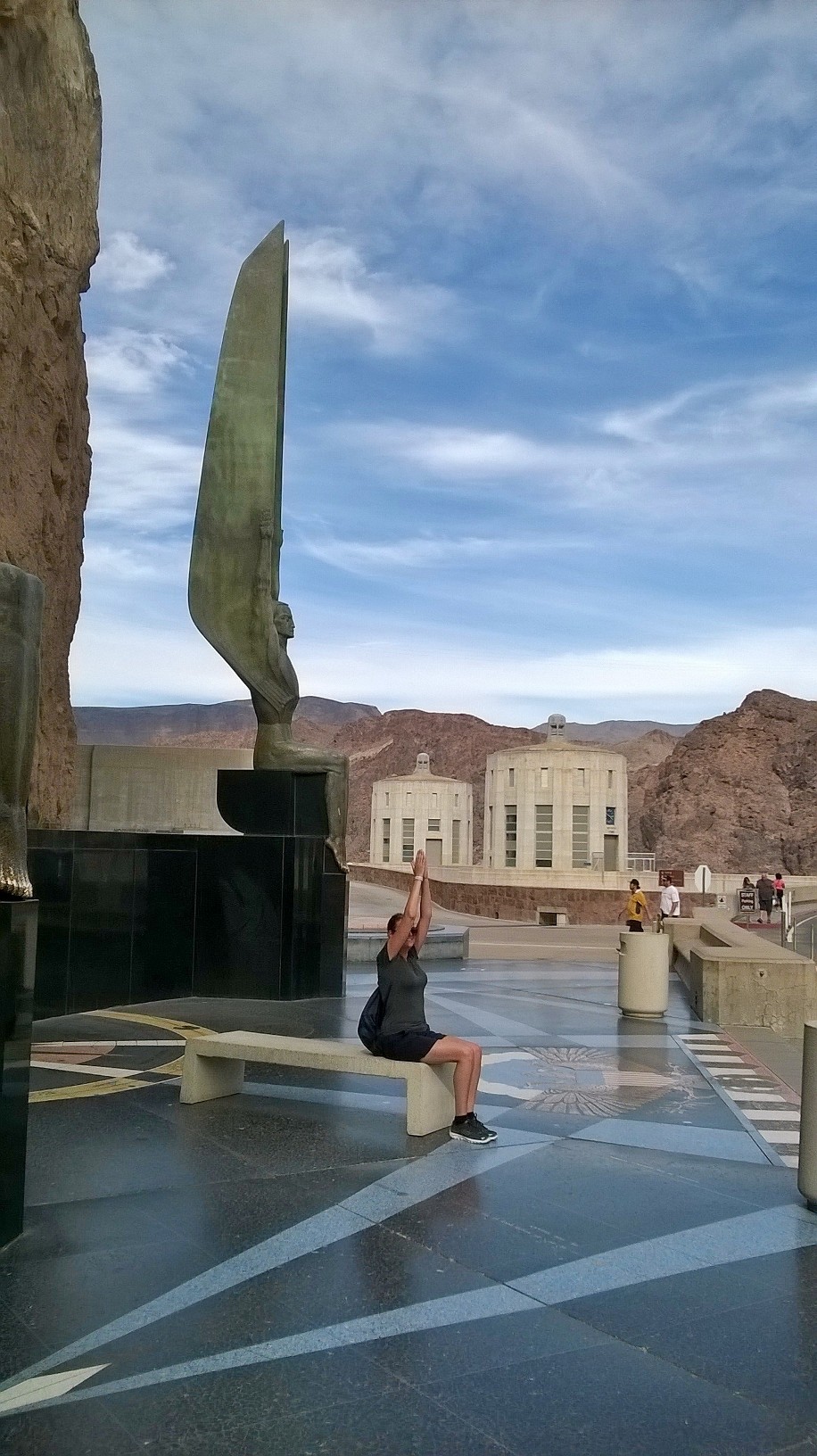
And in and around the Visitors’ Centre itself is the story of the building of the dam in the 1930s. It’s really interesting to see some of the imagery that came out of the Works Progress period of Roosevelt’s administration. See how much these images of hard-toiling American workers resemble Soviet images of the time; the eagles outside have also got that pre-war imperial brutality as well. (That’s Karen clowning around…as usual).
These are very ‘Soviet’ looking.
On the other side of the dam is Arizona, so we popped over for a few minutes and an hour, getting caught in a different time-zone as we did (Arizona is an hour in front of Nevada). Here’s the view from an hour in front…
The view from Arizona, with the Hoover Dam looking even more like a James Bond installation
If you get the chance, this is a must-see, and a really thrilling way to end our trip. We’ve done three weeks of travelling and taken in about 1500 miles of California and Nevada (and Arizona). And we’ve had a fabulous time! The next plan – once we’ve saved up the pennies – is a music tour from Chicago to New Orleans. America, we’ll be back!
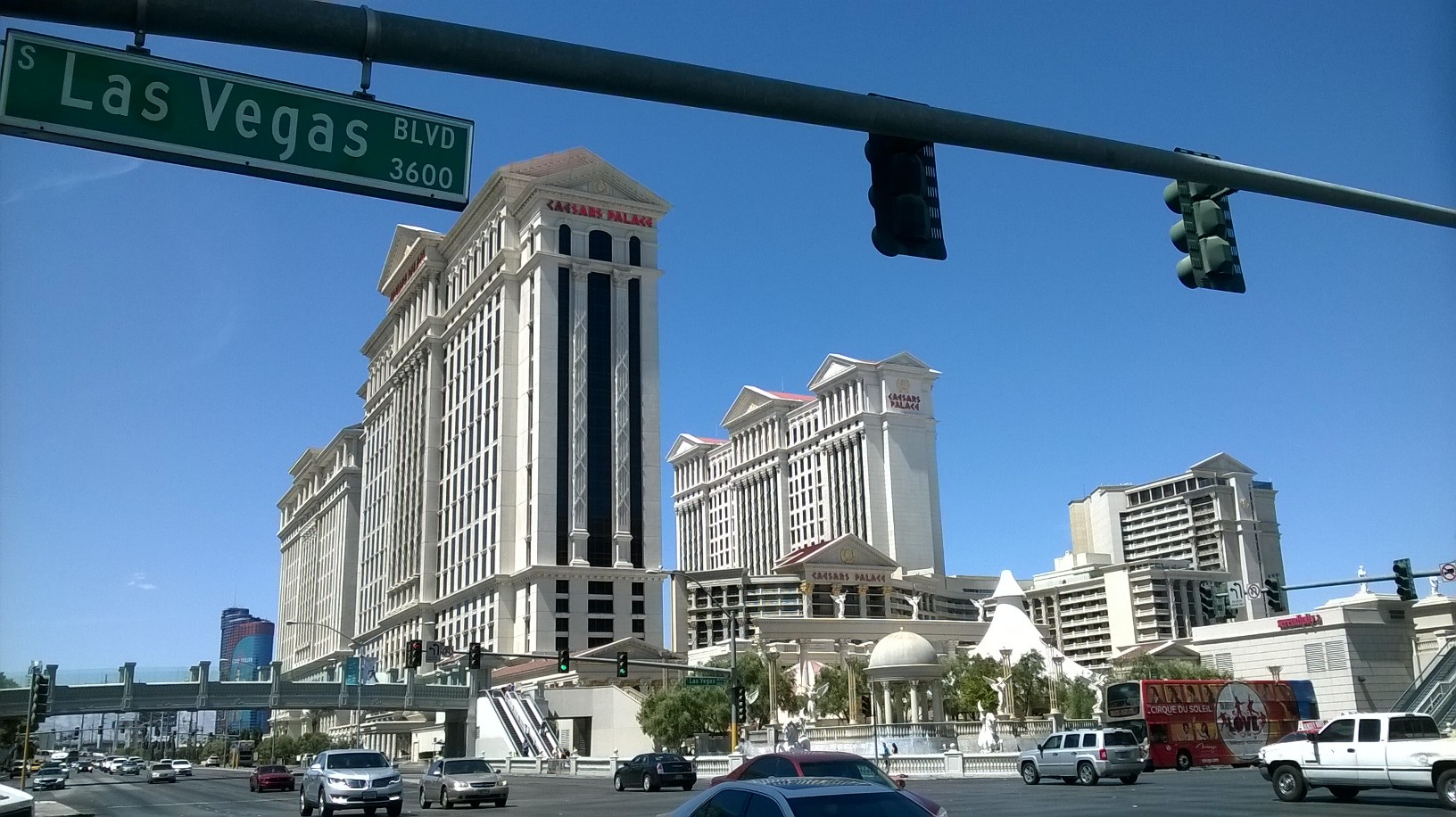
We said that Vegas was a weird town in the desert, and that’s exactly what it is. It’s so incongruous, out in the middle of nowhere, like some big kid’s toybox has been spilt in the desert. But it’s exactly what you expect: excess is everywhere, and the big kids imagination is in overdrive: you want the whole of New York to be squeezed into a snapshot? You got it. What about Paris – the Eiffel Tower, the Arc de Triomphe, the Mongolfier Balloon? You got it. It’s hyper everything – hyperreal, hypercrass and hypercommercial. So using language appropriate for the polarizing feelings that Vegas has provided, it’s safe to say that you’ll love it and hate it in equal measure. So here’re a few of the things that we have loved and hated.
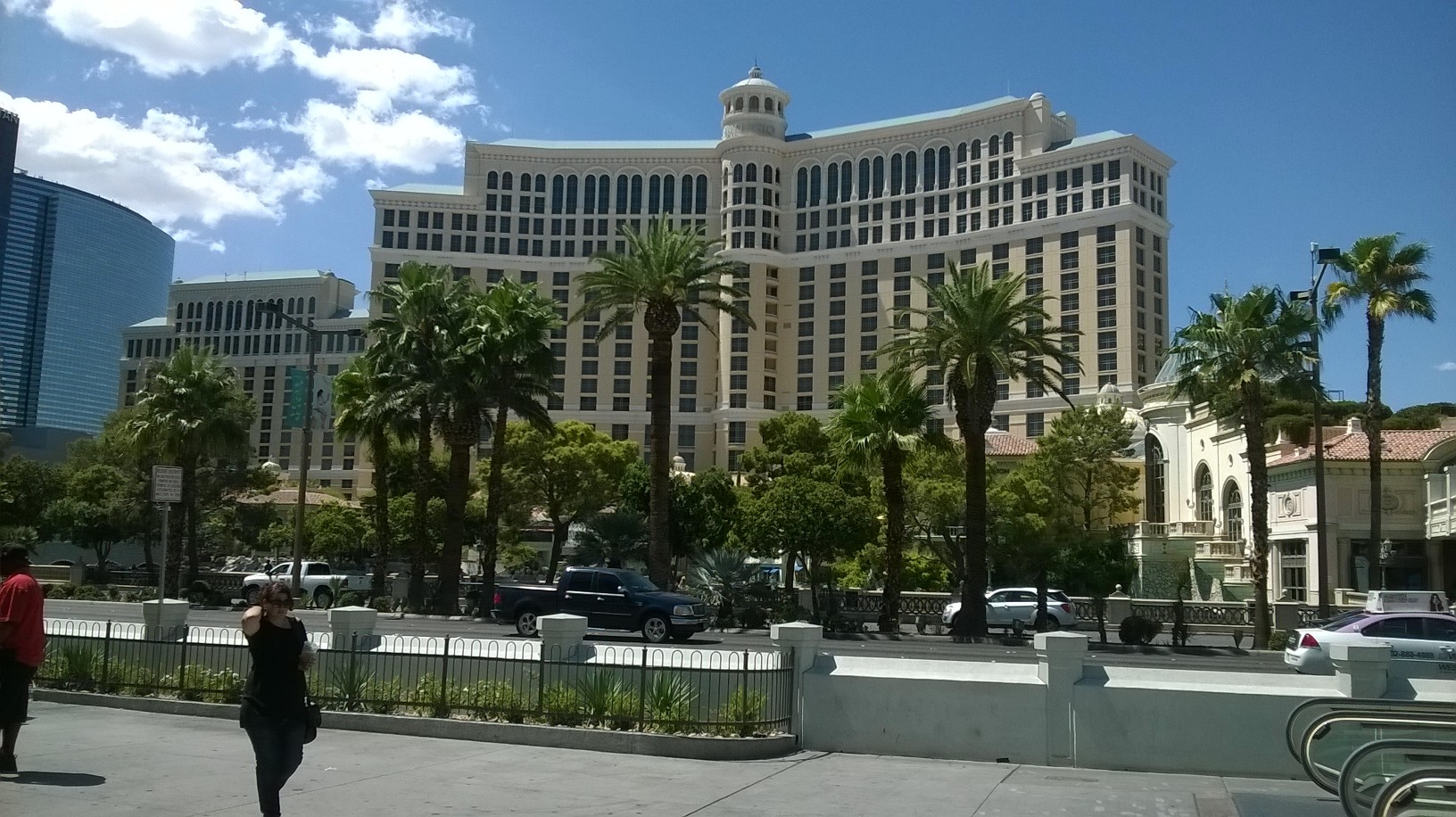
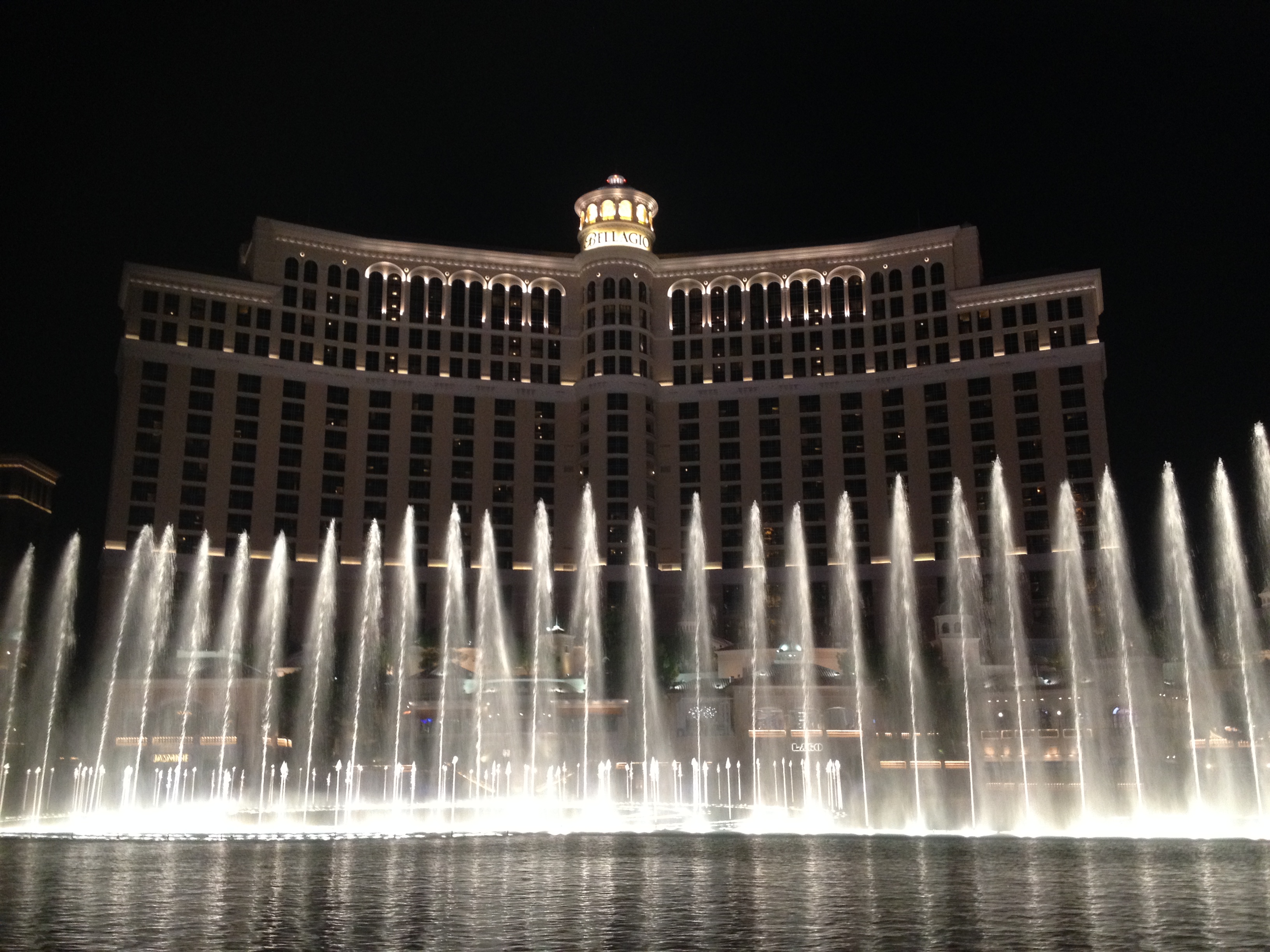
We loved the fountain display at the Bellagio. This is the hotel featured in the Ocean trilogy, out front of which is an enormous pond. Every so often, an amazing water display erupts, with the fountains springing everywhere in sync with the music. That really is magical, especially at night.
We hated the Bellagio. Inside, that is. And most of the other hotels, come to that. These places are so big, so ostentatious and so labyrinthine that it takes you literally half an hour or even an hour to walk round them, during which time you get increasingly lost. Finding your way out is the biggest challenge, and just when you think you have done it and you arrive on the pavement, you find yourself having to take an escalator and whoops, you’re back inside another gargantuan hotel! We got stuck for an hour in the MGM Grand before eventually making it back to the Strip.
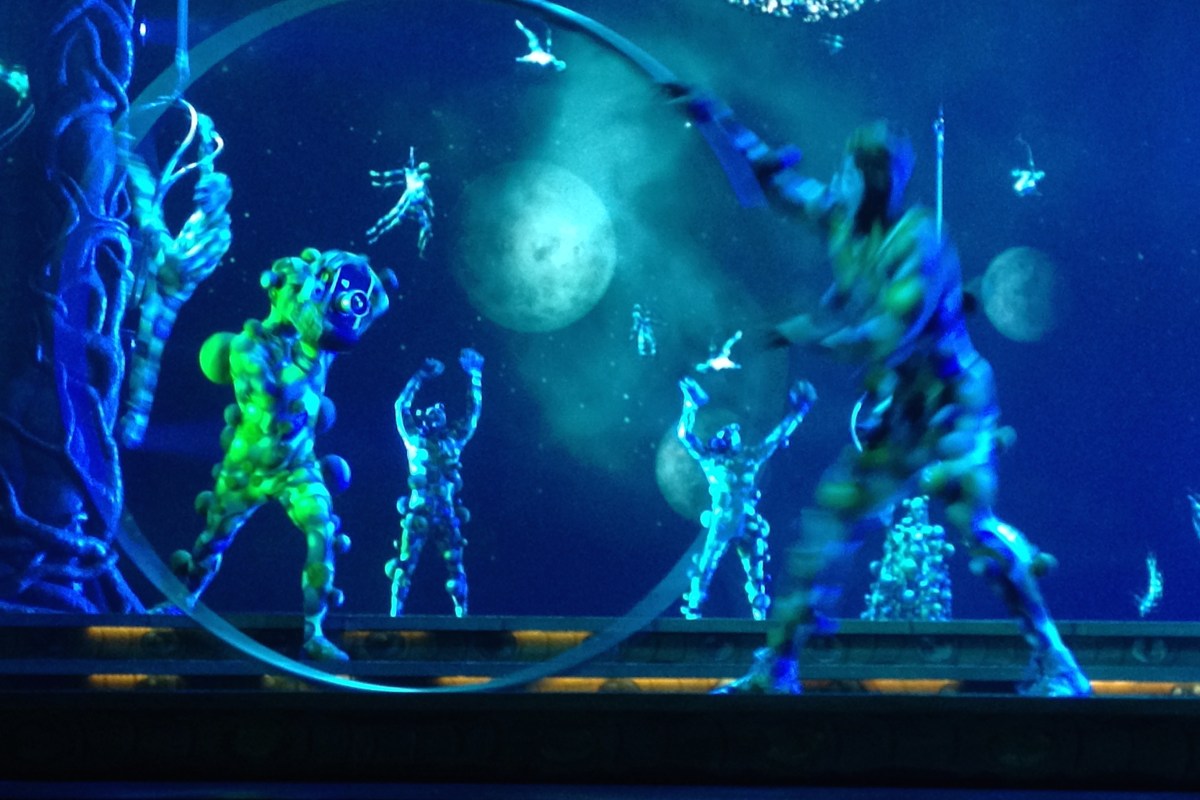
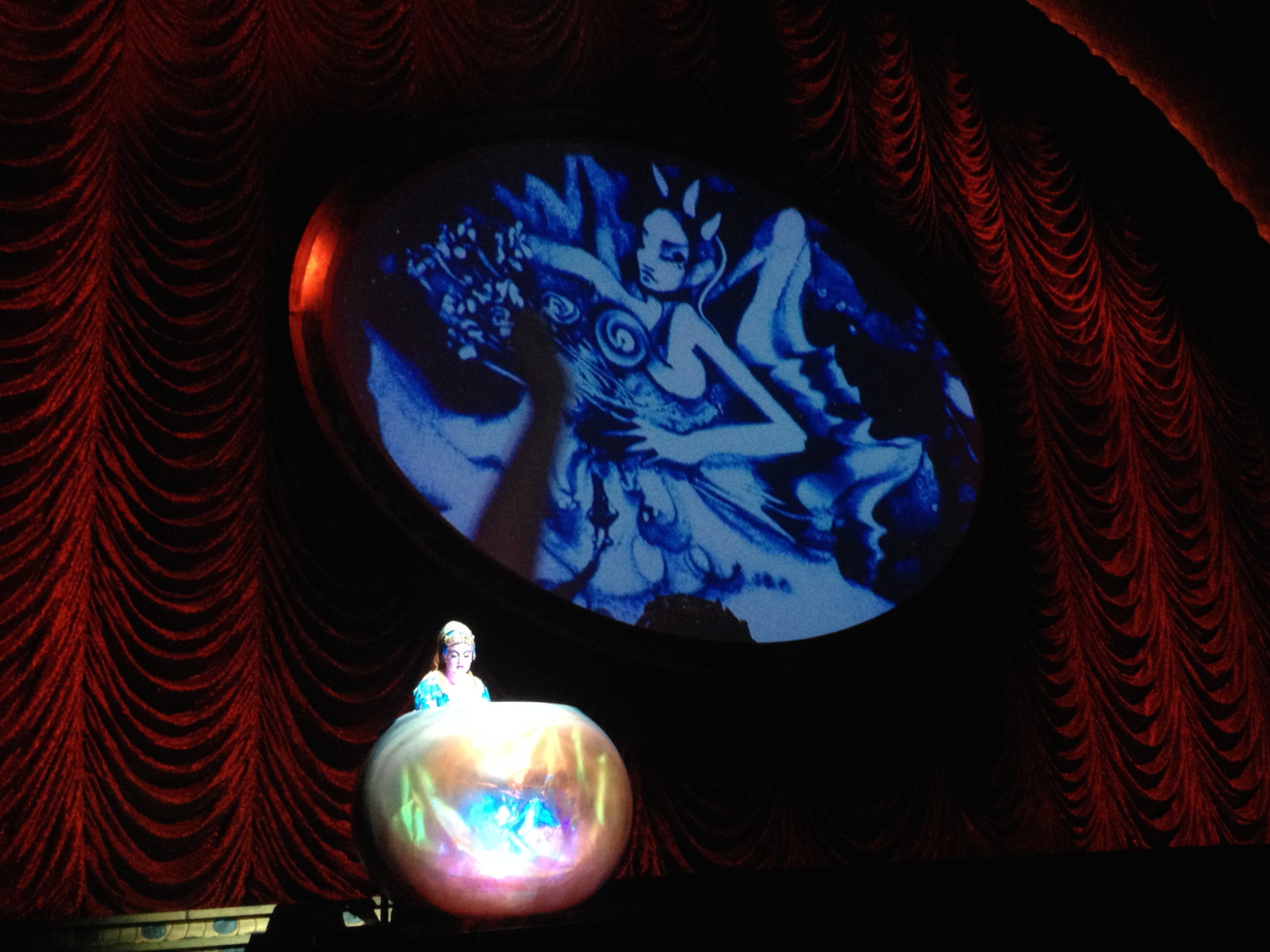
We loved the shows we saw, and Vegas is full of these. They are very much based on spectacle and virtuosity, so don’t go expecting Chekhov. However, you can see everything from the big magicians like David Copperfield and Penn and Teller, to the singers like Donny Osmond and Olivia Newton John, to the exotic cabarets that are too numerous to mention. And then there are the Cirque du Soleil shows, for which Vegas is renowned. We saw one of these – Zarkana – and had a fabulous time. It really is just circus, but done with such lavish and spectacular glam (and skill) that you just can’t help being wowed. We also saw the Blue Man Group, who we have seen previously in New York. They never disappoint: this is funny, feel good fun, with once again an amazing degree of skill and expertise.
We hated the street preachers. As you know, Vegas is a land of vice, with all of its gambling, titillation and hedonism. But it’s also packed with plenty of naysayers, brandishing placards and megaphones and warning everybody that they are going straight to the devil. Now this isn’t our thing at the best of times, but these people showed the problems that happen when American values like freedom of speech and right-wing sentiments come face to face. When they started condemning things like homosexuality, we felt like picking our own placards up and preaching them some of our values.
We loved some of the day trips you can go on out of Vegas – it’s so well located for a number of great attractions (such as the Grand Canyon, that we didn’t do). We passed by another of these canyons, Red Rock, on our way in, though on this occasion we chose not to visit that or the Canyon of Fire, partly because we’ve seen a lot of the natural spectacles already. However, we did make a trip to a man-made spectacle, the Hoover Dam, which was truly awesome. More of that tomorrow!
We hated the prostitution laws in Nevada, and what this leads to: open pimping of young girls on the streets by people old enough to be your grandma. They’re very forthright in what they do, thrusting flyers at you even when you are walking as a couple, as if there is nothing more natural in the world. Whatever your views, it’s problematic when you come (as we do) from a culture that is so differently placed in this regard – and when you have kids who are not much younger than the girls being pimped. Even considering the pro-prostitution perspective and the postfeminist perspective, it still feels ‘off’ and wrongly balanced when you consider who is doing the selling and then who might be doing the buying – and what the ‘service providers’ are actually getting from the transaction. I am sure several people will have strong and different views to us though.
You’ll love Vegas and hate it, as we’ve said. We certainly don’t regret coming, and we’ve had a ball during our stay. Will we come back? Dunno. Perhaps it’s somewhere you have to experience once, but perhaps that’s all you need.
Today has been a real day of inspiration. It was our last day in California (as we crossed into Nevada), but what a great way to leave the Golden State behind.
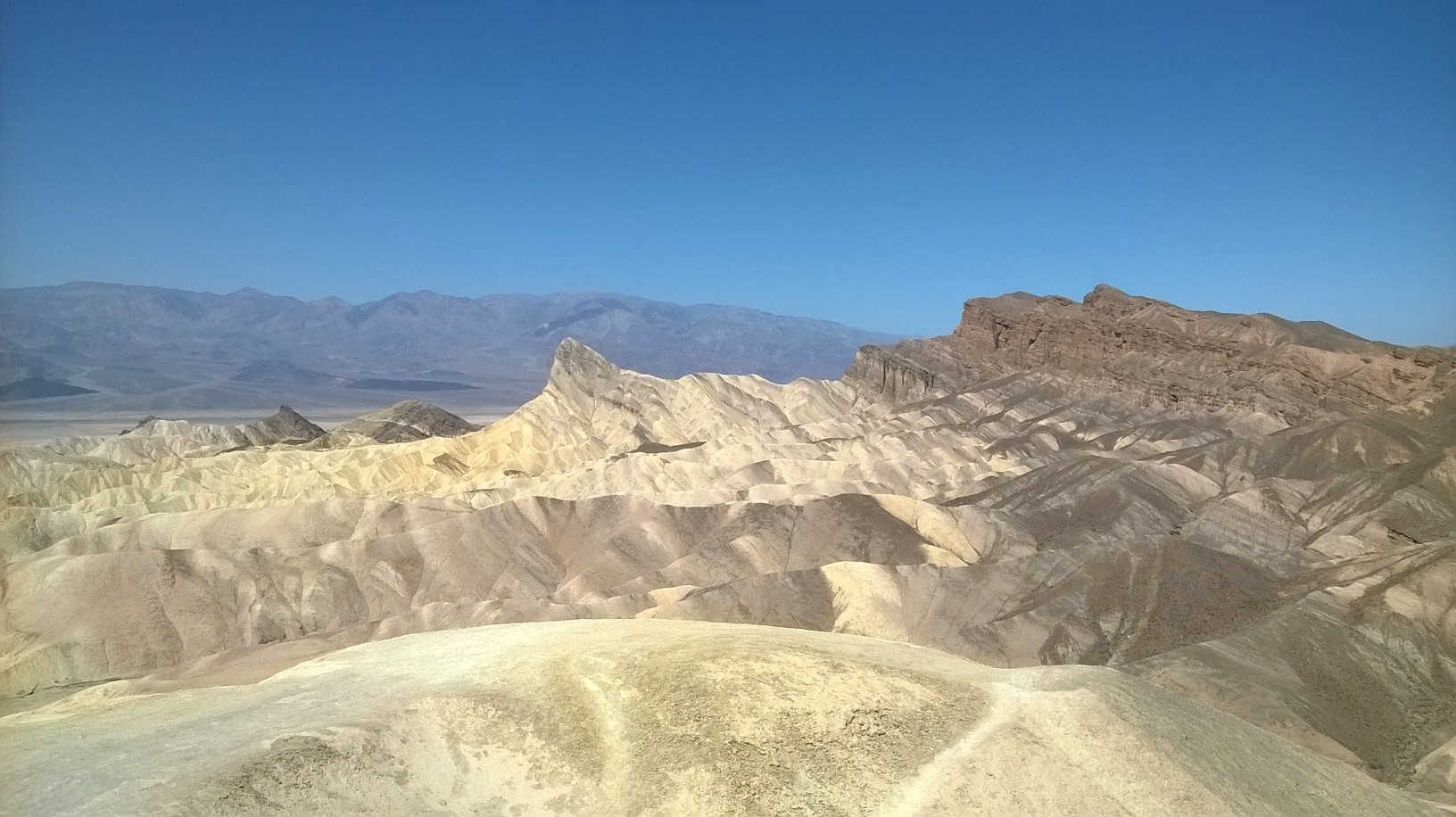
First stop was Zabriskie Point, only a few minutes’ drive from Furnace Creek, and the location of not only some of the most spectacular views in Death Valley, but also a wealth of pop culture references. This was the location for Antonioni’s 1970 film Zabriksie Point, in which the young lovers get together in a stylised love scene in the dunes, staged with performers from California’s Open Theater. This is art cinema at its best and worst – a terrible flop at the box office, but interesting nonetheless. But that’s not all: Zabriskie Point was also the scene for the cover image of U2’s album The Joshua Tree. Not the shot with the actual tree in it, mind – that was taken on the other side of Death Valley not far from Lone Pine, though the tree itself has now fallen down and all that is left is a shrine to U2. The front of the album, though, has one of those black-and-white rock-stars-looking-arty-and-serious-in-the-desert-pics. And that was shot here. But that’s not all either! Perhaps most interesting to us was the fact that the French philosopher Michel Foucault was brought here in 1975, and invited to go on a trip of a different sort. He took LSD, an experience he later said was the best in his life, and perhaps one that influenced some of his later writings. It’s obviously been an alluring place for people, and the fact that there have been so many interesting connections with Zabriskie Point meant that we had to visit it!
Shortly after that, we took a detour off the main road to journey round Twenty Mule Drive, a scenic route of just a few miles between more wind-blown cliff faces and rocky sand dunes. This was part of the route of the original Twenty Mule team that transported Borax in the late-nineteenth century. Spectacular again, though there is so much spectacular stuff to see in Death Valley that you can get rather blasé about it all.
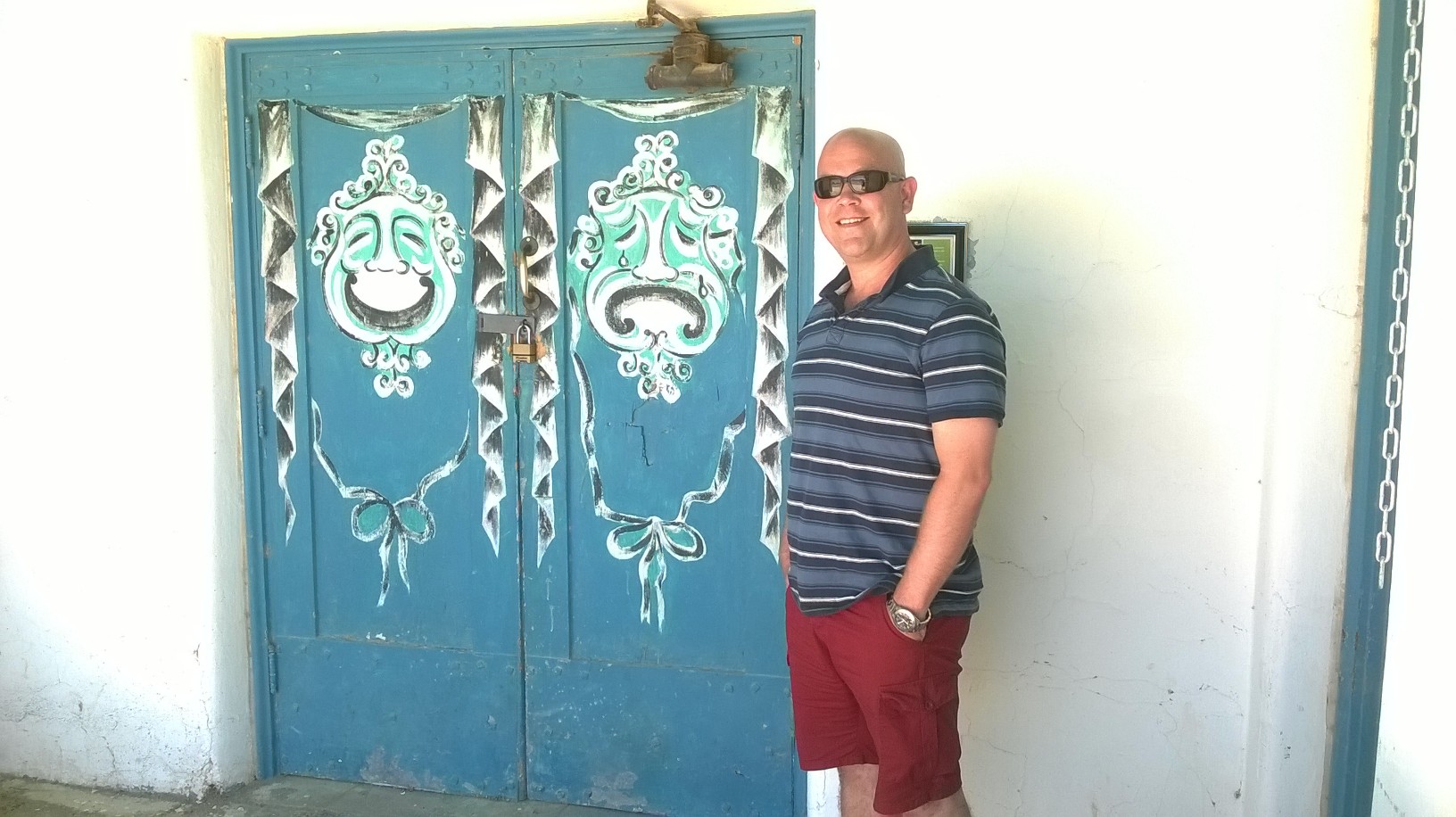
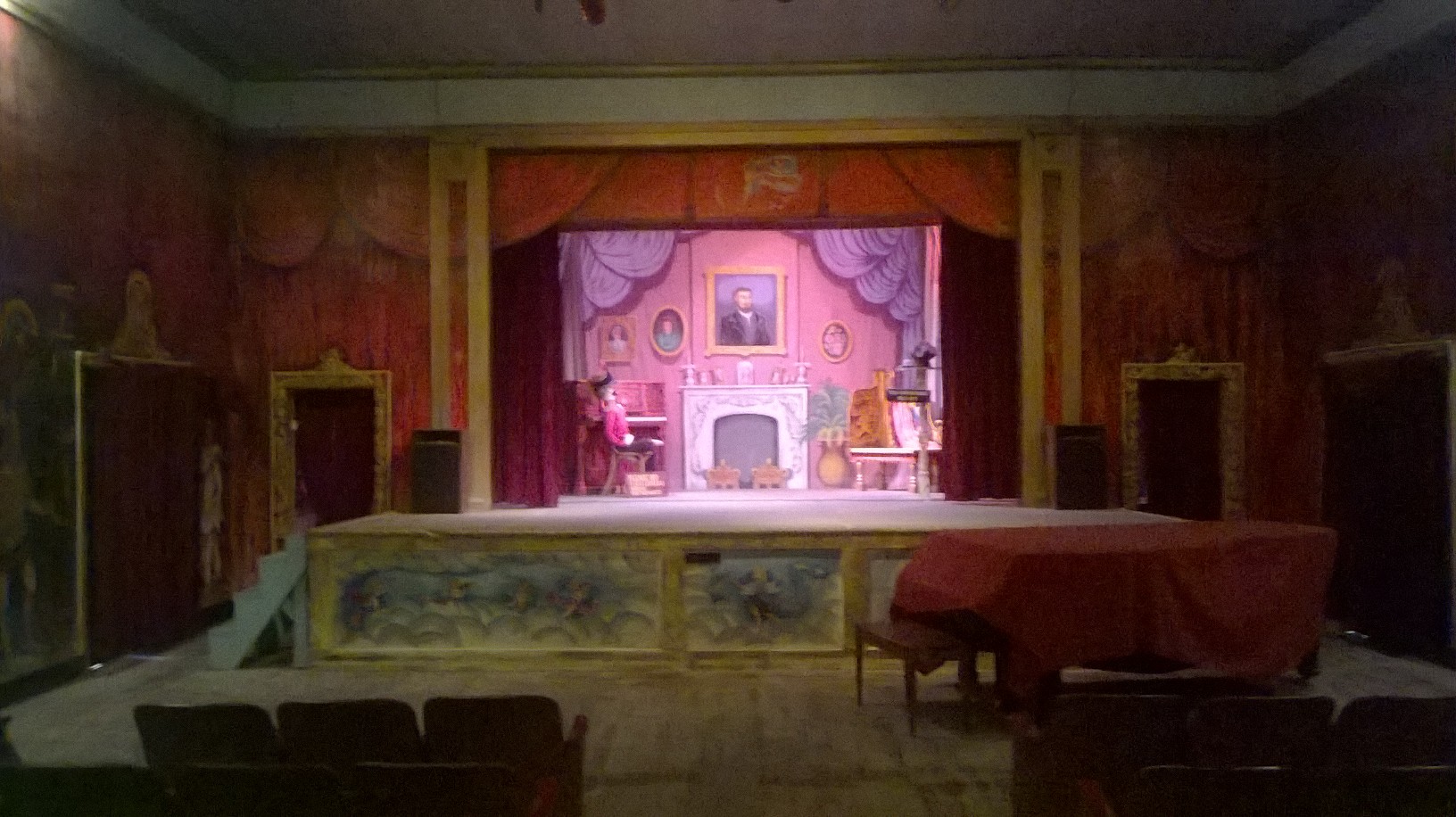
As we came to the end of our Death Valley odyssey, we drew into Death Valley Junction, a tiny village that was once the main artery of the Borax trade. We were keen to come here for a different reason: it’s the site of Amargosa Opera House, one of the most extraordinary theatres in the world.
This was set up in the 1920s as part of the mining village, which became a ghost town when the Borax industry left. However, in the 1960s, the ballet dancer and Broadway star Marta Becket discovered it when she got a flat tyre on a trip through Death Valley. At that point, the theatre building was disused and fallen into disrepair. In an instant she decided to renovate it, and over the next few years she lovingly restored it and started performing her one-woman show there. Now, there are not many residents in Death Valley Junction, so audience figures were low. So she decided to paint an audience on the walls of the theatre. The whole process took her 6 years, but the result is the most amazing set of murals on the walls and ceiling of this tiny jewel of a theatre. We were shown around by Gregory, who now runs the attached hotel and performs in the theatre during the winter months. He is absolutely passionate about the theatre, about Marta Becket’s work, and about the legacy she has left – and rightly so. This is really one of the most admirable projects we have ever encountered, and Marta Becket (now 91) must go down as one of the most inspirational women we have come across.
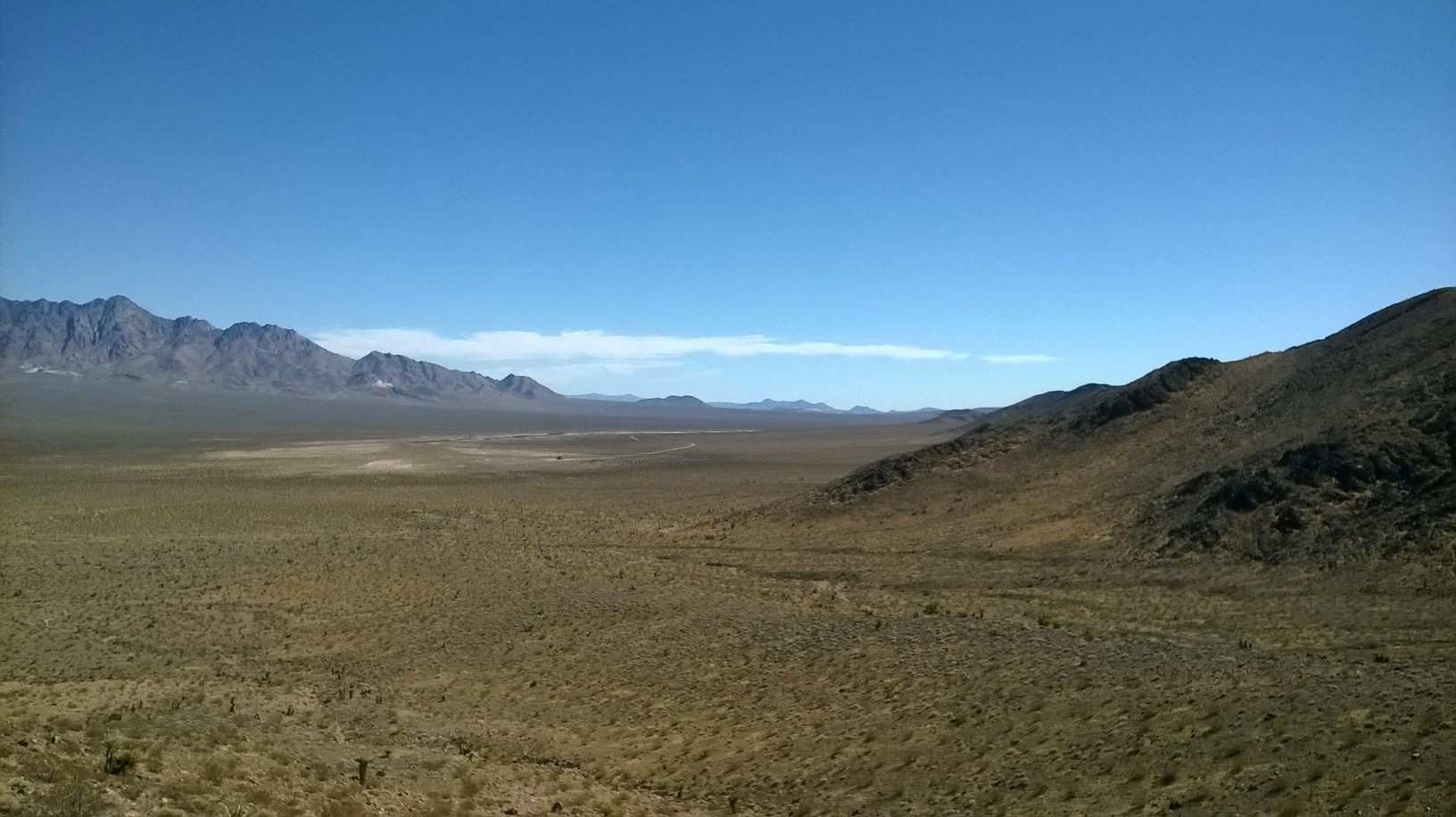
We said our good-byes to Amargosa Opera House to continue our journey. Lunching at a one-horse roadside town called Shoshone (named for the local Native Americans), we then took one of the most desolate roads we have yet travelled towards our final destination. For forty miles, the road meandered through stunning nothingness, sometimes in twists and turns, sometimes in long, straight, never-ending stretches of asphalt. In the course of that hour, we saw just four other cars. This was even quieter than Death Valley!
We had reached Nevada, whose landscape is subtly different than California – red rocks rather than sandy, and the occasional mountain goat in amongst the Joshua Trees. Eventually, we came across the major highway, and it wasn’t long then before we caught sight of our next destination: Las Vegas, aka Weird Town in the Desert.
OK. So we all know that Death Valley is dry, arid and desert-like, that there is narry a plant growing and that you’re more likely to see a coyote dropping rocks off cliffs than you are to see a blackbird. (Though as it happens the roadrunner is a common enough bird in these parts – even if we haven’t seen one!) But before you trek out from the Ranch at Furnace Creek, stop off at the on-site Borax Museum, a wealth of information and a fascinating insight into Death Valley then and now.
To our amazement, it turns out that Death Valley was once a gigantic lake with tropical forest growth and plenty of flora and fauna. We’re going back a few years, mind (like, millions). Most contemporary accounts document the area from around 1850, when coach loads of gold prospectors stumbled into the valley by mistake and promptly proceeded to regret it. They didn’t find a great deal of gold, though the mineral they found that could be exploited was Borax – still a fundamental component of soap, pyrex and glass, and still a major US export. It’s quite amazing to read how these pioneers not only managed to make this hostile landscape habitable, but also managed to forge thriving industries, with mines, rail connections and mapping projects to develop the infrastructure of this uninhabitable environment. Sadly, much of the prospecting yielded very little, so mining towns blossomed and then withered, leaving a host of deserted ghost towns in the desert, and just a couple of existing communities, one of which is the Ranch at Furnace Creek.
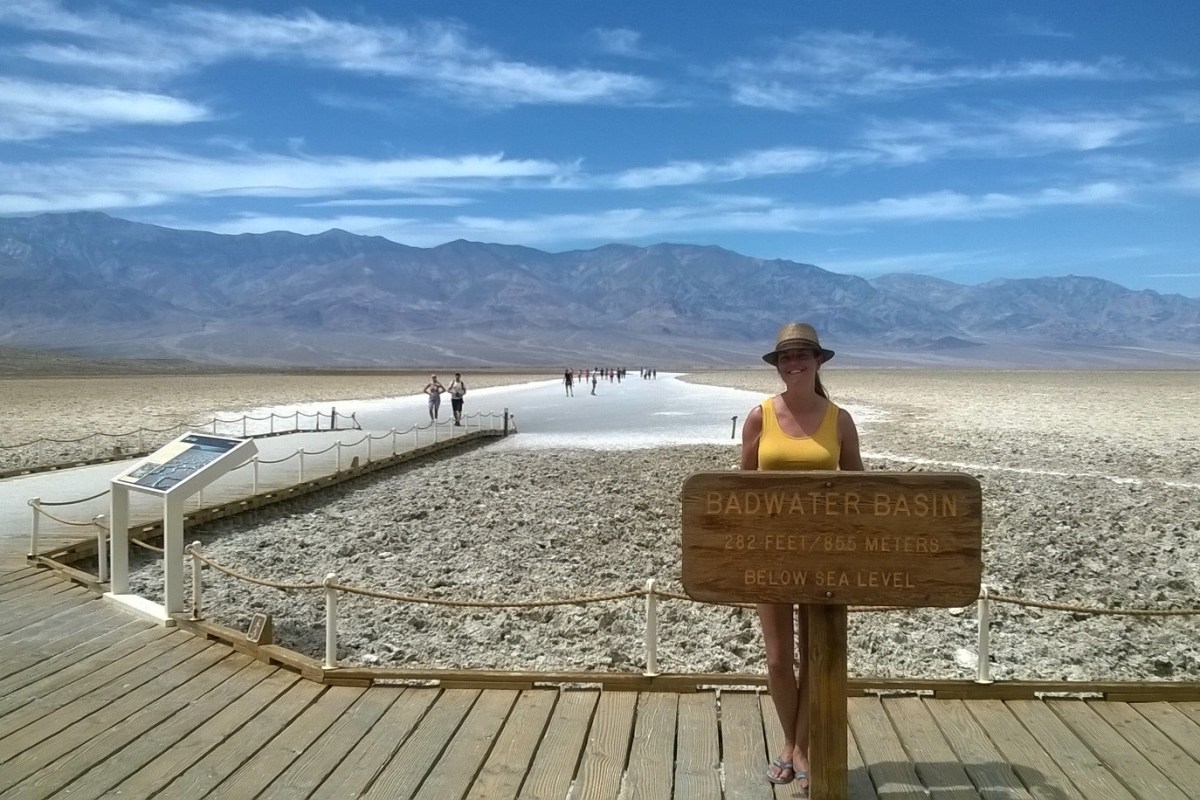
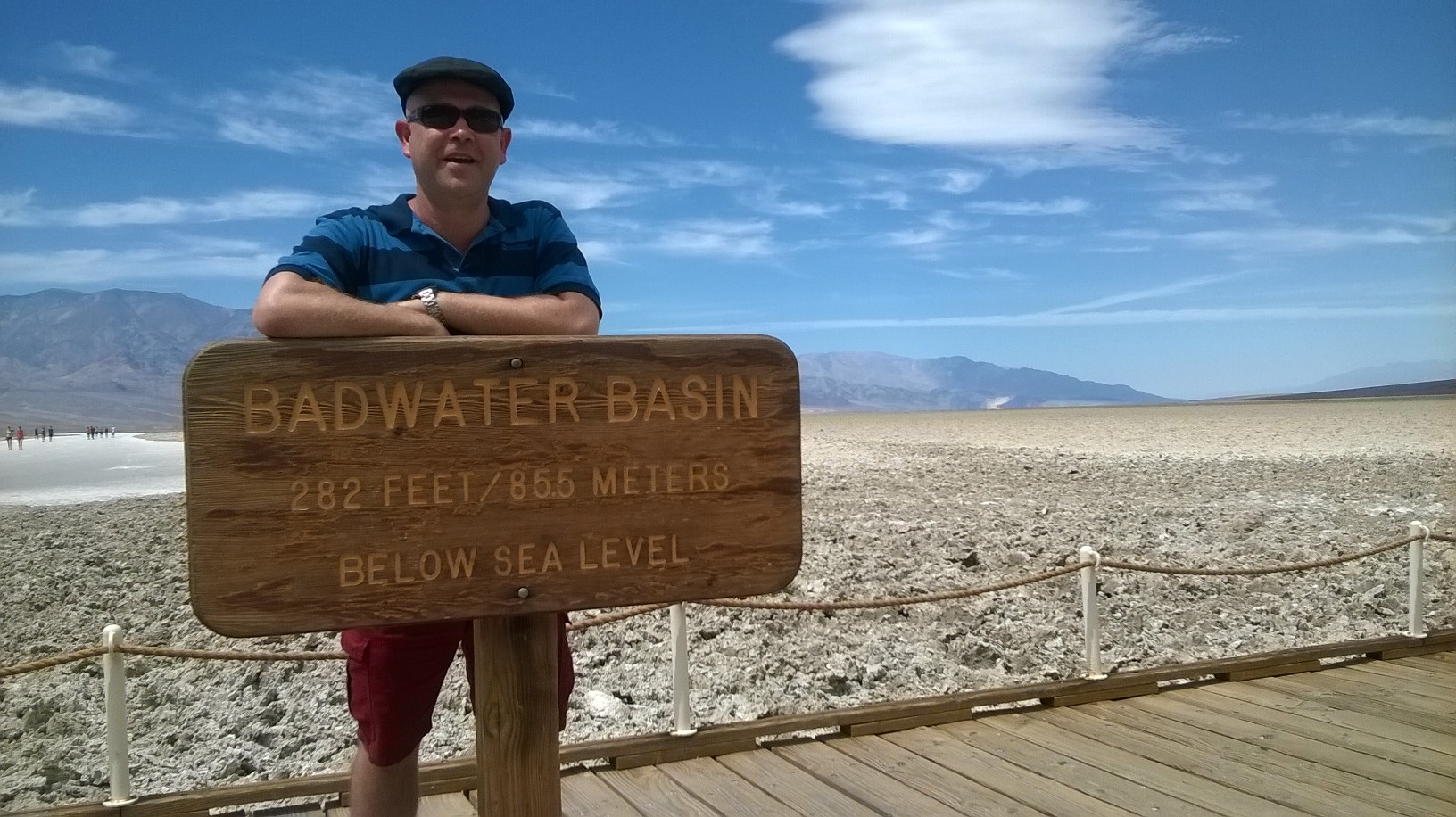
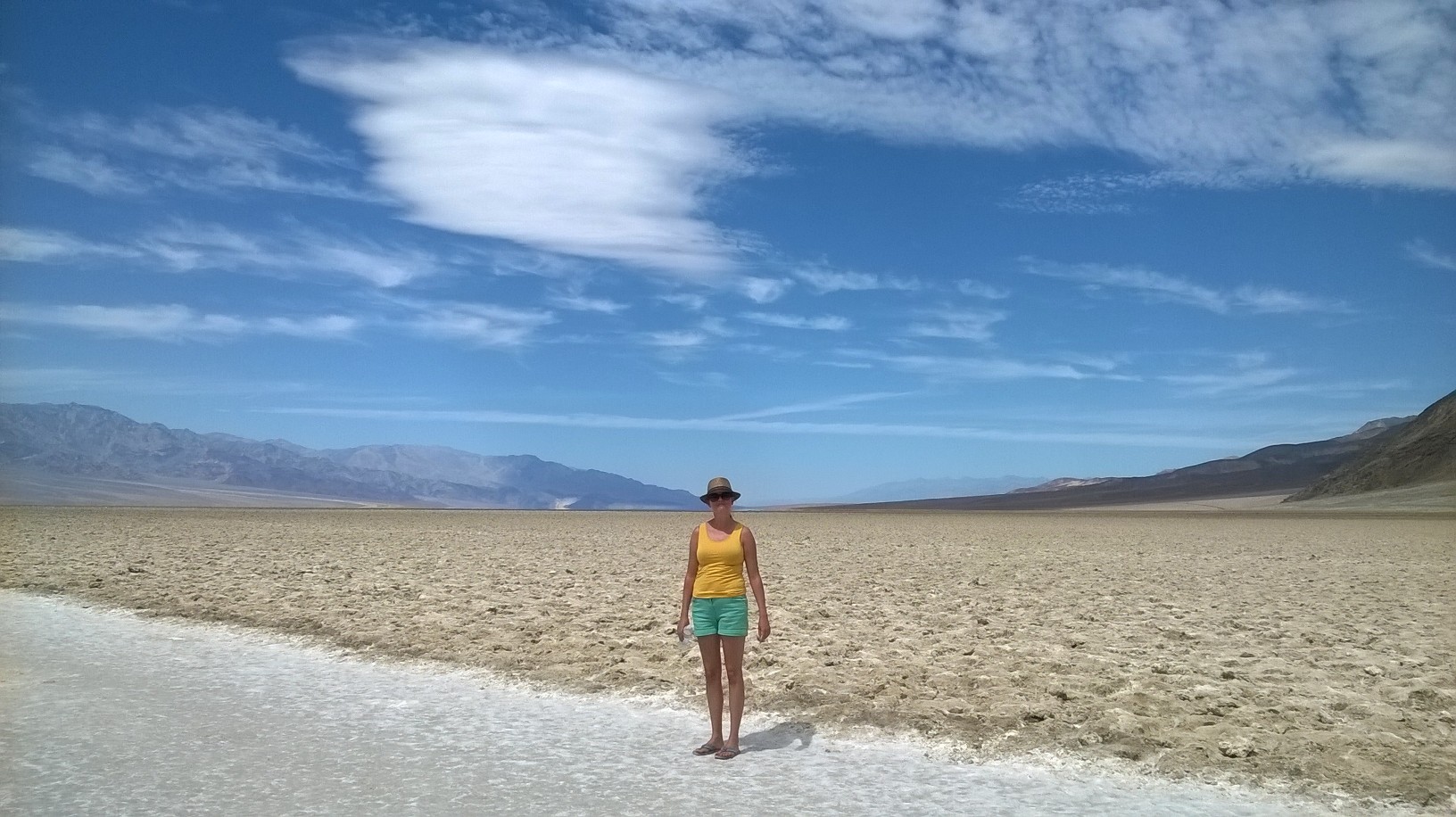
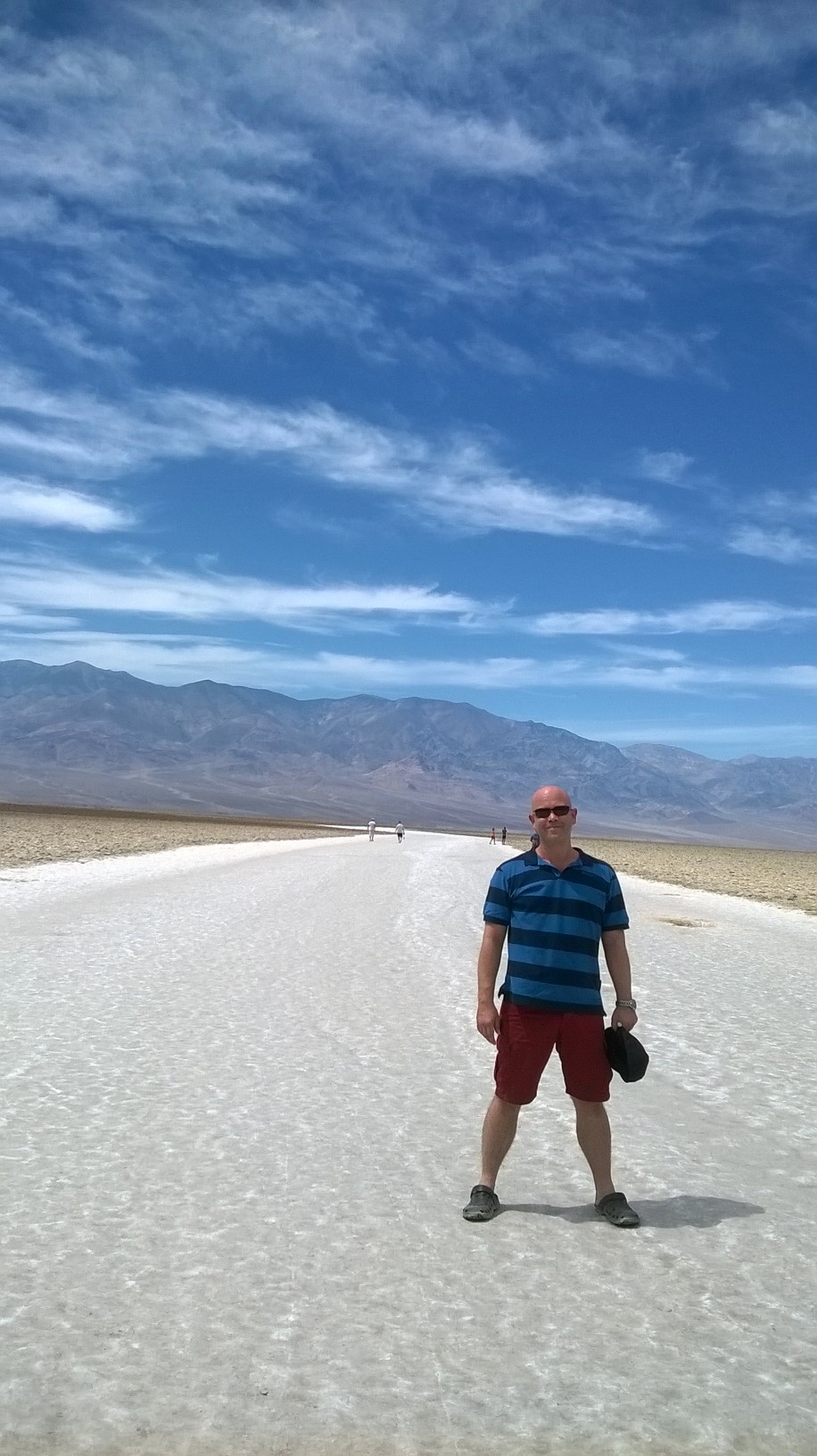
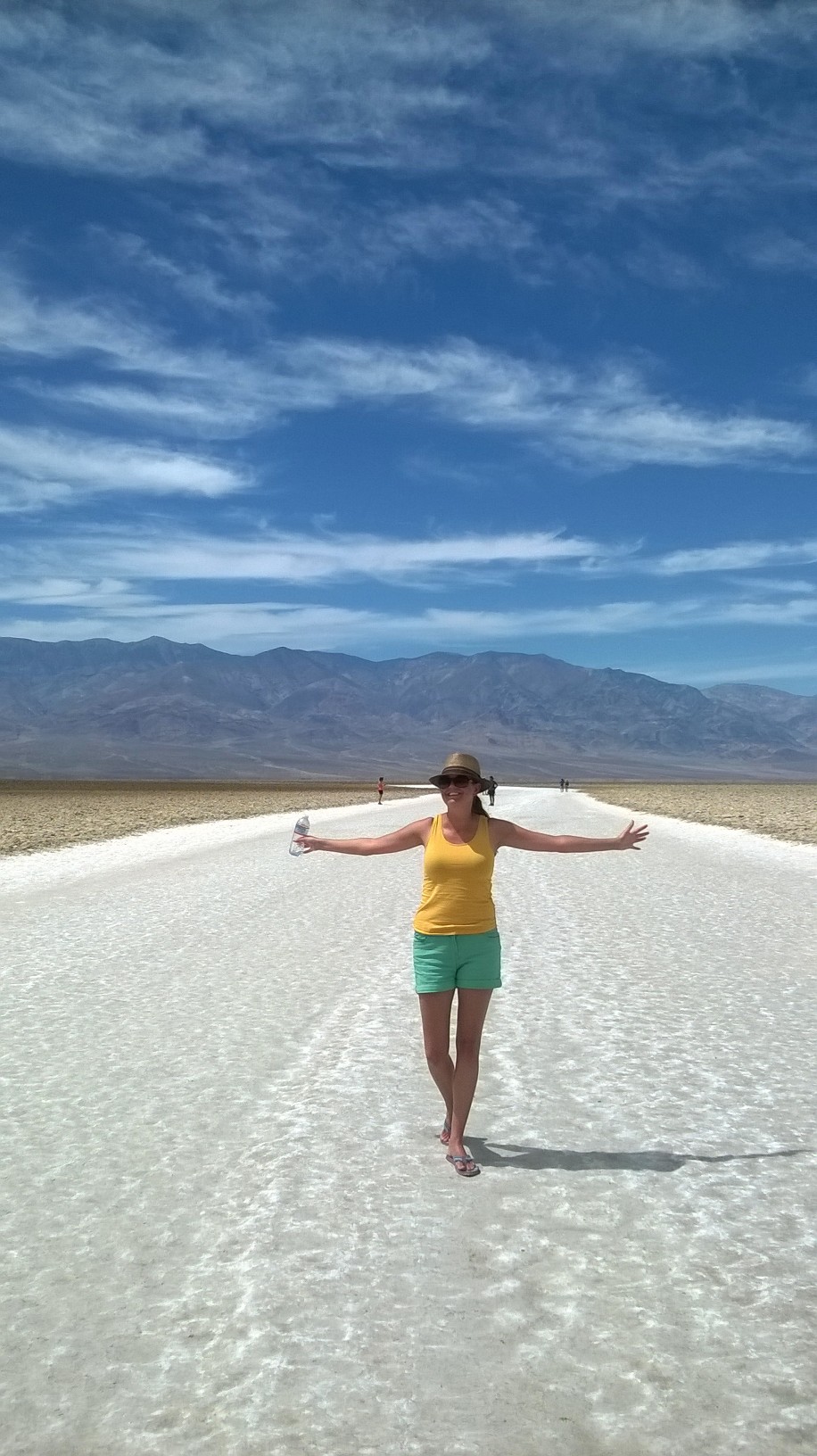
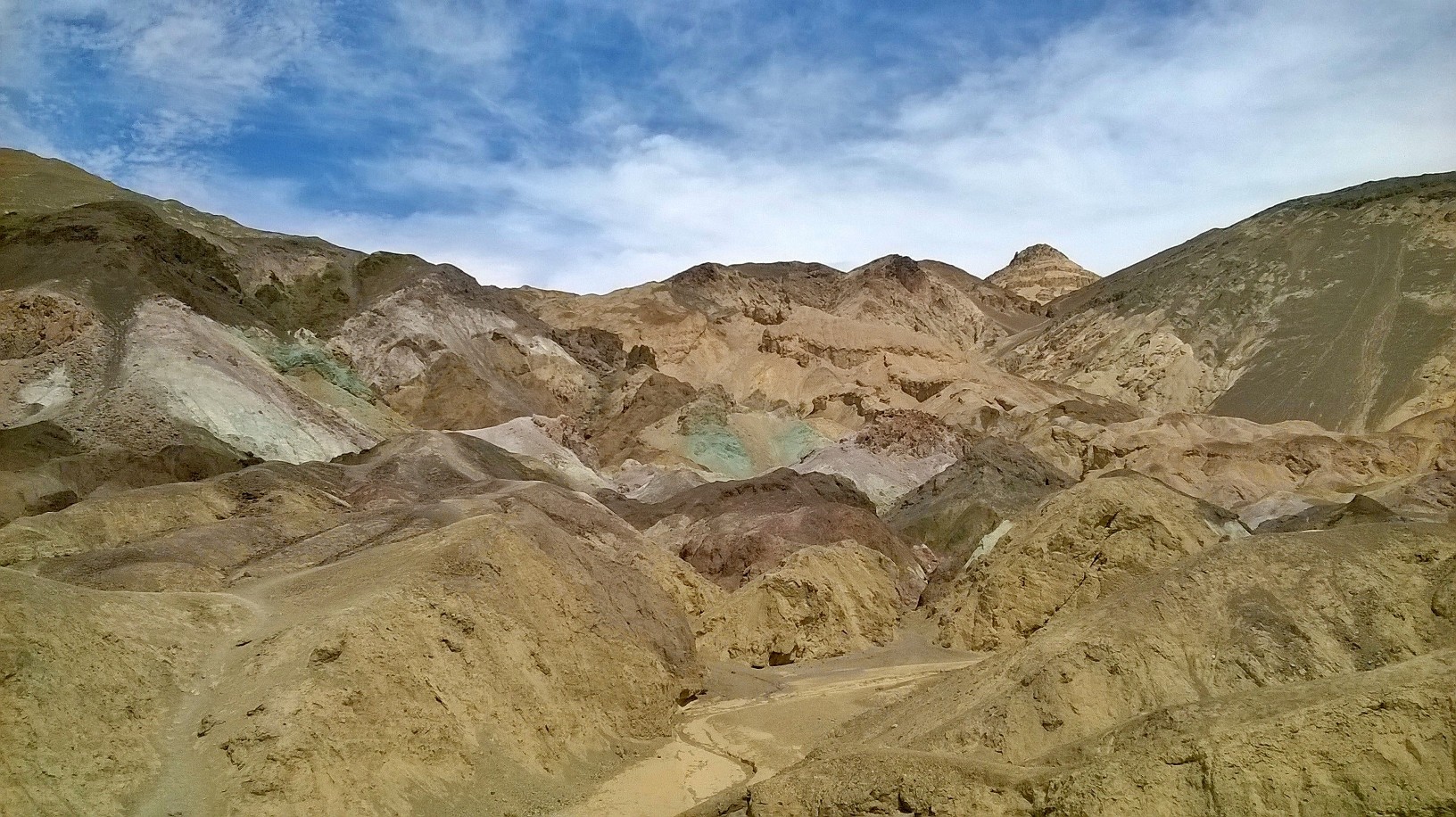
Another surprise is that Furnace Creek itself was established as a leisure resort as long ago as 1940, as lots of the memorabilia, photos and paraphernalia dotted about the complex attests. Back then you could order New York Steak at the restaurant for a dollar, watch movies for an evening’s entertainment, swim in the hot spring pool, and even ride the narrow gauge railway to the most local Borax mine as part of your itinerary. Some of those delights are no longer available (and the New York Steak is a great deal more spenny, though presumably it’s a fresh batch of meat). However, what is available is a wealth of stunning photo opportunities including the lowest point in America at Badwater, the amazing colours of the cliffs around the Artist’s Palette, and the striking scenery of the Golden Canyon. All within an hour’s drive. So we lathered ourselves with suncream, got in the car, and ventured out to explore the delights. A word of advice: this might be the point to make sure your camera gear is top notch; ours isn’t, so what you see here is snapped on smart phones and lacking photographic aplomb. Even so, we’re sure you’ll agree that the sights of Death Valley are pretty amazing!
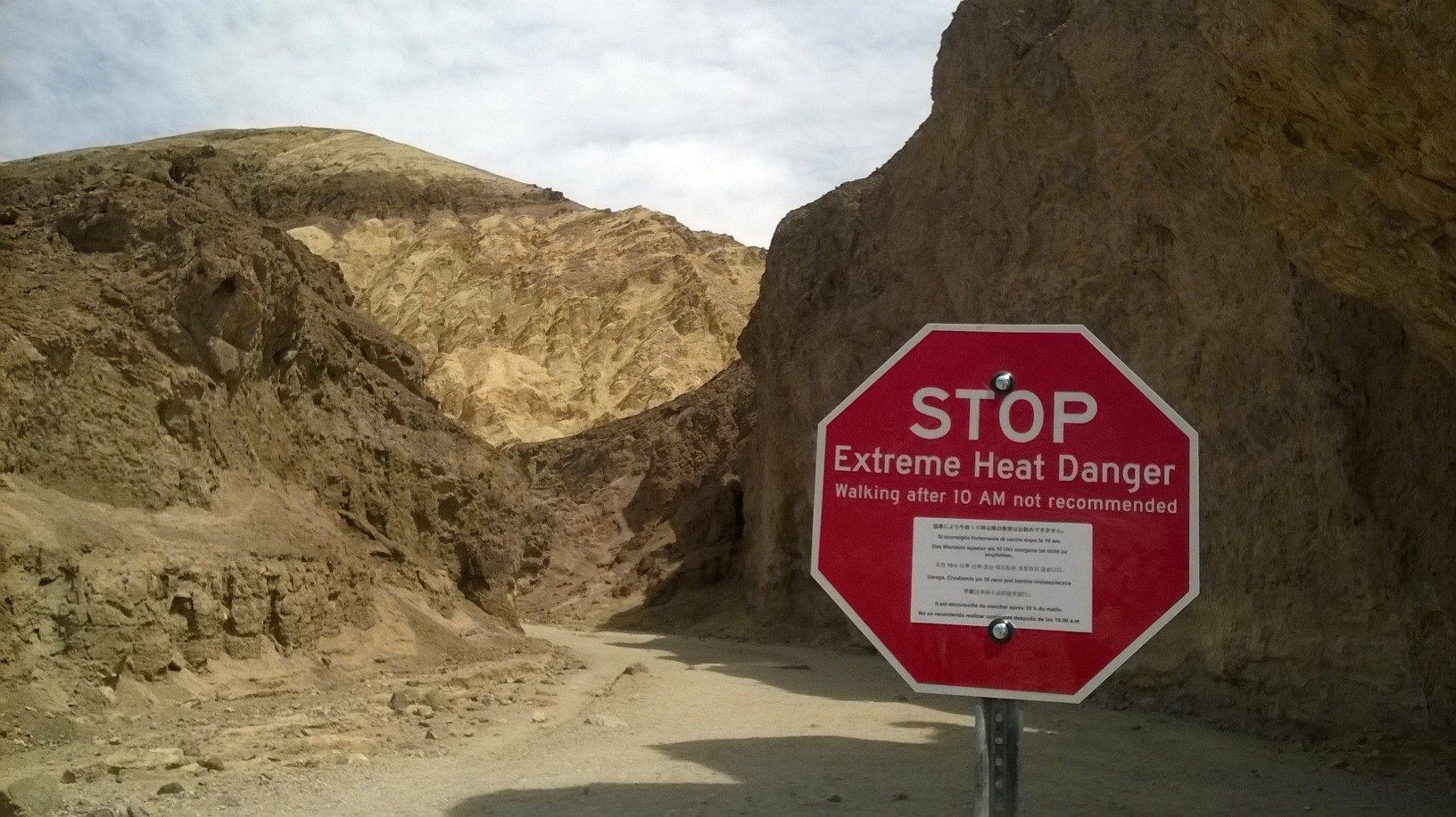
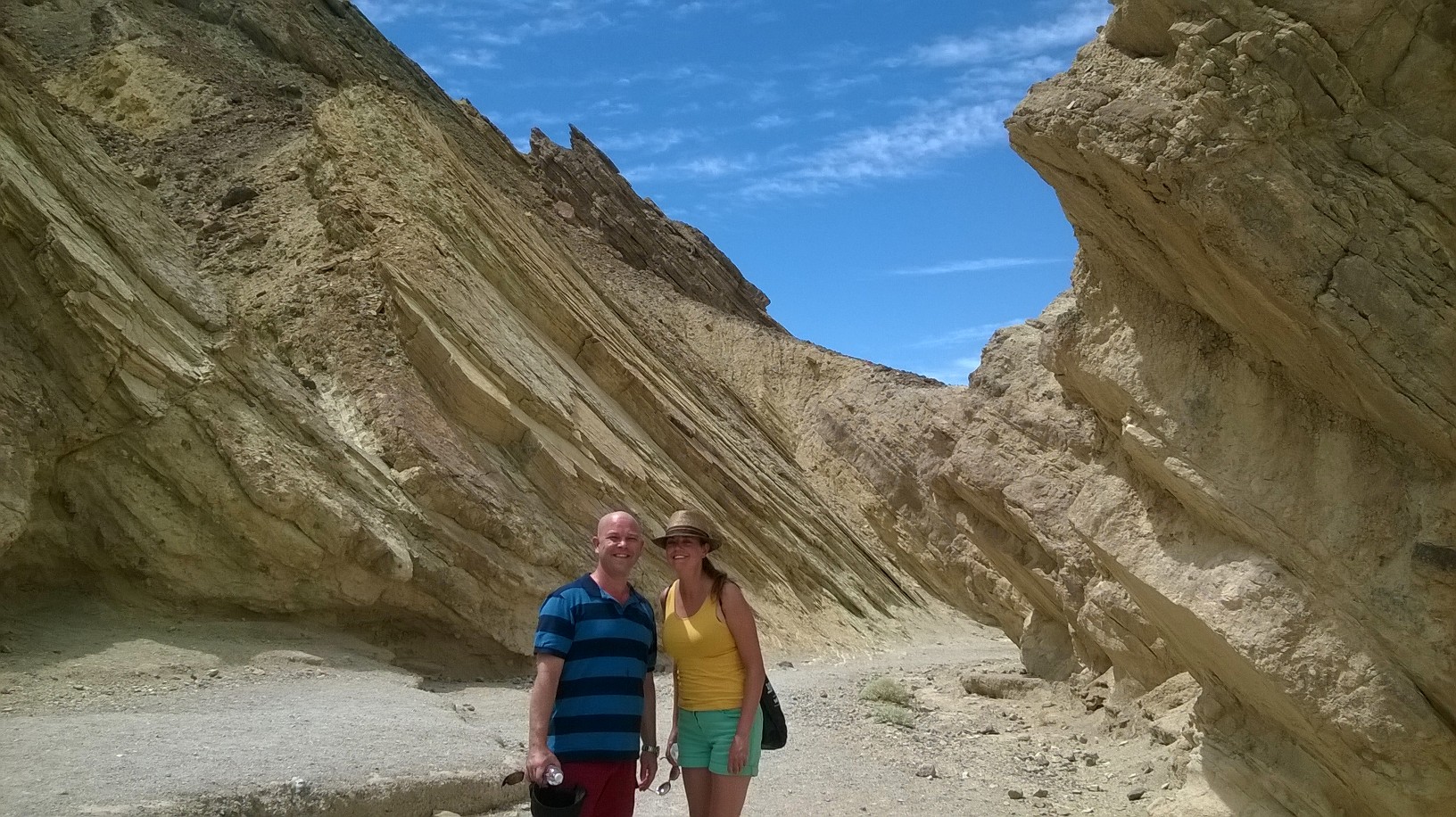
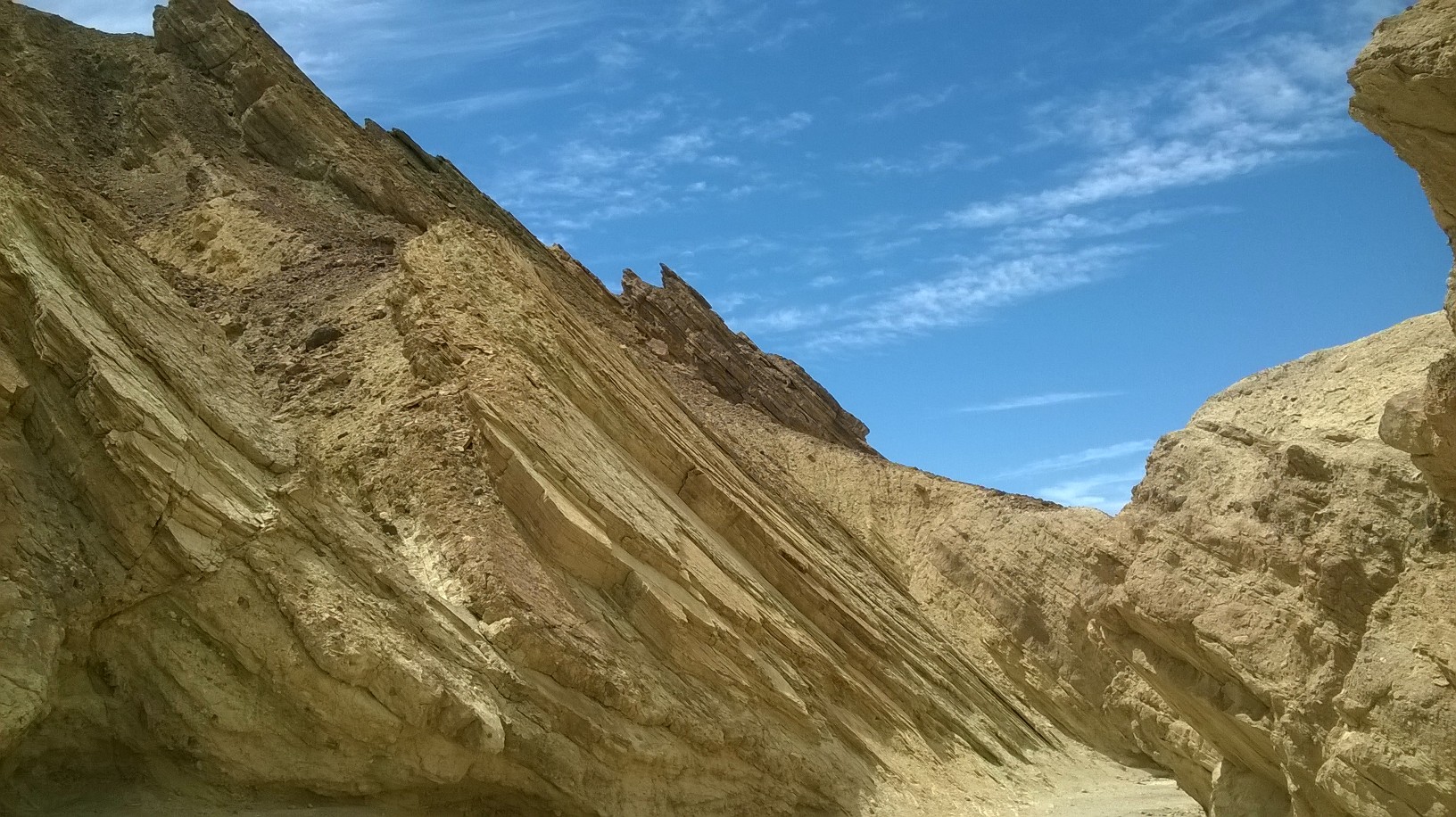
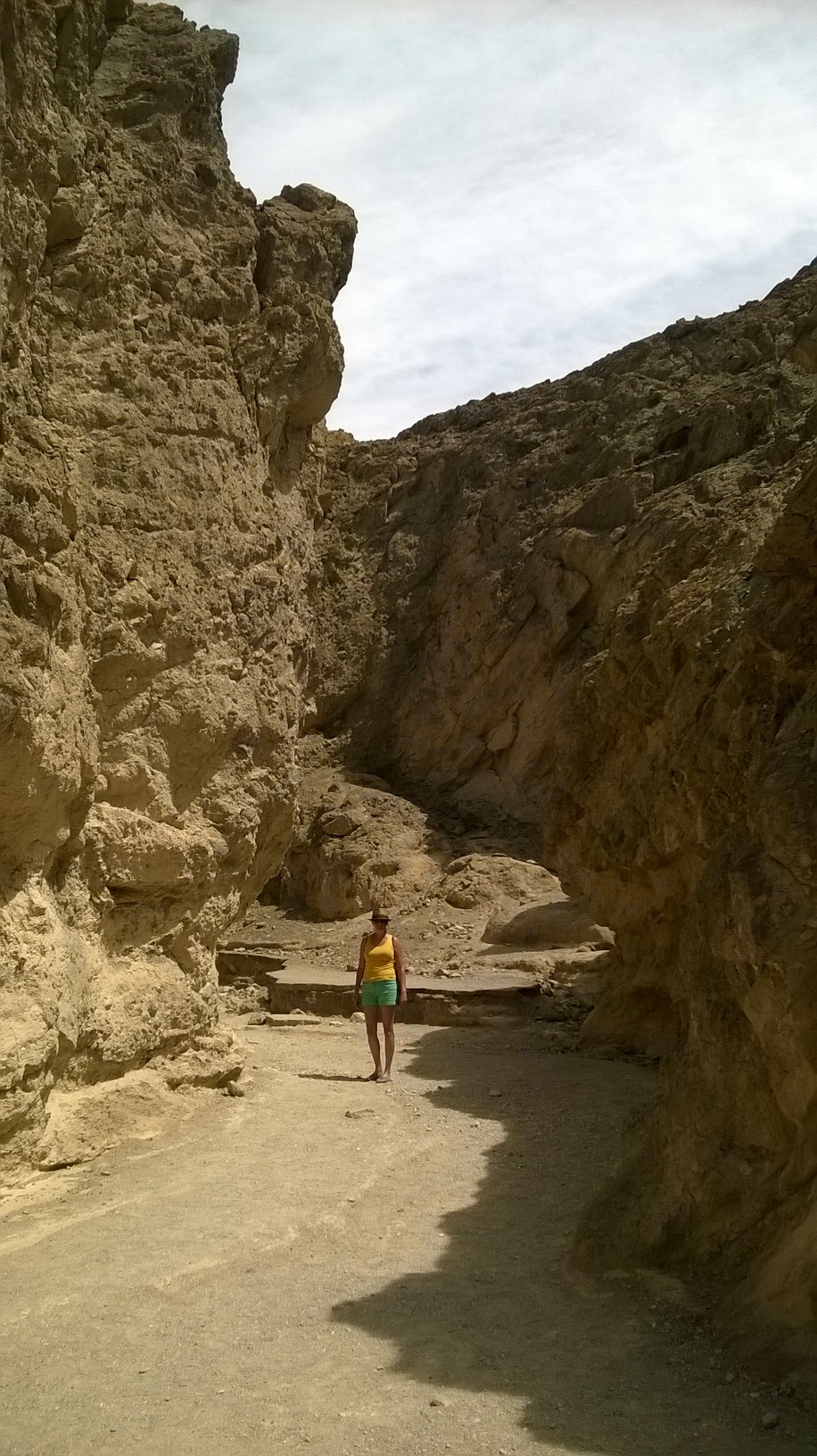
First, the Golden Canyon:
This sign warns against strolling through the canyon after 10am. Whoops, it was 12:06 when we set off to look about Golden Canyon. Don’t fear though, we had plenty of water and wore natty hats.
Then Badwater: the lowest point in America
And finally, the Artists’ Palette, with its extraordinary juxtapositions of colour caused by different minerals in the rock formations:


























 Seeing the world through the eyes of a Savage